Kharkiv residents deeply love their city and celebrate its City Day on a grand scale, with enthusiasm and sincere declarations of affection. Every year on August 23, Kharkiv blooms in festive decorations. Even when blocked by anti-tank hedgehogs and sandbags. Even when plywood covers shop windows, and streets lined with last year’s advertisements feel deserted, it remains beautiful.
In recent years, proposals to move City Day to another date have become increasingly common. Community members, patriotic organizations, historians, researchers of the city’s culture, and advocates of decolonization believe that choosing August 23 is questionable. It distracts attention from State Flag Day and Ukraine’s Independence Day. Ultimately, this date is incorrectly associated with the liberation of the city from the Nazis during the Second World War.
The Liberation of the City as a Gift to a Tyrant
According to Soviet tradition, it was believed that Soviet troops liberated the city from the Nazi occupiers on August 23. In reality, this happened later. Although a celebratory salute in Moscow marking the liberation of Kharkiv was fired on August 23, 1943, the Nova Bavariia railway station and the Chervonobavarskyi district were not liberated until August 29. Until then, enemy forces were still being driven out of certain streets.
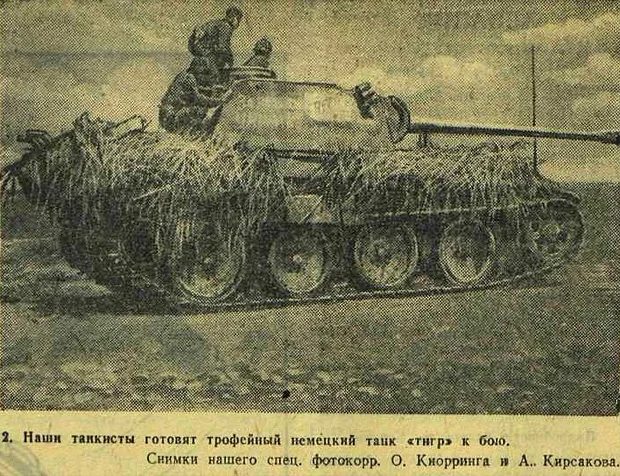
A German Panther tank captured near Kharkiv but mistakenly identified as a Tiger tank — an error made not only by war correspondents but also by intelligence officers of the 5th Guards Tank Army. The photograph was published in Krasnaya Zvezda on August 26, 1943. Source: Andrii Paramonov.
Fierce fighting continued for another week. For an entire week after the official fanfare, part of the city remained under occupation. Constant artillery shelling and enemy air raids continued, while the front line ran not through the outskirts but directly through residential neighborhoods.
The course of the battle for the city has been thoroughly documented by Kharkiv researcher Andrii Paramonov. In his articles and publications, he presented the factual evidence. He also argued for the need to revise the official date of Kharkiv’s liberation from the Nazi occupiers.
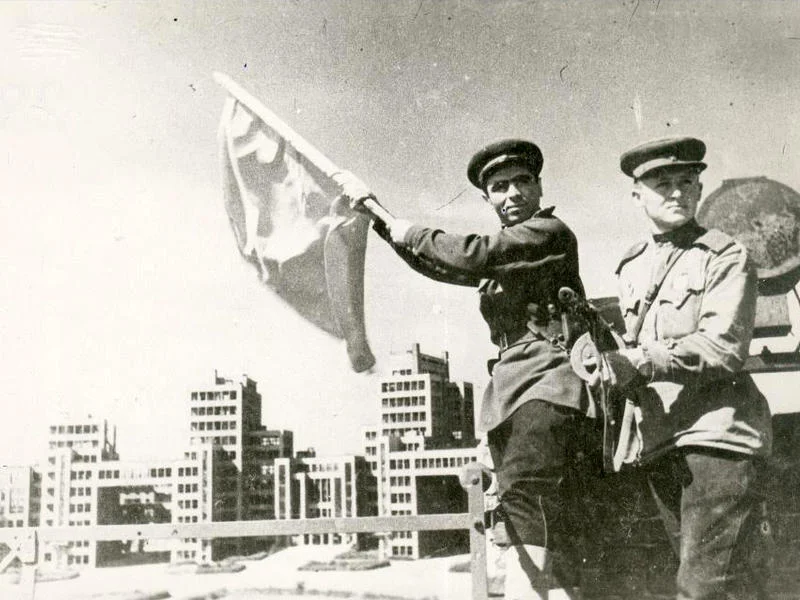
“Let us look at Soviet newspapers from August 24–25, 1943. In photographs published by Komsomolskaya Pravda and Izvestia, we see columns of Soviet military equipment on Kharkiv’s streets deploying anti-aircraft guns on Dzerzhynskyi Square. Yet only small groups of local residents can be seen alongside Red Army soldiers and officers.
A Red Army anti-aircraft unit deploys on Dzerzhynskyi Square. Komsomolskaya Pravda, August 24, 1943. Source: Andrii Paramonov.
A completely different atmosphere prevailed on August 30, during the rally celebrating the liberation of the city. Hundreds of residents greeted the troops. Faces were filled with joy, laughter, and celebration. The difference is easy to explain, and the documents show that it was too early to celebrate between August 23 and August 28, 1943. The city was under regular artillery bombardment and enemy air raids, while the front line throughout those days ran not outside the city, and not even through the suburbs, but through residential districts.”
In other words, even the propaganda rally organized by the Soviet authorities in Kharkiv could only be held later. The cheerful photographs, newsreel footage of smiling Soviet soldiers riding on armored vehicles, and happy Kharkiv residents were filmed on August 30.
On August 23, we celebrate not even the expulsion of the German Nazis from the city, but rather the day when Marshal Ivan Konev, commander of the Steppe Front, reported to Stalin in order to bring the leader good news as quickly as possible. This was a practice typical of authoritarian societies: presenting what the leadership wished to be true as reality, out of fear of punishment.
Incidentally, we can observe something very similar in real time today during the Russian-Ukrainian war. Putin and his General Staff expect reports of yet another seizure of Ukrainian territory, and they are informed that a certain town or village has been captured.
In reality, as Russian military correspondents themselves complain, these places are often “captured on credit.” A sabotage group carries out what is known as a “flag planting.” Superiors are informed that the location has been taken, and afterward troops are sent in as cannon fodder to secure the position at any cost. After all, the capture has already been reported and marked on the map.
Stalin was impatiently awaiting good news, so he was informed that on August 23, 1943, Kharkiv had been “completely cleared of occupiers.” A celebratory salute was held in Moscow that same evening. This ultimately cemented the date as untouchable within Soviet propaganda.
No Holiday? Invent One
If we examine Soviet-era holidays in general, a significant number of them were conditional, based on false dates, and sometimes entirely invented to replace genuine ones. Both Imperial Russia and the Soviet Union used historical narratives and ceremonial traditions to keep Ukraine within the sphere of Russian influence. Persistent narratives such as “Slavic unity,” “a shared civilizational space,” and “one people” were reinforced precisely through Soviet common holidays and commemorative dates.
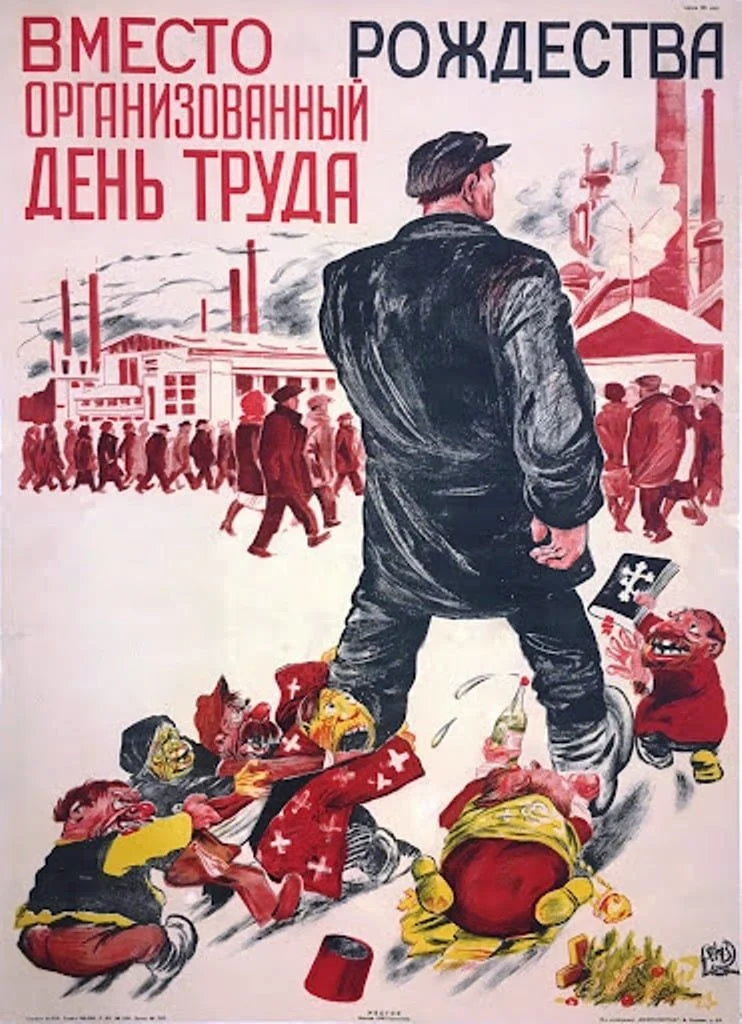
A century ago, in an effort to destroy Ukrainian distinctiveness and national traditions, the Soviet authorities imposed a whole system of new holidays and rituals. “Red Easter” and “Red Christmas,” New Year celebrations and harvest festivals, May 1 and May 9, March 8 and February 23, and ultimately November 7 were all celebrated with spectacular political performances, awards, and gifts for the loyal.
Yet all of this was invented, conditional, artificial, and falsified. The Soviet dictatorship spread its holidays through directives from above. It was a typical Russian propaganda technique. They would conceal negative facts, distort the truth, and produce a positive story instead.
It is no coincidence that all efforts aimed at decolonization, de-Sovietization, and the removal of Russian and Soviet symbols provoke furious anger among Russians: the political leadership, propagandists, occupiers fighting on our land, and so-called ordinary Russians alike.
“Decolonizers who know no history but are trying to climb onto a pedestal have decided to deprive Kharkiv residents once and for all of their memory of victory in the Great Patriotic War. Now they have gone so far as to abolish August 23 — the Day of the Liberation of Kharkiv from the German-Fascist invaders,” reads a typical message from Russian propaganda.
One of the strongest motivations among Russian nationalists is resentment that Ukrainians are abandoning shared, often mythical dates and events and choosing instead to embrace their own history.
“I believe that we are restoring justice and reclaiming what is ours. For many years, we were told that we had no history of our own, only a shared history with Russia, the Soviet Union, and the so-called cult of victory. They tried to show us: ‘Look, we fought the Nazis together; we share the same past.’ That is exactly why the process of decommunization and decolonization is so important.”
— Milla Denchyk, co-founder of the project Decolonization. Ukraine.
Traditions of Celebration
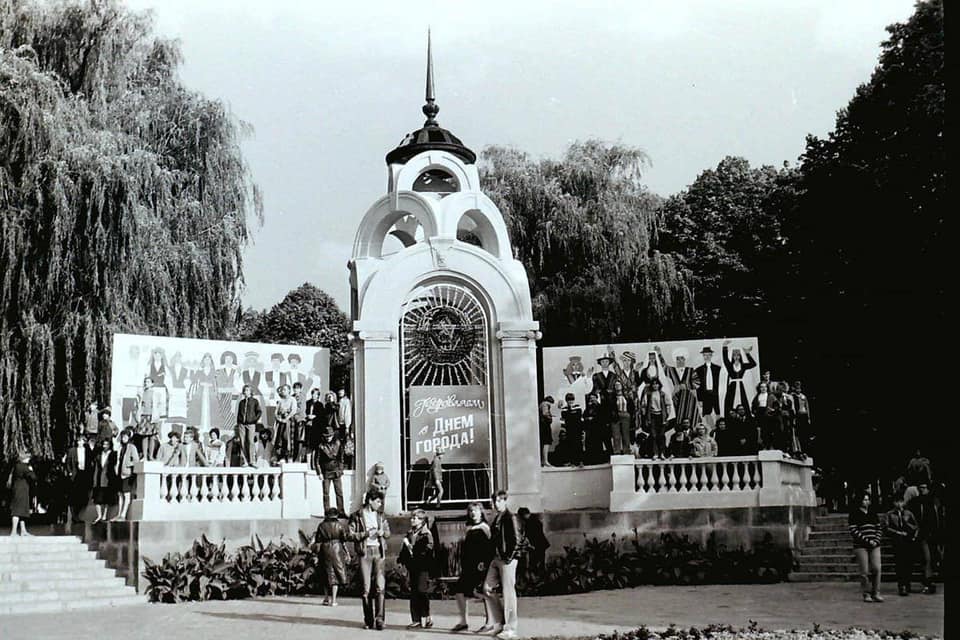
Speaking of traditions, August 23 may seem almost eternal to us, but City Day and the Day of Kharkiv’s Liberation were only merged during the years of Ukraine’s independence, beginning in 1997. One of the arguments for doing so was cost savings. In the 1980s and 1990s, however, City Day was celebrated on September 20 or on the Sunday closest to September 20.
September 20, 1987. Photo: V. Bysova.
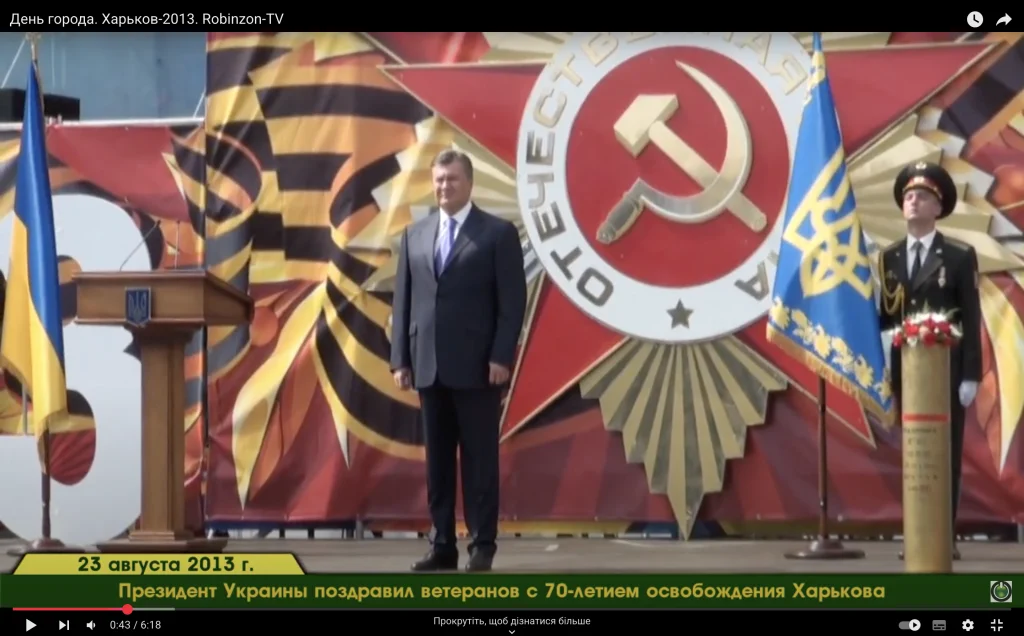
Many of us remember the pompous celebrations of City Day. The Kharkiv authorities organized grand concerts, handed out awards and gifts, and artists painted murals featuring Soviet actors, scientists, and military figures. For a long time, Kharkiv celebrated City Day according to Kremlin standards: with nostalgia for Soviet veterans’ movements, inviting stars from Russia to perform on a central square transformed into a dance floor, while largely ignoring Ukrainian performers.
The reason why the city authorities clung so stubbornly to the date of August 23 was linked to the political situation in Kharkiv after Ukraine gained independence. Throughout the 1990s and early 2000s, celebrations of City Day in Kharkiv were presented by pro-Russian political forces as a kind of antithesis to Ukraine’s Independence Day, celebrated the following day and treated as a secondary event.
One may recall that in greetings addressed to Kharkiv residents on the occasion of both City Day and Ukraine’s Independence Day, Kharkiv was always mentioned first. This was reflected in billboards along roads throughout the city, in local media coverage, in publications on websites, and even on postcards distributed by the city authorities through residents’ mailboxes.
This convenient format of celebration became established for years. In it, the “first capital” appeared to stand alongside the rest of Ukraine while simultaneously remaining somewhat apart, constantly emphasizing its uniqueness, superiority, and distinctiveness.
Beginning in 2004, yet another “auxiliary” holiday was added — the Day of the State Flag of Ukraine. It was celebrated even more modestly because it also fell on August 23 and was often not marked at all, or only formally. Against the lavish backdrop of City Day, observances of Independence Day, and especially Flag Day, were barely noticeable. It was as if the main holiday for Kharkiv residents had already taken place, while the national holidays were observed merely for reporting purposes.
In Search of Genuine Traditions
It is possible to change an inauthentic date associated with a major historical event. What is needed is political will. Consider the Soviet Victory Day. It was celebrated on May 9 in order to stand apart and emphasize a sense of difference. The Act of Unconditional Surrender of Nazi Germany was signed in Reims on May 7, 1945, with the participation of General Susloparov. However, Stalin refused to recognize the act and demanded that a new one be signed in Berlin, which had been captured by the Red Army.
The second Act of Germany’s Surrender was signed in the Berlin suburb of Karlshorst on May 8 at 22:43 Central European Time. In Moscow, however, it was already May 9, at 00:43. Through this unusual sequence of events, May 9 became the principal holiday of the USSR. Later the myth of Victory evolved into something resembling a cult.
Fortunately, Ukraine now commemorates May 8 as the Day of Remembrance and Victory over Nazism in the Second World War. Despite resistance, we have moved away from Soviet traditions and Russian victory cultism and joined the broader European tradition of marking this date. It is important for us to honor history — but let it be the history of Ukrainians who fought against Nazism during the Second World War, rather than a glorification of the Soviet totalitarian regime.
And if even May 9 could be reconsidered, perhaps the time has come to rethink August 23 as well.
A city day is often a matter of convention. Establishing the exact date of a city’s founding is difficult, and sometimes impossible. Discrepancies may span not weeks but years or even centuries. In the European tradition, celebrations are tied to the first recorded mention of a settlement. City Days are usually linked either to the earliest written mention in historical sources or to the earliest archaeological findings.
Why, then, should Kharkiv’s City Day be tied to an imprecise date from the twentieth century? According to current scholarship, Kharkiv was founded in 1654–1655 by Ukrainian Sloboda Cossacks. That was in the seventeenth century, as historian Dmytro Bahalii wrote. Yet even before that, the area was not empty. Archaeological excavations confirm that Cumans lived here, that Ruthenian princes were present, and that settlements existed on the territories of the Kharkiv and Donets hillforts.
Within the many layers of our city’s history, it is possible to choose a date that is neither Soviet nor Russian. Such a day should be connected to Kharkiv’s history, meaningful to its residents, and relevant today. Events tied to Soviet history, and all attempts to anchor city holidays to Russian imperial or Soviet history, are now unjustified and inappropriate.
A good example of decommunization and a return to genuine traditions is Poltava. Previously, the city celebrated its City Day on September 23 because the Soviet authorities designated that date as the day of liberation. But recently, residents began asking themselves whether the city had truly become free in 1943. The German occupiers were expelled, but the Nazi regime was replaced by a communist one. Today, Poltava celebrates City Day on June 29, the date of the city’s first mention in the Hypatian Chronicle. Residents selected the celebration date through an electronic vote and restored it according to the Revised Julian calendar.
The time has therefore come to raise this issue in our own city as well. Some argue that now is not the right time, claiming that there are more serious matters to address. Yet this is also a serious and timely issue, because war exists everywhere, including in the information sphere. It would become our ideological response to the enemy — one that is entirely appropriate.
The Position of the City Authorities and Ordinary Kharkiv Residents
Kharkiv Mayor Ihor Terekhov’s position on decolonization is as follows: he believes that the most important thing is to preserve the authenticity of our city.
In an interview with Ukrainian Radio Kharkiv, journalists asked the mayor about August 23 and whether it makes sense to change the date on which Kharkiv celebrates its City Day.
“We need to remember our history. No society has a future if it does not remember its past — that is an axiom. Today it is important to preserve traditions and honor those people thanks to whom we are alive today. Our grandfathers and fathers fought, and at the cost of their lives and health they gave us life. This must be remembered. Likewise, it is our sacred duty to remember our defenders who are protecting our land today,” Ihor Terekhov replied.
On August 23, 2024, we used the occasion to reflect on whether it is appropriate to celebrate Kharkiv City Day on this particular date. The discussion demonstrated that opinions are sometimes sharply divided and that a broad public debate is both necessary and timely. Residents’ comments varied. Some denied the presence of Soviet narratives in the choice of date. Others had grown accustomed to it and wished to preserve memories of pre-war times. Still others considered it inappropriate for City Day to commemorate Stalinism’s victory over Hitlerism.
The Cult of August 23: Why Now Is the Right Time to Change the Date of City Day
It is important to honor Ukrainians who fought in the Second World War. However, this should not contain elements that glorify the Soviet totalitarian regime. More important than the Soviet legend is historical truth, including the memory of the Red Army soldiers and officers who died here after reports of the city’s “liberation” had already been filed and a grand celebratory salute had been fired.
The entire society must be involved in this process. The issue needs to be explained, information campaigns conducted, and professional local historians engaged — those who work with historical sources and can provide verified information about the city. One of the significant events in Kharkiv’s history, meaningful to its residents, could be chosen instead.
“People often do not reflect on the origins of this date, even though it is one of many imperial markers on our territory. One can speak of liberation only when a period of occupation is followed by a period of freedom. Here, however, the Nazi totalitarian regime was replaced by the Stalinist totalitarian regime. Surely that can hardly be called ‘liberation.’
This event cannot truly be described as liberation, as the bringing of freedom or liberty. Immediately after the Red Army entered Kharkiv in September 1943, the People’s Commissariat for State Security of the Ukrainian SSR relocated to the city and launched mass repressions against residents who had spent nearly two years under occupation. Many people were convicted on unfounded charges. Anyone who had remained in the city during the German occupation automatically fell under suspicion,” explains Vladlen Maraiev, historian and co-author of the YouTube channel History Without Myths.
And this is indeed true: one totalitarian regime replaced another and systematically destroyed every manifestation of Ukrainian life in Kharkiv. The memory of that liberation carries both joy and happiness at the end of a time of terror, and pain and tears over immense losses. Liberation came at a terrible cost, paid for with blood and countless lives. It also brought the bitter realization that what had seemed like a victory resulted in the return of communist rule. Before the Second World War and after it, the communists destroyed expressions of Ukrainian national identity, humanity, aspirations for freedom, economic self-sufficiency, and even independent thought.
Andrii Paramonov notes that for more than ten years historians and members of the public have been speaking out, publishing articles, producing documentary films, and releasing books. They have been trying to convince the authorities that August 23 is a false date in the history of the region. It is not the day of liberation from Nazism, not the day the Battle of Kursk ended, and not a date that Kharkiv can genuinely celebrate as its City Day.
“Russian troops continue to destroy Kharkiv’s historical heritage. They cannot be forgiven for this. And the struggle against today’s Nazis, who hide behind the victories of their grandfathers, must take many forms. Kharkiv needs to wage an information war against the Russian occupiers right now and demonstrate that our Ukrainian city is turning away from them. We do not want another ‘liberation.’
The Russian invader must see that they are met not only by gunfire from our brave soldiers and defenders. They must understand that they will not be greeted with joy, much less with flowers. Not for living occupiers, and certainly not for dead ones. We must show that we are erasing everything that tarnishes Kharkiv and everything connected with the myths of Soviet times.”
— Andrii Paramonov
Moreover, August 23 is the European Day of Remembrance for Victims of Stalinism and Nazism. It appears cynical when Kharkiv is celebrating while the rest of the world commemorates the victims murdered by Stalin’s regime.
“We need to ask whether this was truly liberation or simply the replacement of one occupying power with another. The army fought against one occupier, but the state for which it fought was not Ukraine — it was an empire. Therefore, I believe a major information campaign is needed to communicate this to the people of Kharkiv. I think that, over time, we will move away from August 23 as the City Day of Kharkiv,” reflects Milla Denchyk.
“What is the point of celebrating the return of Soviet rule to the city? One possible option for Kharkiv would be February 27, the day when Russian special forces units that had broken into the city were destroyed. That is already our history — relevant and important,” proposes Vladlen Maraiev.
The time has therefore come to decommunize the City Day of our beloved Kharkiv. The city community should be involved in the process. The importance of change should be explained. Historians and local history experts should be invited to provide compelling and reliable facts. Then, as a community, we can choose a truly meaningful event from Kharkiv’s history to become the city’s official day of celebration.
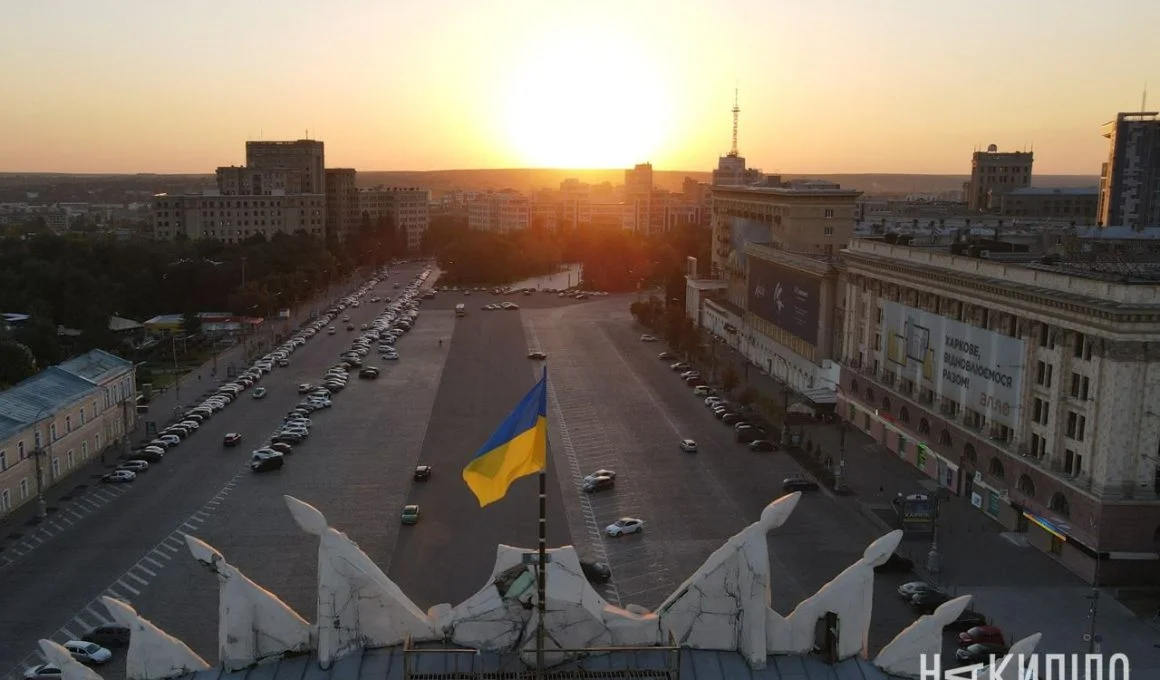
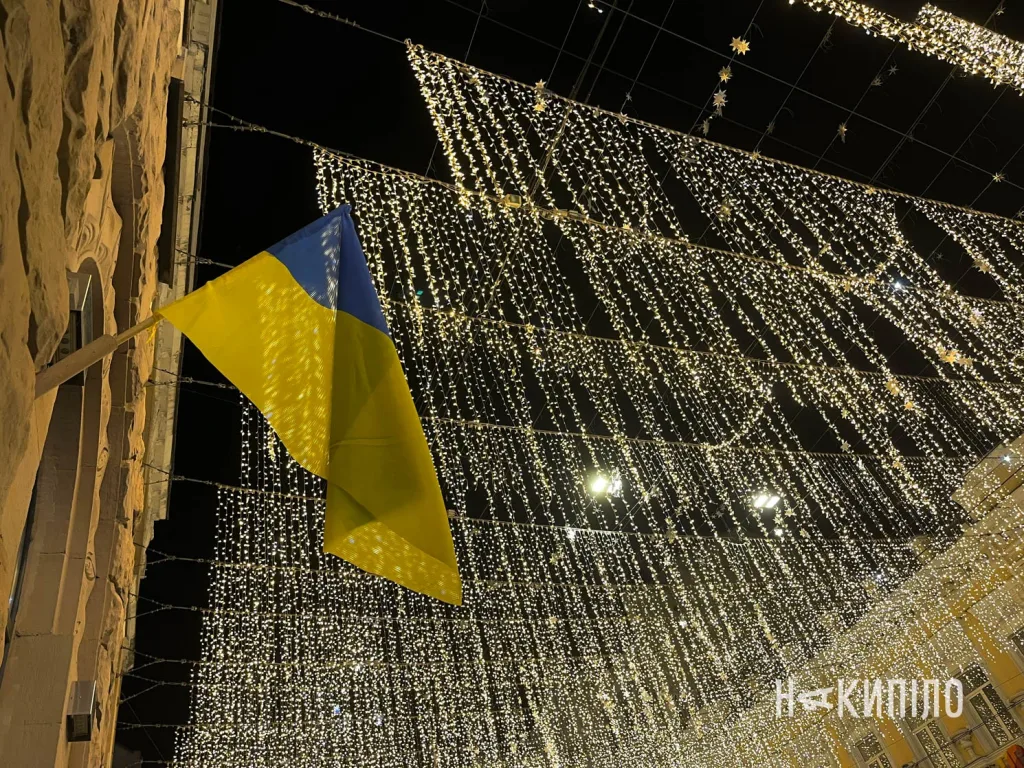
Kharkiv City Day, 2024. Photo: Ihor Leptuha.
Independent Journalism from Ukraine
Stories about war, culture, and people that shape Ukraine today. Support independent media and help us keep telling the truth.