Evacuation Under Fire: Why Sometimes It Is Too Late
Nakypilo
17 minutes
Media Nakypilo, together with Skhidnyi Variant, tells the story of evacuation efforts in the Kharkiv and Donetsk regions.
Since the beginning of the full-scale invasion, the number of civilian Ukrainian deaths has increased many times over. In just three months of fighting in Mariupol, various estimates suggest that between 20,000 and 100,000 people were killed. According to the UN Human Rights Monitoring Mission in Ukraine, 2025 saw the highest number of civilian deaths since 2022. The total number of civilians killed and injured in 2025 was 31% higher than in 2024 (2,088 killed; 9,138 injured) and 70% higher than in 2023 (1,974 killed; 6,651 injured).
Given the dangerous situation and the enemy’s advance, officials stress every day the importance of evacuating in time to protect people’s lives and health.
Evacuations from frontline communities in the Kharkiv and Donetsk regions continue every day: under shelling, drone attacks, and constant danger. Behind this work stands a complex system of coordination between military administrations, the police, the State Emergency Service, and volunteer organizations. At the same time, the key challenge remains not logistics but the decisions people make themselves: exactly when they agree to leave.
Evacuation in Numbers
Since 2022, civilians have been evacuated to safer regions of the country. In most cases, evacuation is voluntary. However, when the frontline approaches a particular community, the military administration may order the mandatory evacuation of children. In such cases, parents are required to leave as soon as possible together with their underage children.
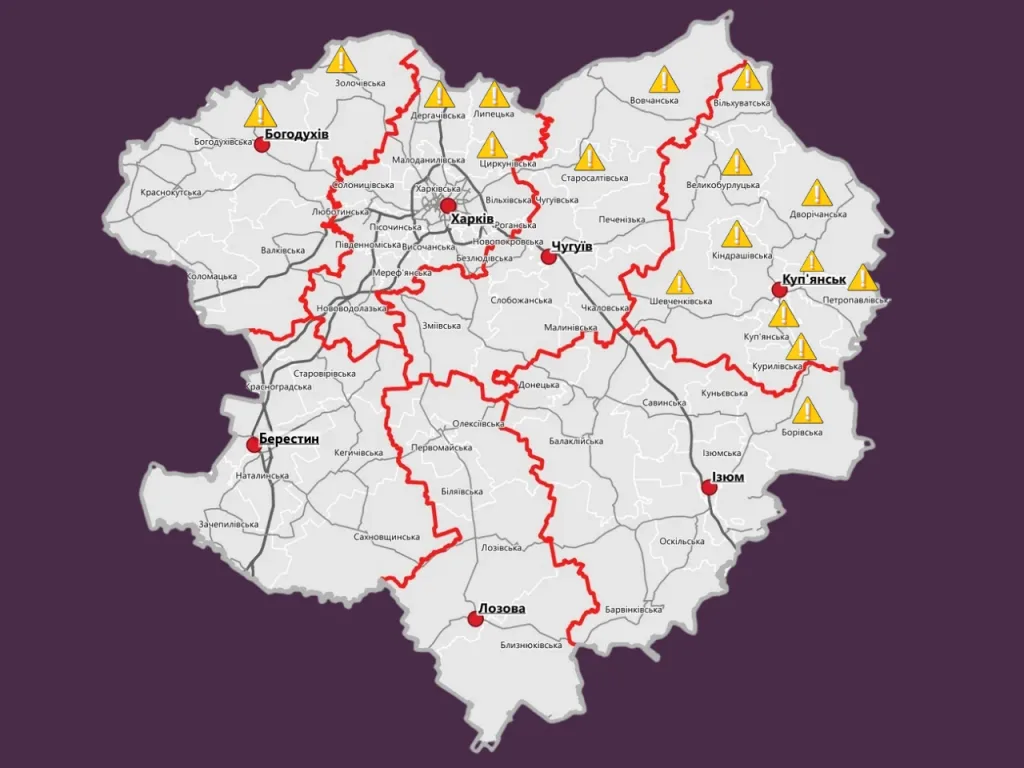
Mandatory evacuation is currently in effect in 14 communities of the Kharkiv region: Zolochiv, Derhachi, Lyptsi, Tsyrkuny, Vovchansk, Dvorichna, Velykyi Burluk, Vilkhuvatka, Kindrashivka, Kurylivka, Kupiansk, Petropavlivka, Shevchenkove, and Borova.
Areas under mandatory evacuation in the Kharkiv region.
According to the Kharkiv Regional Military Administration, 13,146 people were evacuated from dangerous areas in 2025, including up to 10% children—1,288 minors. In addition, 155 people with disabilities were evacuated.
Nearly 75% of all evacuees during the year came from the Kupiansk District. In September and December alone, 5,596 people were evacuated from the district, including 772 children. Overall, 9,849 people were evacuated from the district during the year, including 1,074 children.
From the northern direction (Bohodukhiv, Kharkiv, and Chuhuiv districts), 993 residents were evacuated, accounting for 7.5% of the annual total. Another 2,304 people (17.5%) were evacuated from the Borova community.
From the beginning of the full-scale invasion through early January 2026, a total of 1.3 million people had already been evacuated from the Donetsk region.
How Evacuation Works
Evacuation is not simply a bus or an armored vehicle arriving in a village and collecting local residents. It is a multi-layered process that begins with communication and ends with resettlement and assistance in safer regions.
Kharkiv Region
According to Ivan Sokol, Head of the Civil Protection Department of the Kharkiv Regional Military Administration, the region operates under a unified procedure. It includes collecting requests, approving routes, arranging escorts, transportation, and transferring evacuees to transit centers.
“In my opinion, everything is organized better here than in other regions of the country. We have full communication with the humanitarian sector. There is incredible cooperation with the National Police, the State Emergency Service, and local authorities. In practice, we coordinate the entire evacuation process across the region, from a person’s request onward. Requests can come through various channels: the 203 hotline or direct appeals to representatives of local authorities, the police, or volunteers. All information is processed daily: convoys are formed, teams arrive, and people are evacuated,” said Ivan Sokol.
Evacuation in the Kharkiv region. Photo: Viktor Pichuhin.
Evacuations remain particularly difficult in areas where the drone strike zone continues to expand. Under such conditions, every trip is planned as a separate special operation, taking into account the time of day, weather, and enemy activity.
“The kill zone is a relative concept; there is no officially declared distance in meters. Previously we said it was, conditionally, five kilometers (from the line of contact or the border — ed.). Now it has expanded to as much as 20,” said Yevhenii Khaustov, coordinator of the STEEL consortium.
Donetsk Region
Between 18 and 20 joint evacuation groups operate daily across the Donetsk region. These include teams from the National Police, the State Emergency Service, and the Patrol Police, all equipped with armored vehicles. Juvenile prevention officers (specialists responsible for protecting children’s rights and safety) and White Angels (a specialized police evacuation unit that evacuates civilians from hotspots) are mandatory members of these groups. When necessary, officers from the KORD special police unit are involved to provide cover for evacuation teams.
Evacuation from the Donetsk region. Archival photo: Skhidnyi Variant.
“Evacuation measures in the Donetsk region involve transporting local residents by road to the city of Pavlohrad in Dnipropetrovsk region and the city of Lozova in Kharkiv region. Free evacuation trains depart daily from there. Transportation is provided by the Angels of Salvation Charitable Foundation, the Proliska Mission, the East SOS Charitable Foundation, and the Save Ukraine charitable organization,” said Pavlo Chelpykh.
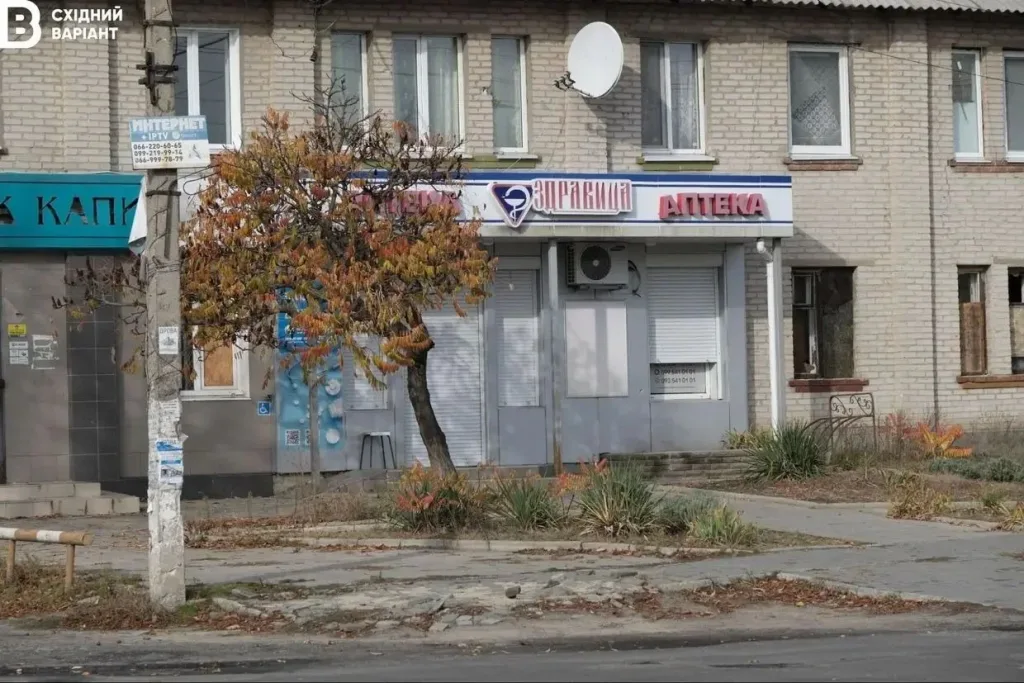
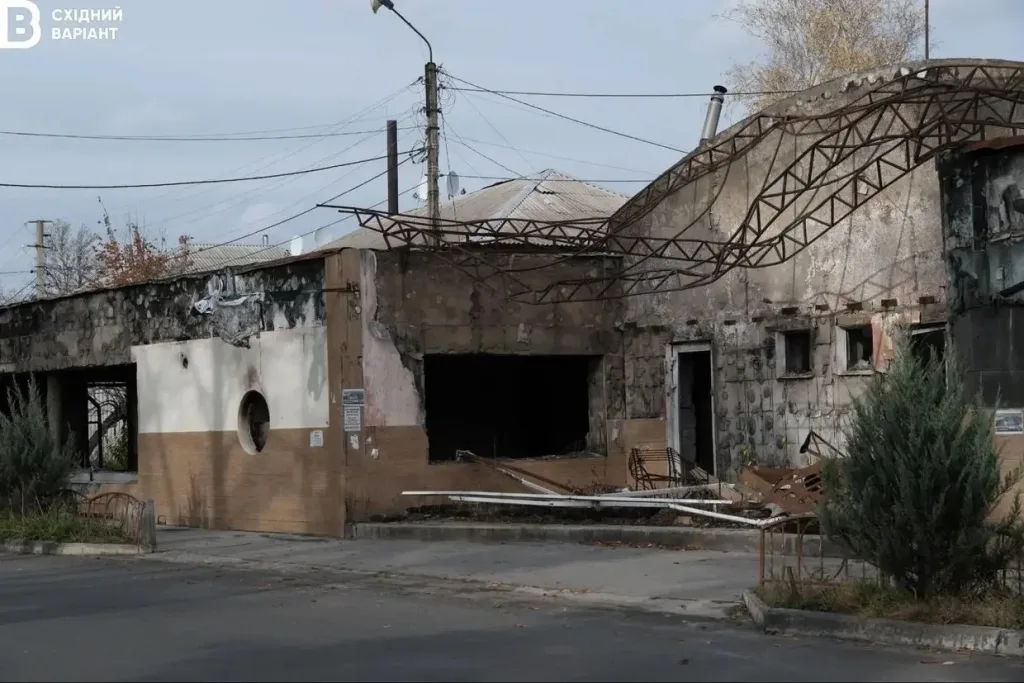
Sviatohirsk community. Photo: Skhidnyi Variant.
Police and the White Angels: Constantly Under Fire
The police are involved in most evacuations in the Kharkiv region. Viacheslav Markov, Assistant to the Head of the Main Directorate of the National Police in Kharkiv Region for Humanitarian Issues, emphasizes that saving as many civilians as possible is only achievable through cooperation with other services. Each participant contributes according to their capabilities and authority.
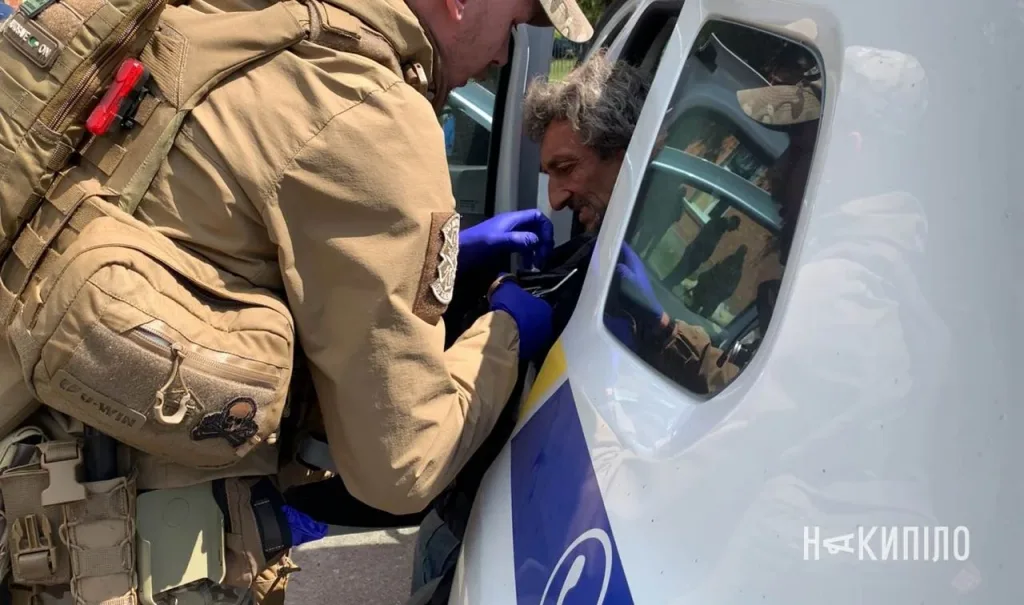
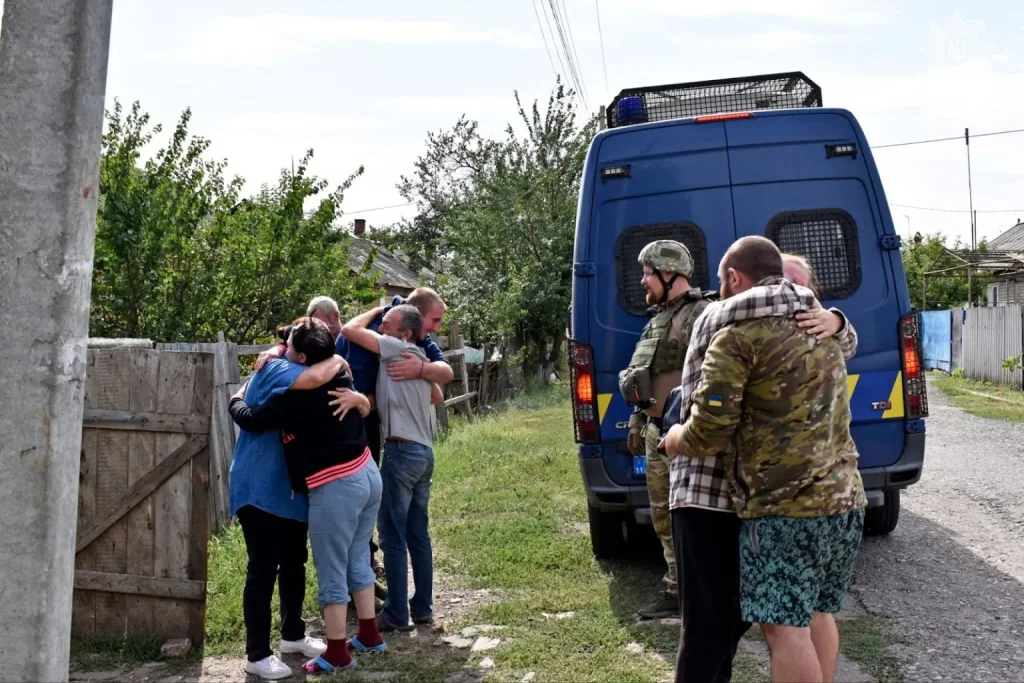
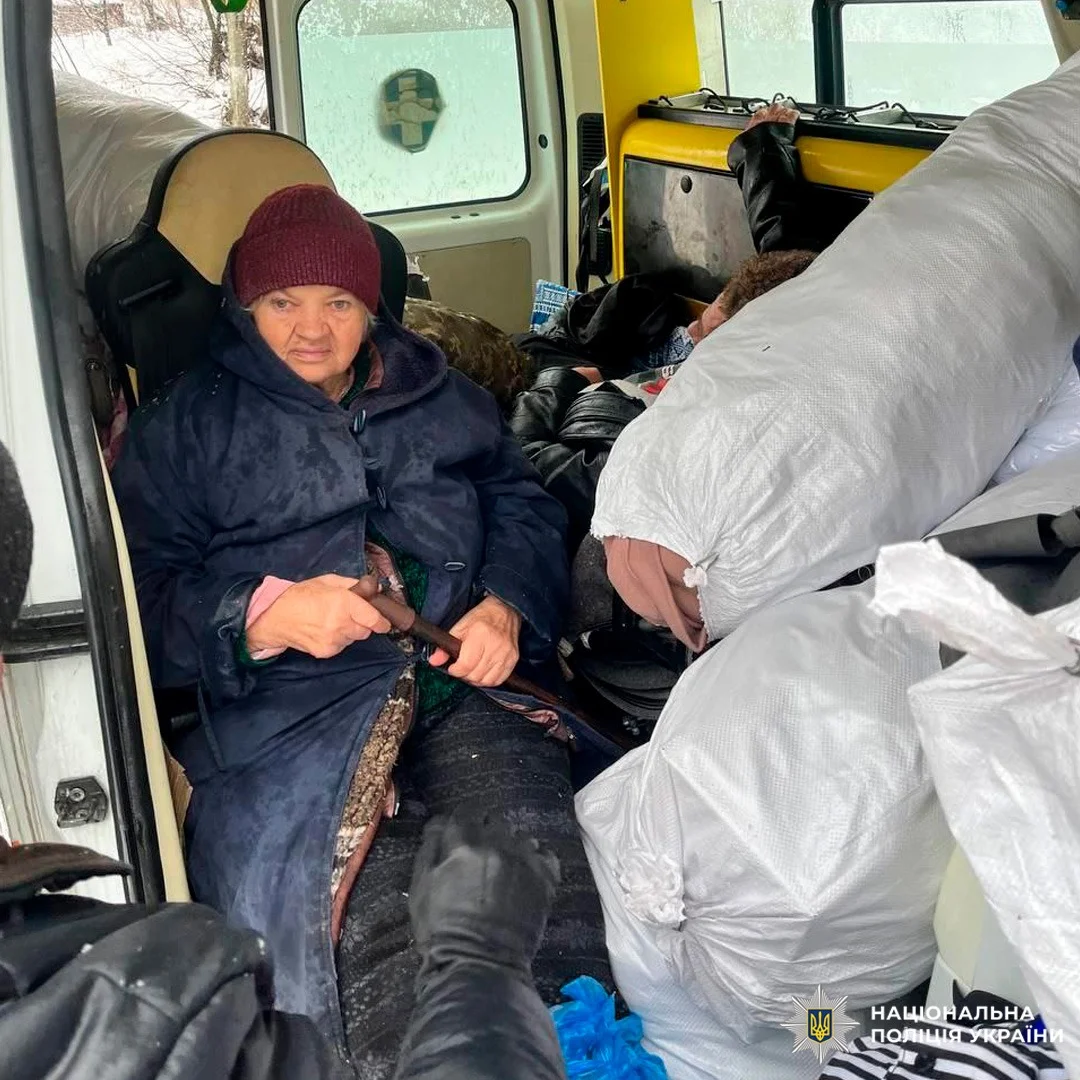
Police officers evacuated a married couple from the Borova community, January 2026. Photo: Main Directorate of the National Police in Kharkiv Region.
“The police have electronic warfare systems, anti-drone rifles, and armored vehicles. Naturally, we try to take on the most difficult evacuations. To be honest, there are no easy evacuations anymore. Every evacuation now is difficult and dangerous. Each stage requires a different approach. Some tasks can be performed by the National Police, others by the humanitarian sector. Humanitarian organizations are not allowed to use electronic warfare systems, and anti-drone rifles are out of the question. However, they have the desire to save lives,” said Andrii Vasianovych, head of STEEL’s armored transport team.
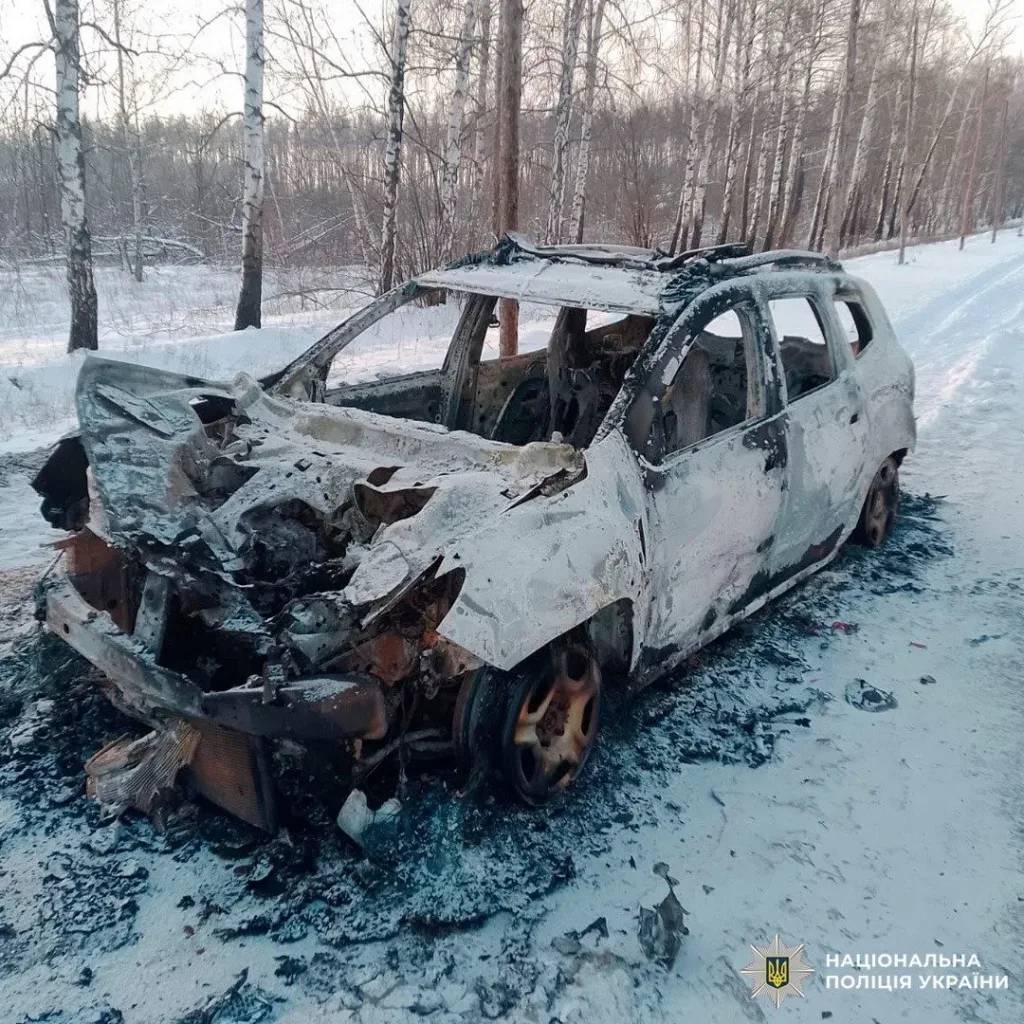
During the first two weeks of January alone, the White Angel unit carried out 19 missions and evacuated 31 people, including individuals with limited mobility. Evacuation crews repeatedly came under drone attacks, and their vehicles became direct targets of the enemy. The latest report about a destroyed evacuation vehicle came on January 14, when a Russian drone attacked police officers. They spotted the enemy UAV in time and managed to leave the vehicle before it was struck.
Destroyed police evacuation vehicle. Photo: Main Directorate of the National Police in Kharkiv Region.
At present, the White Angels are evacuating residents from the Lyman, Kostiantynivka, Sviatohirsk, and Kramatorsk communities in the Donetsk region. In previous years, they operated in Avdiivka, Toretsk, Pokrovsk, Myrnohrad, Bakhmut, Chasiv Yar, Soledar, Selydove, Kurakhove, and other localities.
The White Angels evacuation teams began operating in 2022 at the initiative of Ruslan Osypenko, Head of the Main Directorate of the National Police in Donetsk Region. Due to the heightened danger, ambulances, State Emergency Service personnel, and many evacuation teams do not travel to frontline towns and settlements. This work is carried out by the White Angels, who operate armored vehicles and use personal protective equipment.
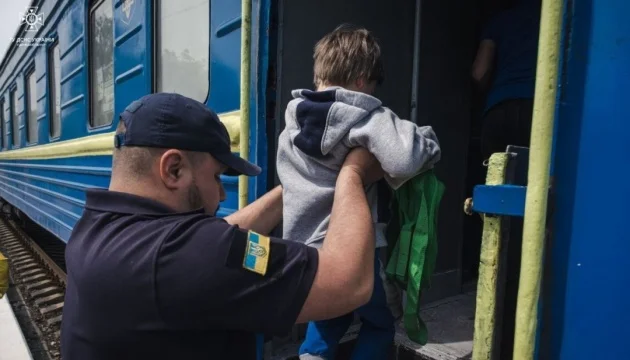
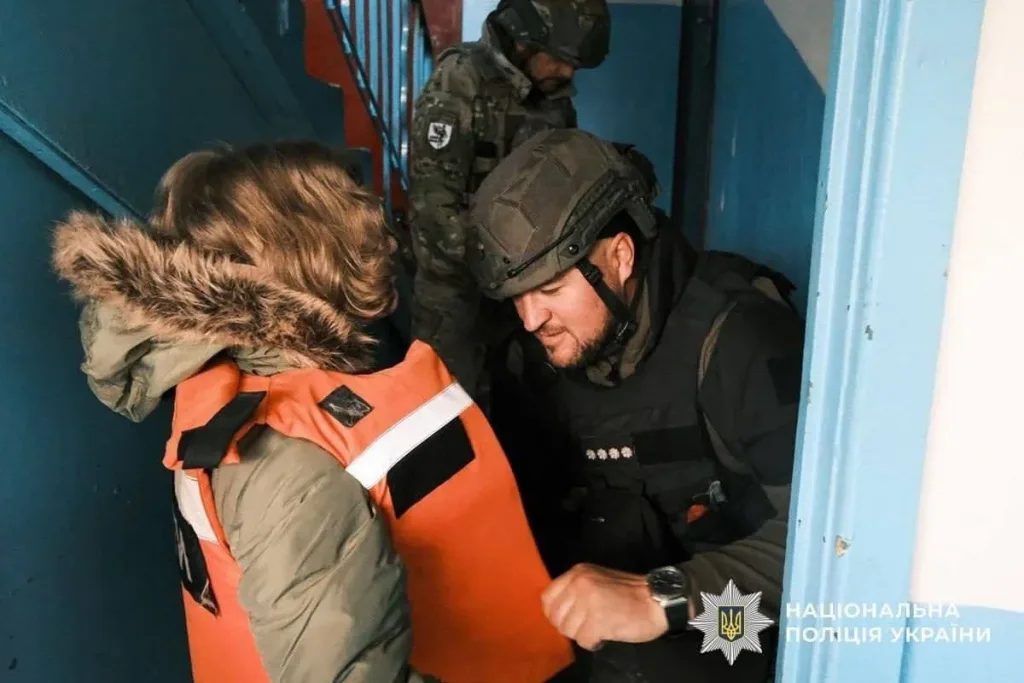
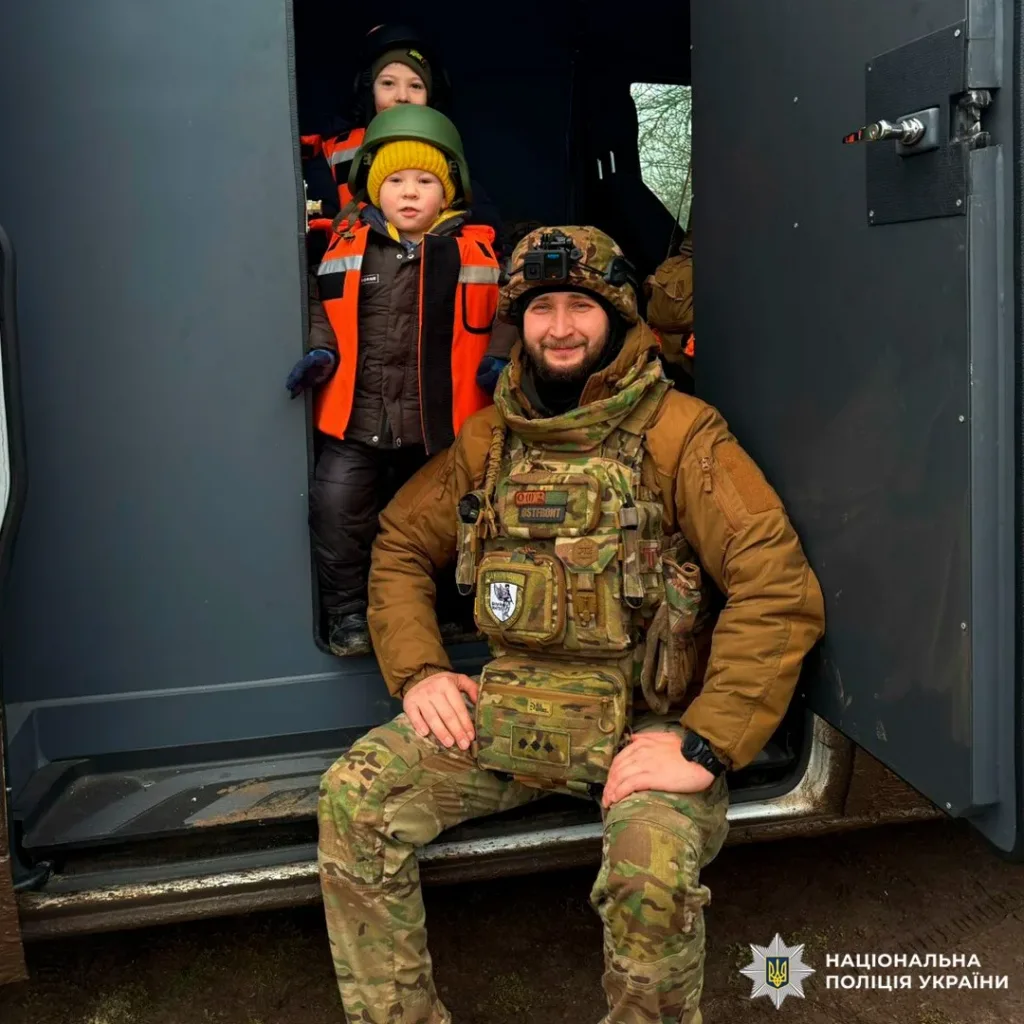
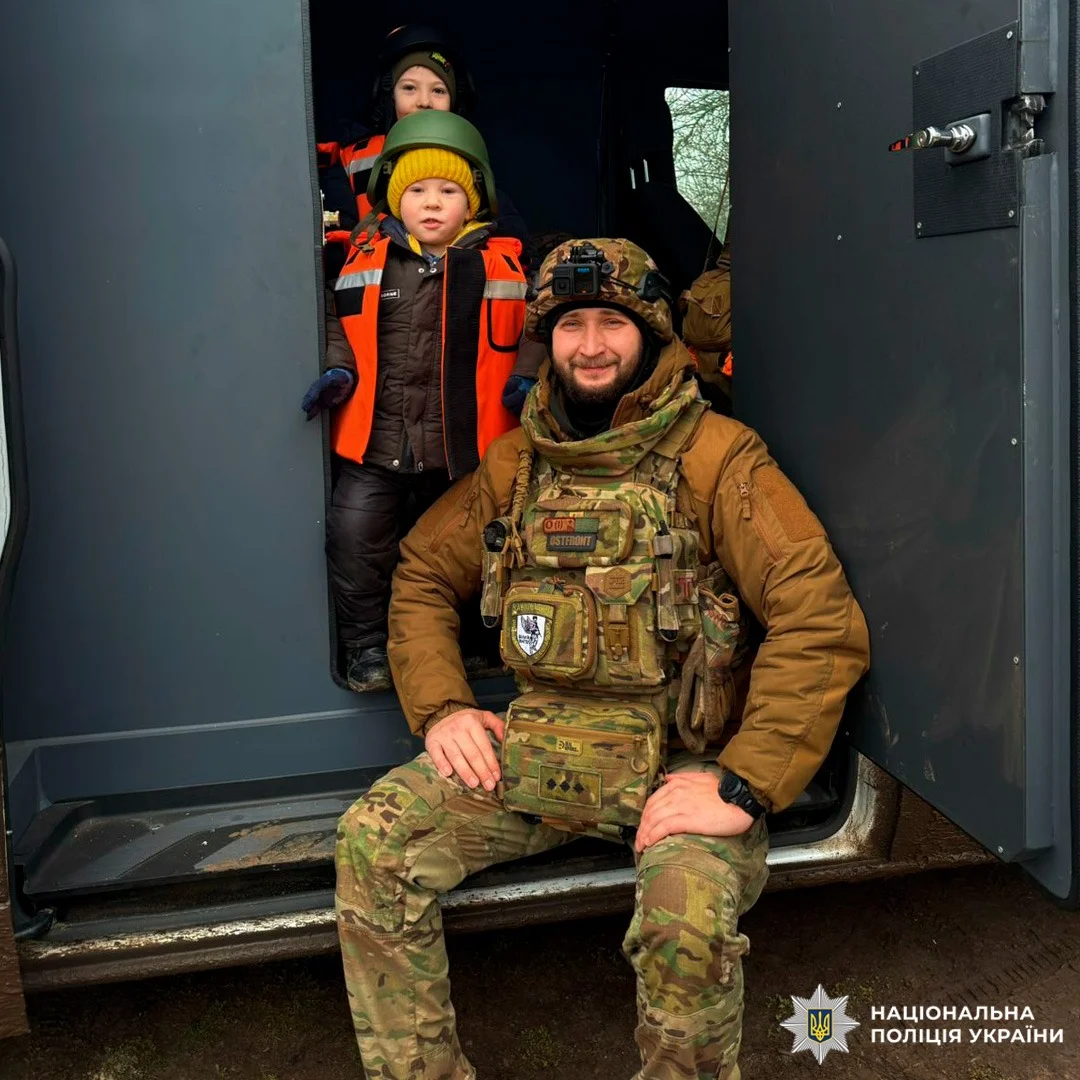
White Angels evacuate children from Druzhkivka. Photo: Ministry of Internal Affairs of Ukraine.
They respond to calls every day. Sometimes they complete two or three missions in a row before everyone is evacuated. Each team consists of five people: a commander, a senior inspector, two inspectors, and a police officer. The crew operates a specially armored vehicle that can accommodate up to 12 civilians, along with minimal personal belongings and even pets.
Evacuating people is becoming increasingly difficult, says Anastasiia Trubnikova, a police officer with the White Angels special unit. The Russian army is launching more and more drones, continuously improving them and finding ways to send them deep into the rear. Explosive-laden UAVs target civilians and do not stop even for evacuation missions.
Sviatohirsk community. Photo: Skhidnyi Variant.
The White Angels transport evacuees to one of the region’s shelters. There, people receive assistance and consultations regarding further resettlement. The evacuation of people with limited mobility and persons with disabilities follows a different procedure. In such cases, the White Angels transfer the individual to specialists from the Proliska humanitarian mission, who arrange placement in a care facility or hospital.
To register for evacuation, residents can call 102, contact charitable foundations, or call the regional administration’s hotline.
The Patrol Police of Donetsk Region also have evacuation crews and special armored response groups. Their roles differ somewhat, explains Kseniia Yatsen, Senior Press Officer of the Patrol Police Battalion in Kramatorsk and Sloviansk.
“Armored groups are special patrol police units that assist colleagues from the Main Directorate of the National Police in Donetsk Region in recording and documenting war crimes and shelling incidents, providing medical assistance, and conducting evacuations. There are also evacuation crews whose primary task is specifically the evacuation of civilians,” says Kseniia Yatsen.
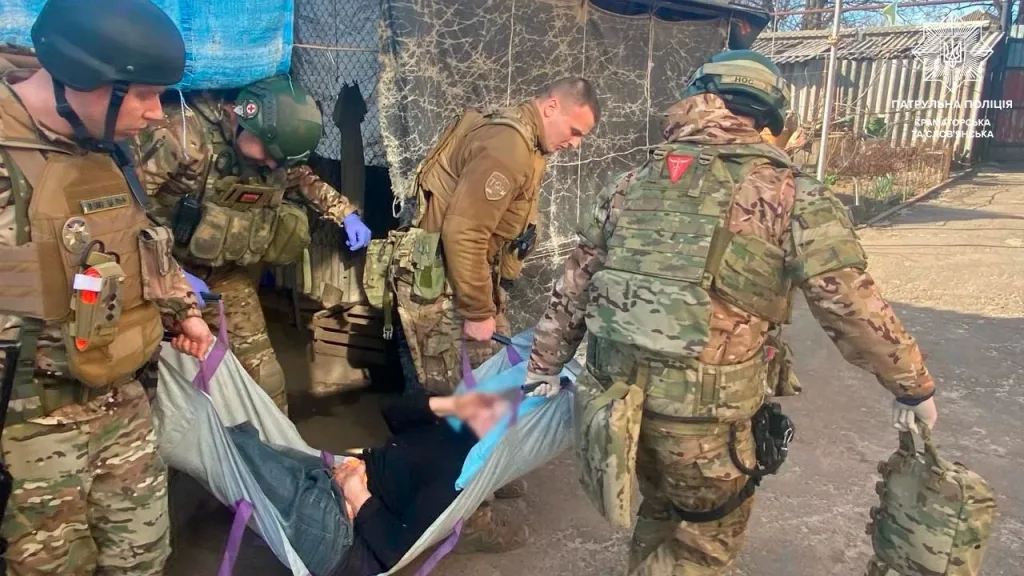
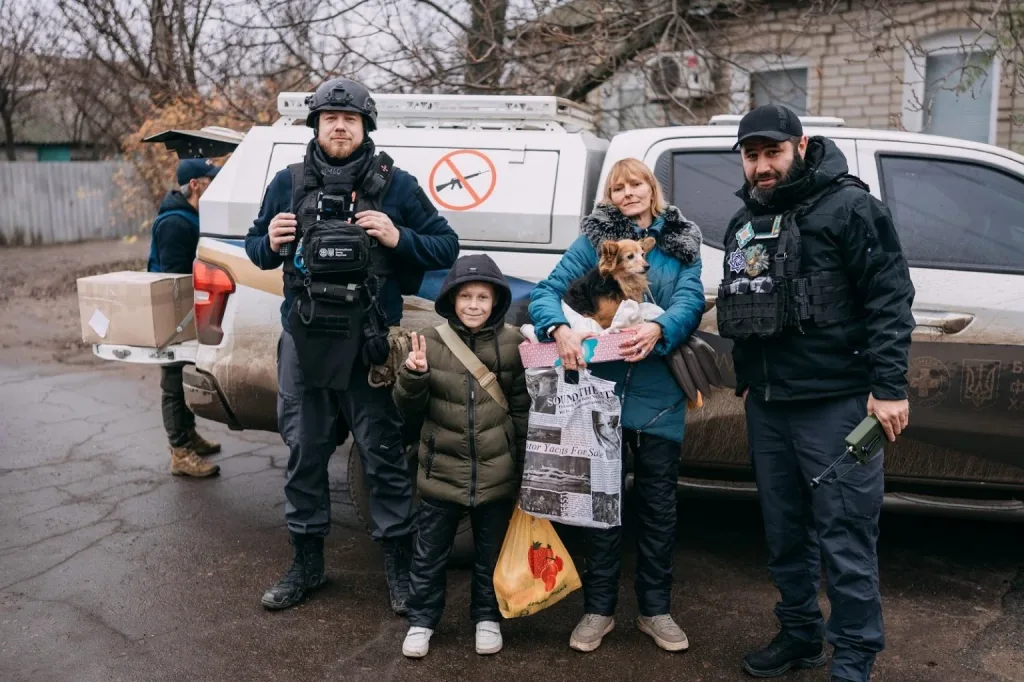
Photo: Press Service of the Patrol Police of Kramatorsk and Sloviansk.
Kseniia Yatsen explains that evacuation today is extremely dangerous. Remaining in frontline regions for too long is not advisable. Therefore, all operations must be coordinated and carried out quickly.
“There have already been multiple incidents in which enemy drones struck our vehicles during evacuations. Fortunately, there were no fatalities. Our specialists try to shoot down drones and evade them, but all of this is extremely dangerous. During evacuations, it is often the case that some colleagues help people load their belongings and get into the vehicle while another keeps watch on the sky,” says Kseniia.
Photo: Press Service of the Patrol Police of Kramatorsk and Sloviansk.
Evacuation crews transport people to transit hubs. From there, people decide where to go next: either by evacuation train to safer regions or to relatives and friends.
Since the beginning of the full-scale invasion, police officers in the Donetsk region have evacuated 5,060 people from danger, including 1,444 children.
People Stay Until the Very Last Moment
Evacuation from dangerous areas is difficult not only physically but also psychologically. Evacuation routes have now been established, and cooperation between institutions is functioning smoothly. According to Ivan Sokol, between 15 and 65 people are evacuated every day. At the same time, the main challenge remains residents’ reluctance to leave their homes, even when the situation becomes critical.
“The most problematic issue is people’s unwillingness to leave areas that are under constant shelling. This creates additional risks to the lives and health of volunteers, law enforcement officers, and State Emergency Service personnel. Every day we risk our lives, traveling to areas under constant, intense fire in order to save people,” says Ivan Sokol.
Yevhen Koliada, head of the Coordination Humanitarian Center charitable organization, talks about evacuation not in numbers but through human stories. His team works specifically with those who refuse to leave until the very last moment.
The scenario is often the same for those who refuse evacuation. People hope to wait it out, do not want to leave their homes, fear the unknown, or do not understand what will happen after evacuation. They decide to leave only when shelling becomes systematic and access to assistance is limited. That is why communication with residents is so important. We need to explain why evacuation matters both for them and for the military, whose efforts to destroy the enemy are hindered by civilians remaining in dangerous areas.
“It is extremely important to work in advance with settlements where mandatory evacuation may be announced any day. Consultation sessions should be held so that people know the procedure and who to call. This prevents us from wasting time during the evacuation itself. We enter places where people can no longer physically wait, where there is no communication, electricity, or water, and where drones are flying overhead. The worst situation is when a person finally agrees to leave, but it is already too late,” says Yevhen Koliada.
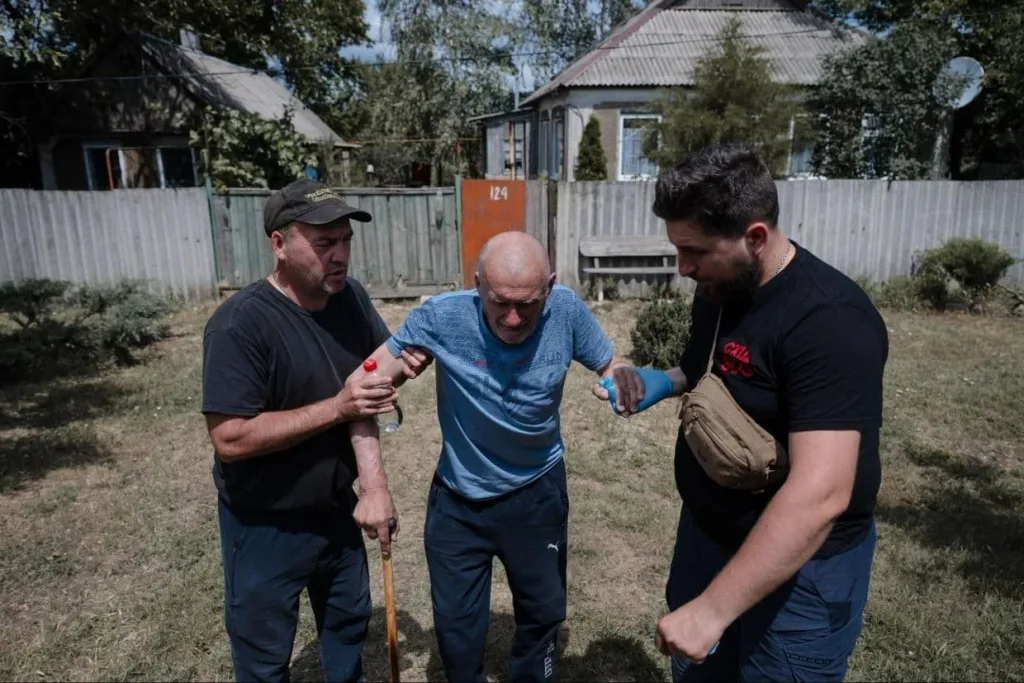
Another challenge involves people with limited mobility and families with children. In such cases, evacuation requires more time, specialized transport, and coordination with medical personnel, the police, and transit centers.
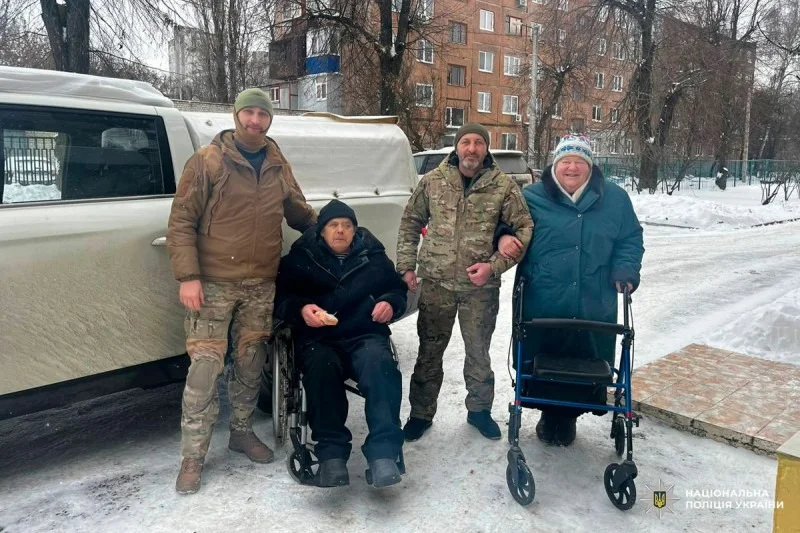
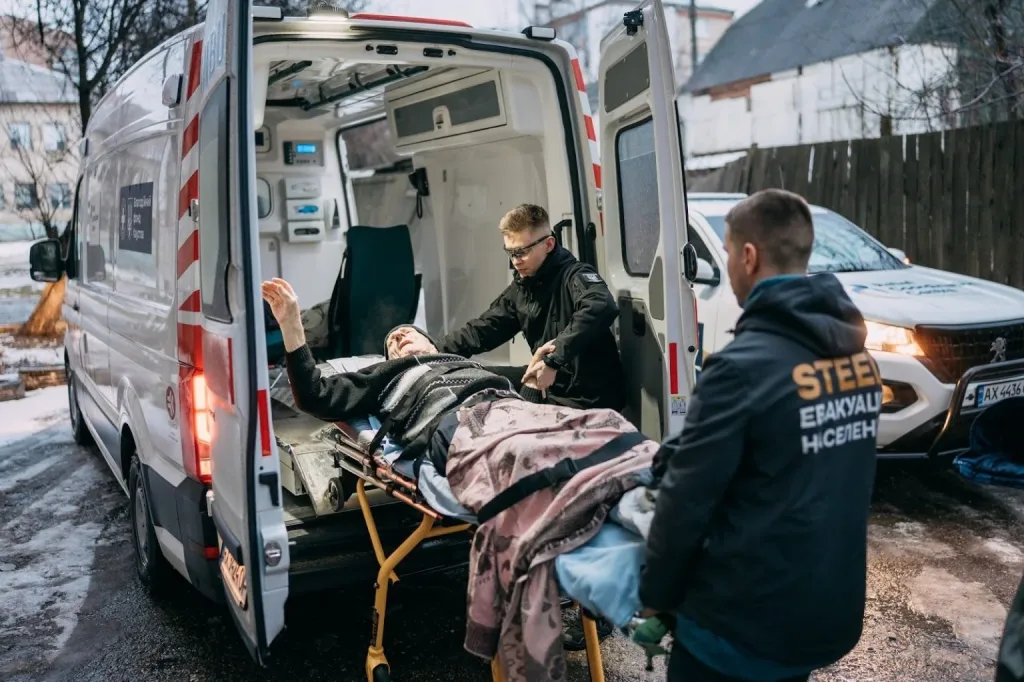
Volunteers evacuate an elderly man using specialized transport. Photo: Khaustov Charitable Foundation.
The Cost of Delay Is Life: Both for Those Being Evacuated and Those Conducting the Evacuation
The sooner a person decides to leave, the greater the chance of avoiding tragedy. By staying, people risk not only their own lives but also the lives of those who come to rescue them. That is why, Yevhen Koliada stresses, it is important not only to conduct evacuations but also to systematically explain that leaving is not a defeat—it is a way to preserve life.
“We transport people to transit centers, where multisectoral assistance is provided. After the transit center, there are many more operations that we carry out: accommodation, adaptation, reintegration into new communities, and logistics. All of this is provided free of charge. But everything must be explained individually because people have perfectly reasonable questions: what will happen to me, where will I go, what conditions will I live in?” says Yevhen Koliada.
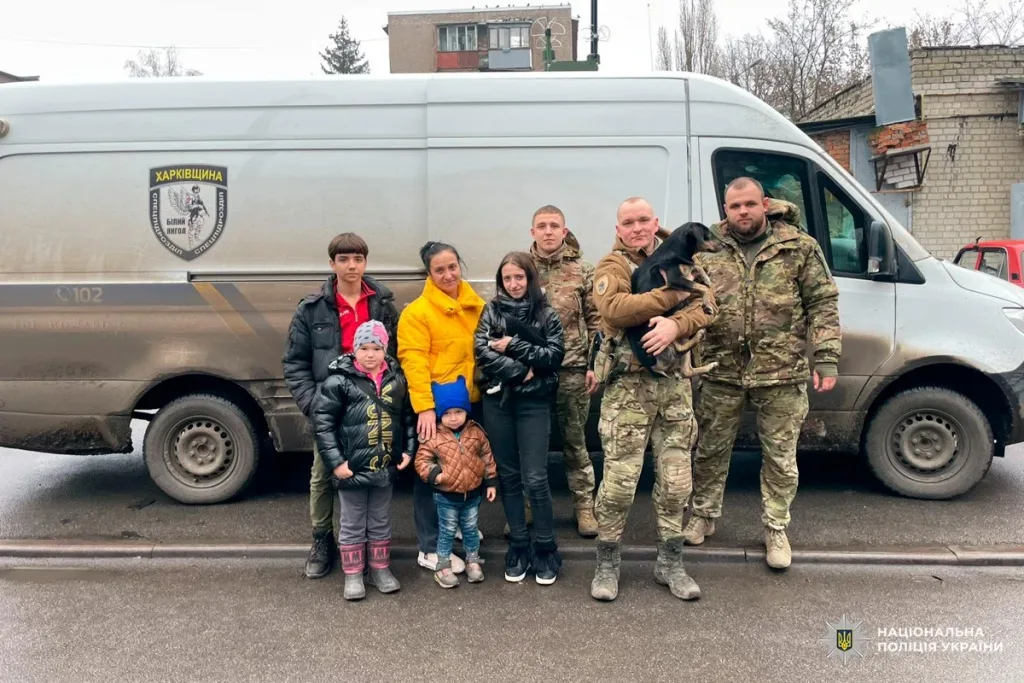
White Angel special police unit officers evacuate a family in the Kharkiv region. Photo: Main Directorate of the National Police in Kharkiv Region.
Armor from the STEEL Consortium
The STEEL consortium plays an important role in evacuation efforts. It unites nine volunteer organizations from across Ukraine. STEEL coordinator Yevhen Khaustov explains that the consortium operates along almost the entire frontline and takes responsibility for the most difficult areas. It is, in fact, a unique example of cooperation between international donors and Ukrainian volunteers.
“This is the first time the UN has funded the purchase of armored vehicles specifically for the charitable sector. They did not buy them for themselves but for volunteers directly involved in evacuations. Today, we work with organizations from Dnipro, the Donetsk and Kharkiv regions, and elsewhere.
In the Kharkiv region, we constantly work in the Kupiansk and Velykyi Burluk Districts, and we travel beyond Zolochiv. We go as far as possible while maintaining an acceptable level of safety. At the moment, we also have requests from the left bank of the Oskil River, but for obvious reasons, we do not go there. There is a 99.9% probability that we would not make it back,” says Yevhen Khaustov.
Photo: Khaustov Charitable Foundation.
Armored vehicles enable access to areas inaccessible to ordinary transport and the evacuation of people from territories facing heightened risk.
“I’ll use Kupiansk as an example. Recently, we picked up four residents who had been walking out of the city for two days. They reached the outskirts of Kupiansk and spent the night in a private house after asking the owners for shelter. The next day they made it to Hrushivka, where conditions were relatively safe. Right now, our crews do not get within 10–15 kilometers of Kupiansk,” says Yevhen Khaustov.
Within STEEL, evacuations are carried out by the charitable organizations Coordination Humanitarian Center and Path of Hope; the charitable foundations Khaustov, Unity and Strength, Path of Ukraine, Child New Generation, and Bridge of Unity; and the civic organizations Free Kharkiv Movement and Old Town Community.
A 24-hour evacuation hotline operates under the short number 203.
Evacuation by the Ukrainian Red Cross
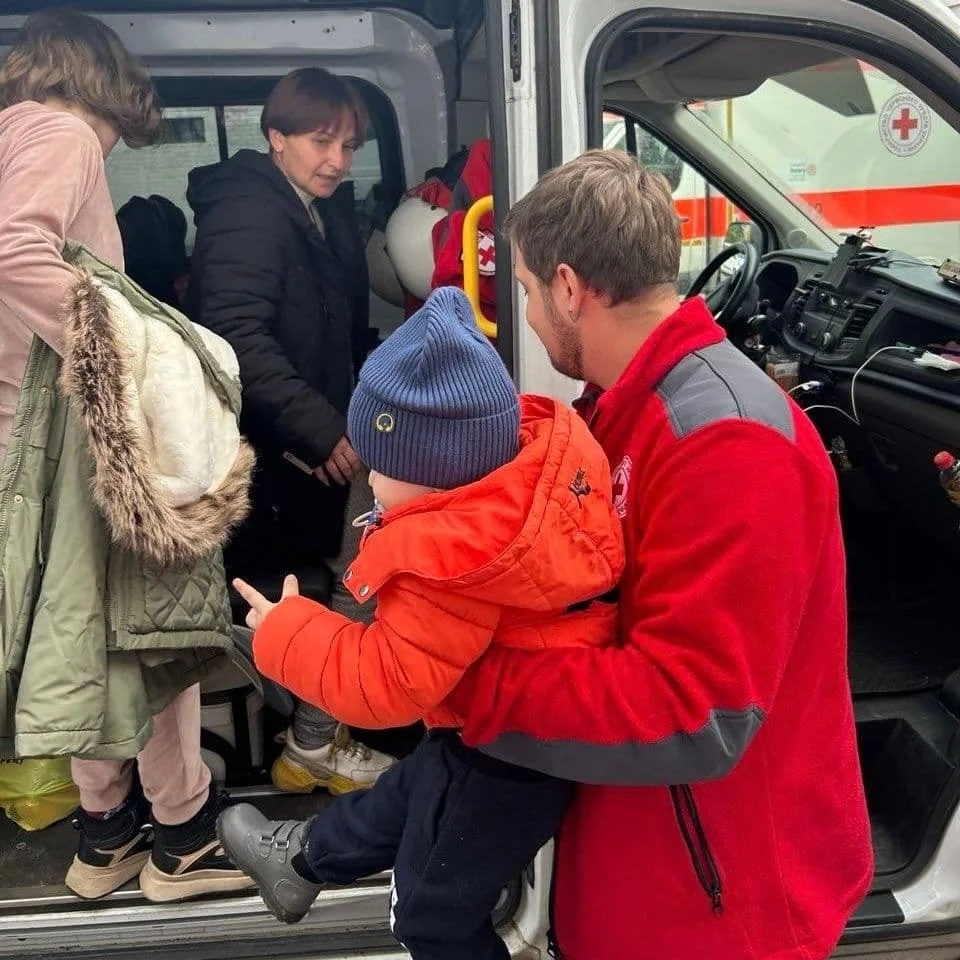
Since the beginning of the full-scale invasion, the Ukrainian Red Cross Society’s Rapid Response Units have been conducting evacuations in frontline areas of the Donetsk region. They also deliver humanitarian aid, transport wounded individuals to stabilization points and medical facilities, and provide emergency assistance. During this period, they have evacuated more than 326,000 people from the Donetsk and Luhansk regions.
The main mission of the units is to save lives and support people during their most difficult moments. This is how Kostiantyn Binkovskyi, commander of the Ukrainian Red Cross Rapid Response Unit in Donetsk Region, describes their work. Volunteers respond to shelling, fires, accidents, floods, and road traffic collisions. They assist with evacuations, provide first aid, and participate in search-and-rescue operations. The units consist of specially trained volunteers. For most of them, this is not their primary profession. In civilian life, they are doctors, psychologists, photographers, or students. Nevertheless, all of them undergo training in first aid, search operations, and rescue procedures.
Photo: Communications and Marketing Department of the Ukrainian Red Cross Society.
Today, one regional Ukrainian Red Cross Rapid Response Unit operates in the Donetsk region. Its volunteers are on duty around the clock and respond to calls together with rescuers, police officers, and representatives of military administrations. They help evacuate civilians to safer regions and accompany and transport people with limited mobility.
The Ukrainian Red Cross hotline in Donetsk Region operates daily from 8:00 a.m. to 5:00 p.m. and is ready to answer all inquiries at +38 (050) 814 85 45, or via Telegram using the same number at any time of day. All transportation services are provided free of charge.
Evacuation Teams of the East SOS Charitable Foundation
Since the beginning of the full-scale invasion, the East SOS Charitable Foundation’s evacuation teams have been transporting people out of frontline territories. The foundation prioritizes evacuating people with limited mobility and persons with disabilities. Its specialists work to find accommodation for them, provide social and medical support, and assist with restoring documents or obtaining state benefits.
During an evacuation carried out by the East SOS Charitable Foundation. Photo: Viacheslav Ratynskyi.
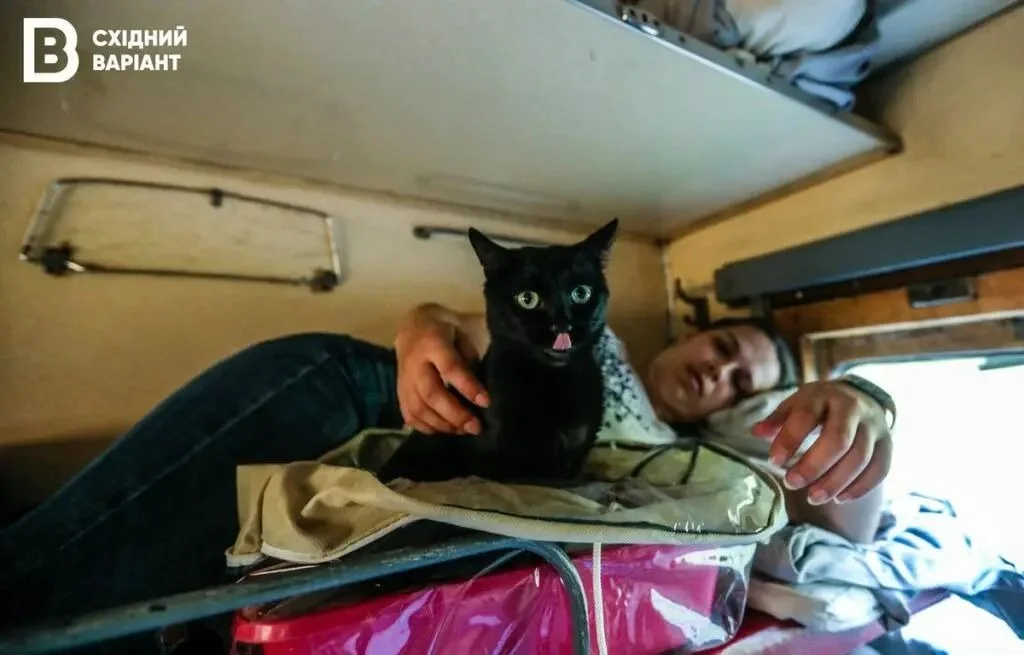
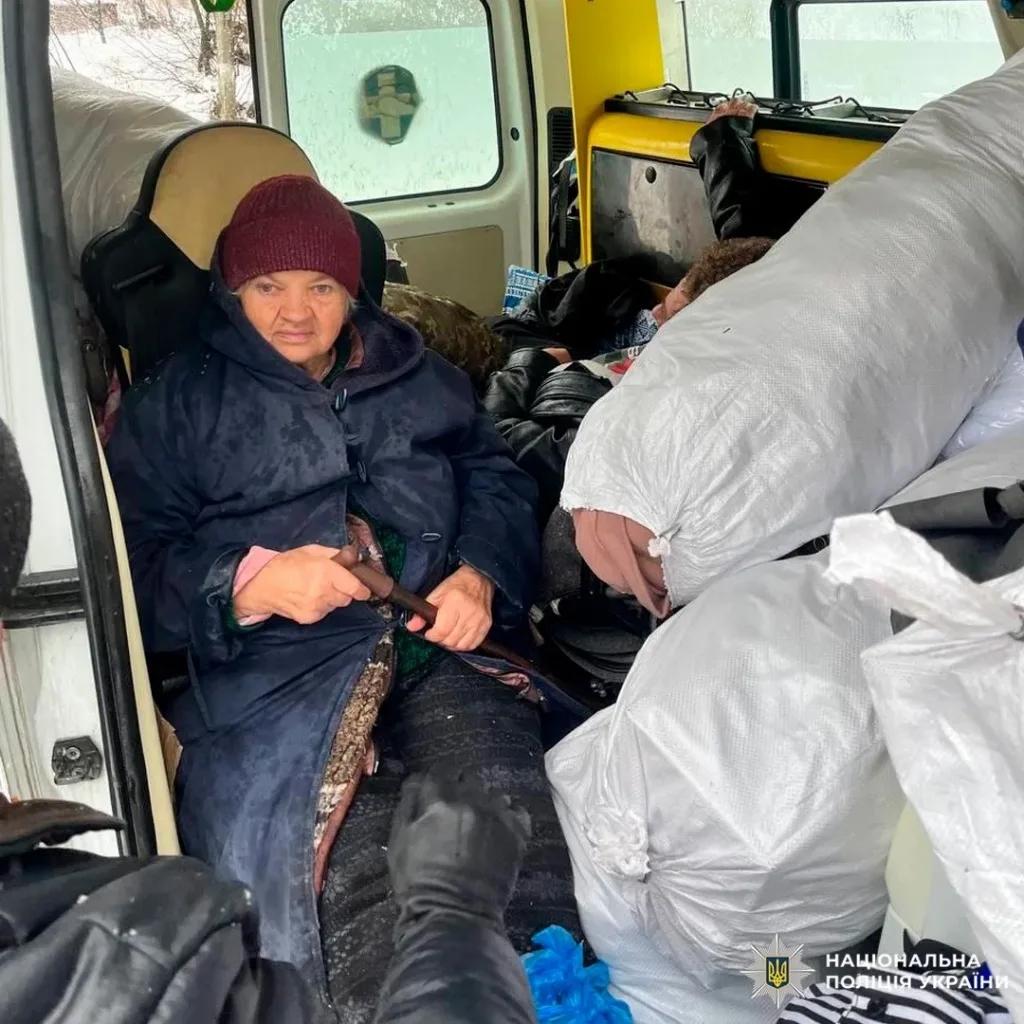
Typically, people leave home carrying two or three large bags containing only the essentials. If a family has pets, says Roman Buhaiov, evacuation teams take them without hesitation. Moreover, volunteers repeatedly emphasize that pets must not be left behind in danger zones. Over the years, East SOS buses have transported not only cats and dogs, but also parrots, rats, guinea pigs, chickens, and even goats.
Sometimes, evacuation requests are submitted by close relatives because mobile communication is often unavailable in frontline settlements. In such cases, arrangements and clarifications are coordinated through family members, with every effort made to determine the meeting point as accurately as possible.
East SOS volunteers stress that evacuation in the Donetsk region is becoming increasingly difficult due to constant shelling and ongoing combat operations. That is why they continue to remind people again and again: it is essential to leave in time and not postpone the decision until the last possible moment.
Where to Seek Evacuation Assistance in the Kharkiv Region
Short number 203. This hotline has been operating since the autumn of 2025 and is currently the primary evacuation hotline. It operates 24/7. Requests (either personal or submitted through relatives) are accepted from the frontline areas of the Kharkiv, Donetsk, Dnipropetrovsk, Zaporizhzhia, and Sumy regions.
Police hotline 102. Callers should provide their address, the number of people to be evacuated, information about pets, and other relevant details. The operator will process the information and provide the specific date and time when residents must be packed and ready to leave.
Phone number 0 800 33 92 91. This is the former hotline number of the Coordination Humanitarian Center. Calls can still be made to this number.
In addition to accepting evacuation requests, operators provide consultations regarding assistance available at transit centers, accommodation for internally displaced persons throughout Ukraine, and opportunities to receive humanitarian, psychological, legal, or administrative support.
If mobile communication is unavailable, residents can contact the head of their settlement or the local administration. Officials will pass the information to the Coordination Humanitarian Center and later inform the person of the pickup time and location.
This publication was created within the framework of the Institute for War and Peace Reporting (IWPR) project “Strengthening Public Oversight,” funded by Norway. The editorial team of Nakypilo media outlet bears sole responsibility for the content of this publication. This material cannot in any way be considered to reflect the views of IWPR or the Government of Norway.
Independent Journalism from Ukraine
Stories about war, culture, and people that shape Ukraine today. Support independent media and help us keep telling the truth.