“It’s hot, humid, and there’s barely any oxygen”: how a stabilization point operates in the Kharkiv region
Nakypilo
17 minutes
by Anna Miasnykova
A stabilization point. The Vovchansk direction. Here, every day, doctors and nurses from the medical company of the 113th Separate Brigade of the Territorial Defense Forces help wounded soldiers. We spent 12 hours with the stabilization team, standing watch outside the operating room with a critically wounded man and hoping that the medics would manage to save his life. We saw mutilated bodies, spoke with soldiers, slept for three hours (and the medics even less), and enjoyed incredibly delicious borscht made by a local cook.
What kinds of injuries do soldiers most often sustain? How do medics cope with such an intense pace of work? What do they dream about? How do they decompress after their shifts, and do they joke with patients? Read about all this in our report.
A space that holds life
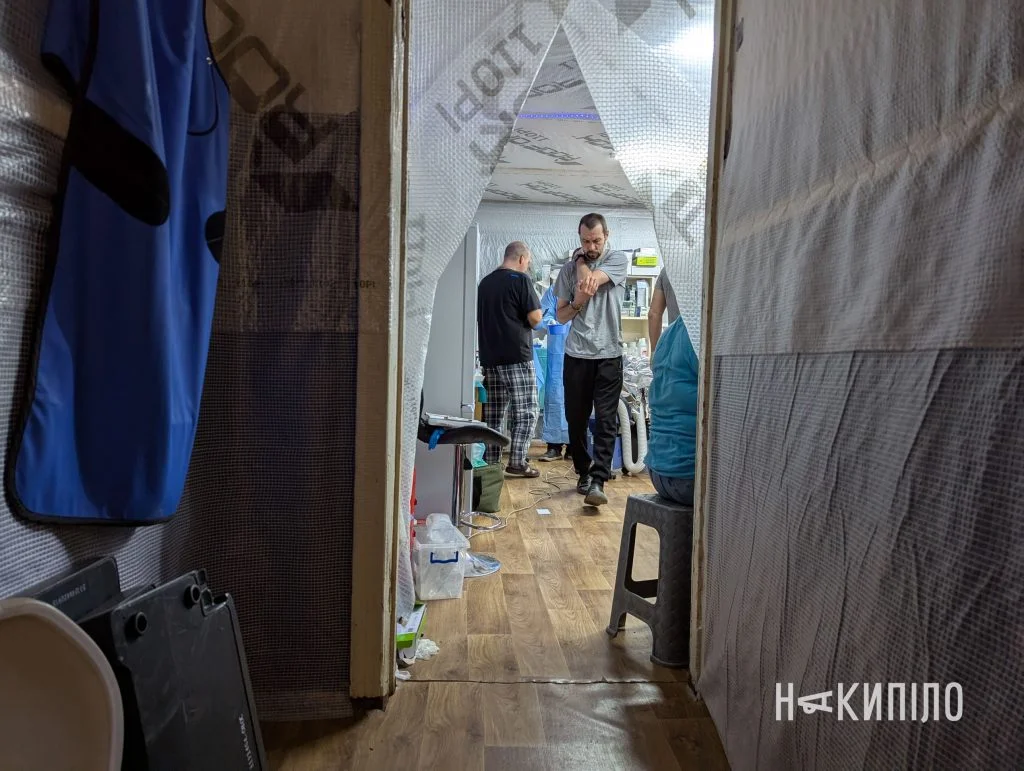
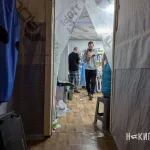
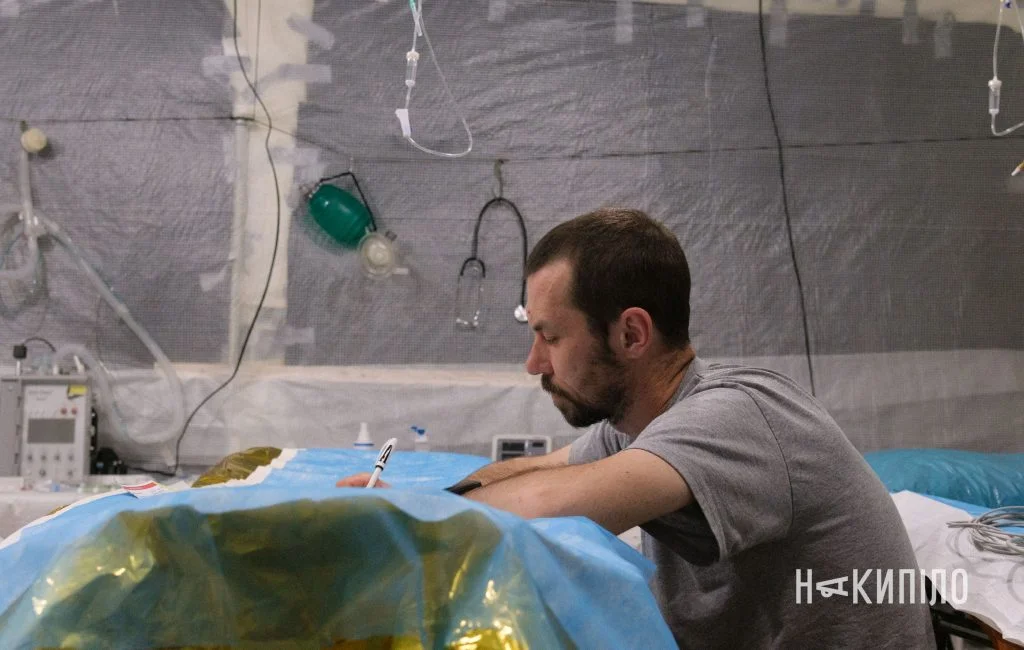
Inside the stabilization point, there is an entire micro-universe, where each room serves its own function. Everything is here: from fully equipped operating rooms to a dining area and a modest place to sleep, where medics can rest for at least an hour between patients. Inside these rooms, it is difficult to keep track of time without a clock: artificial light replaces sunlight.
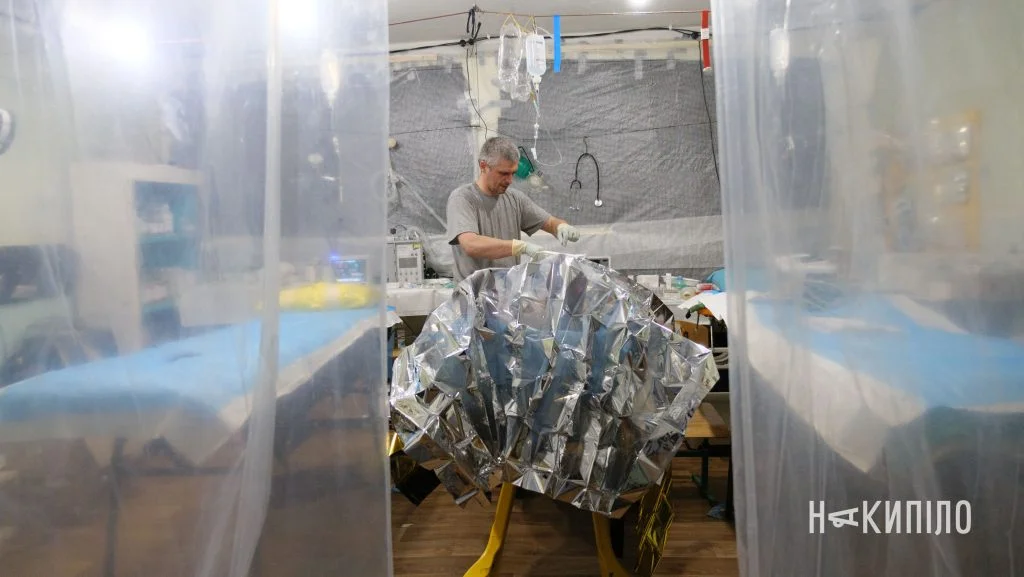
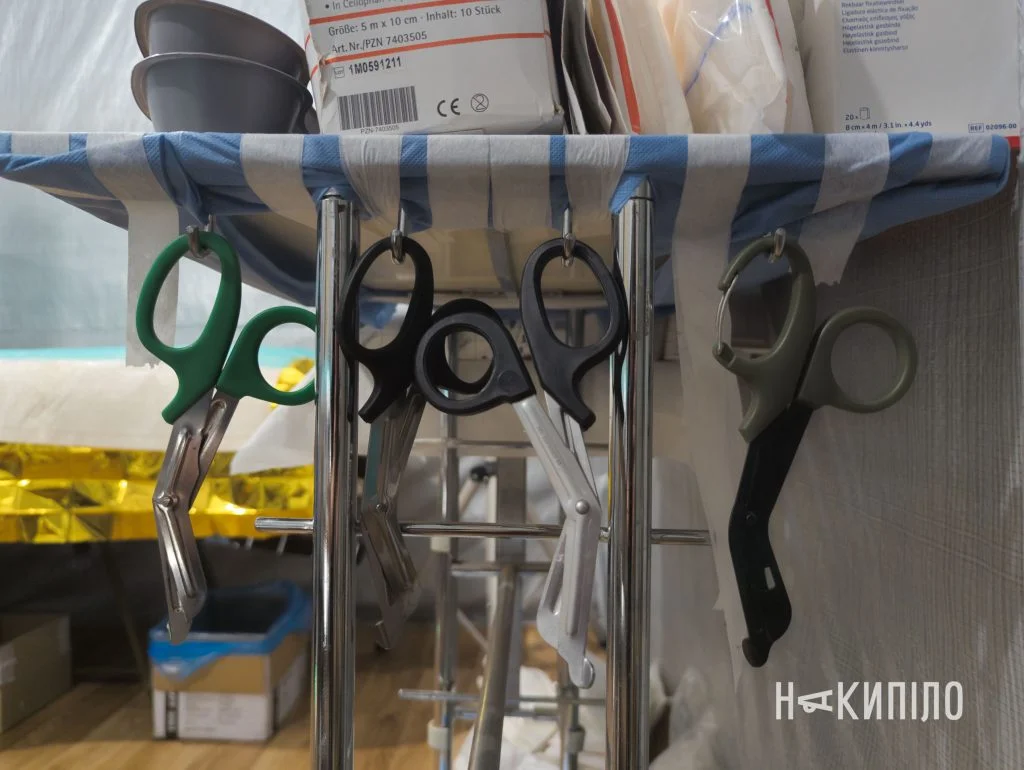
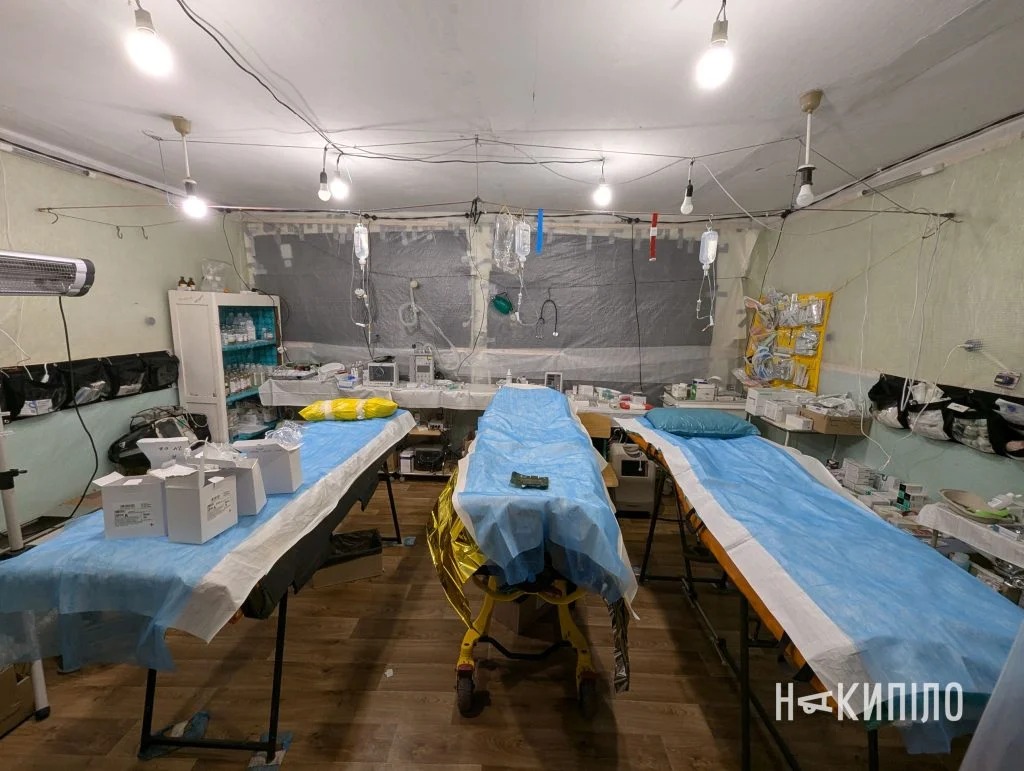
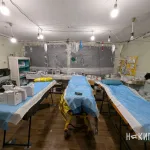
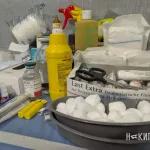
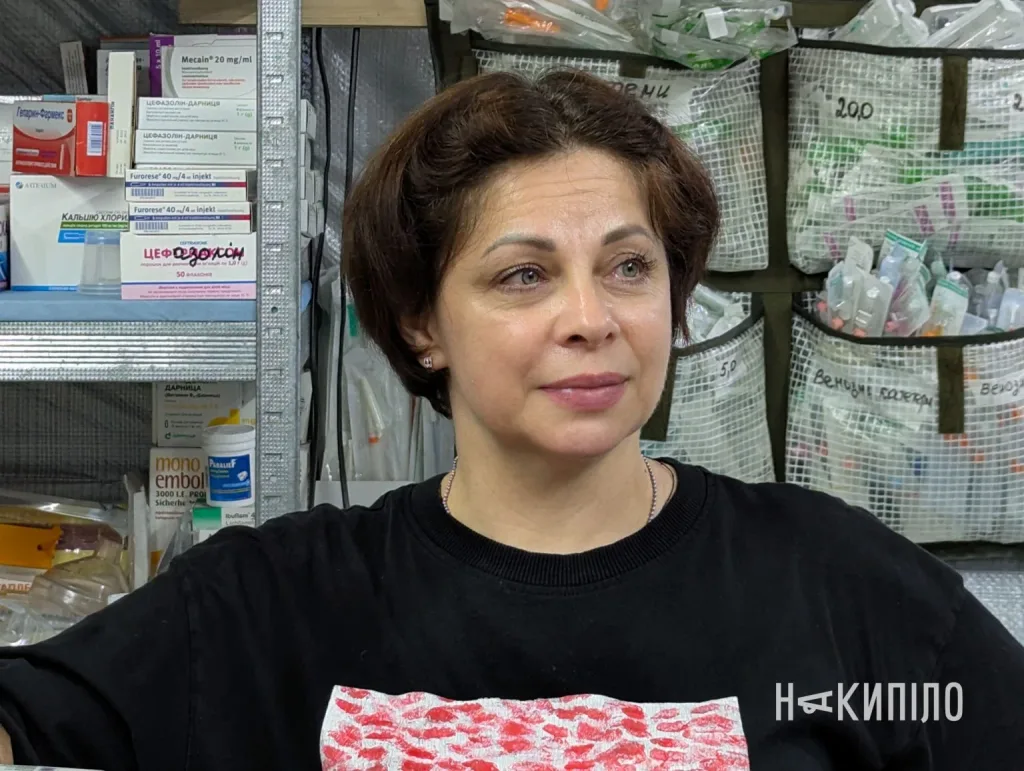
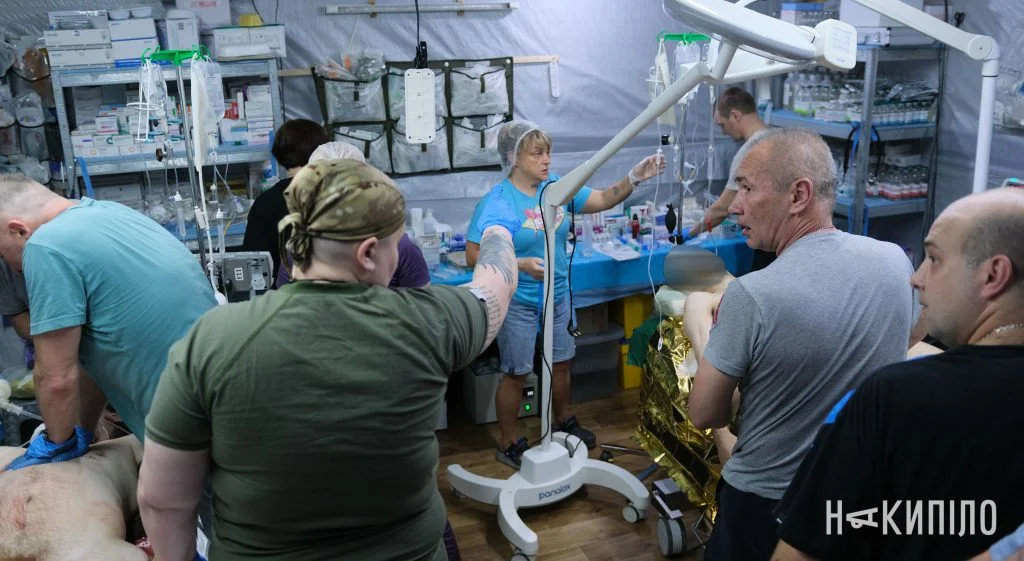
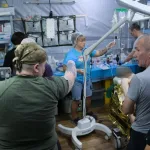
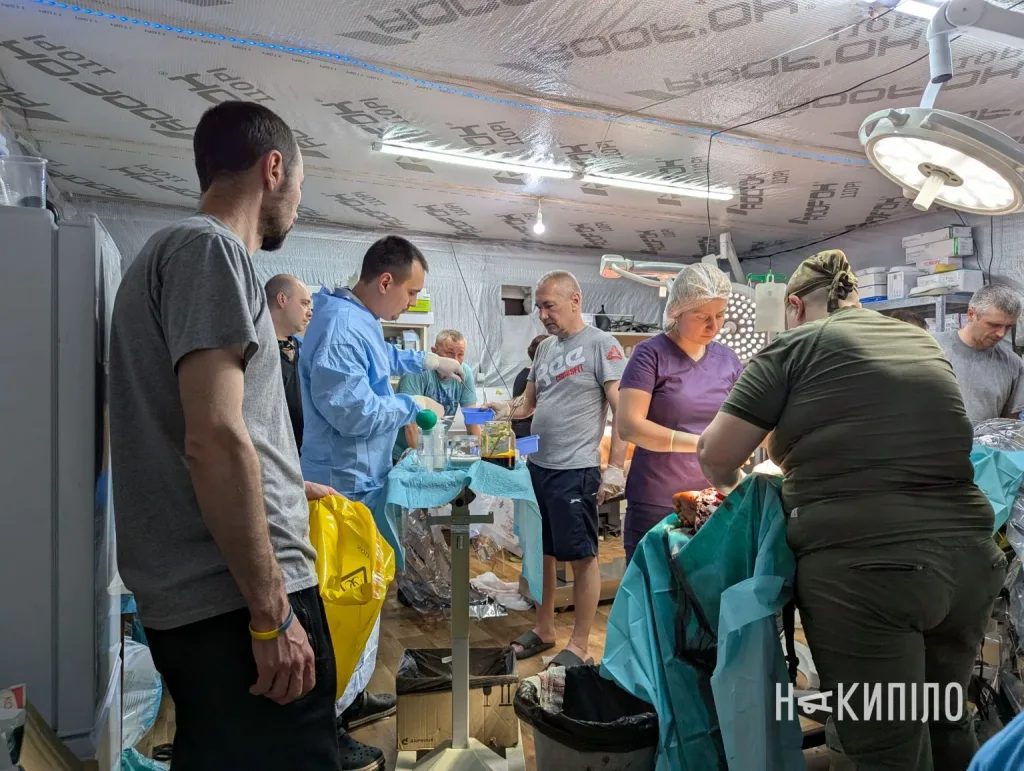
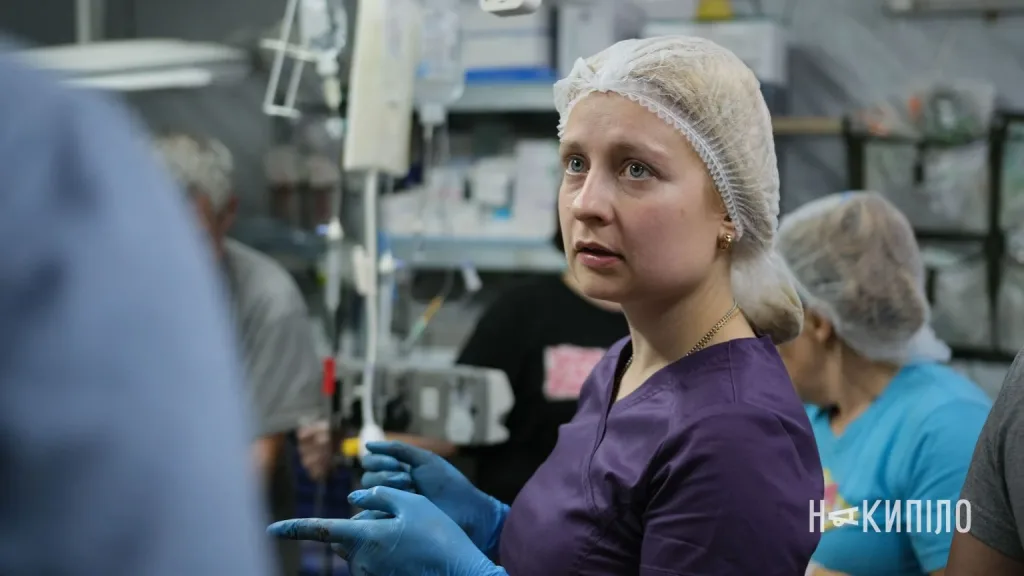
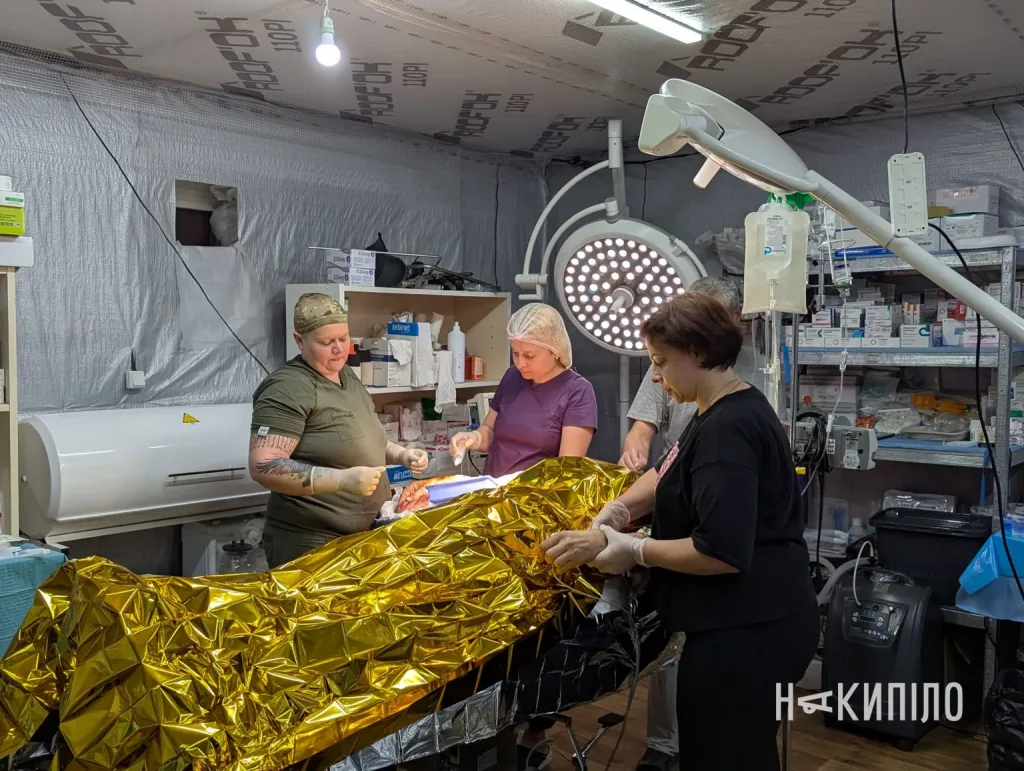
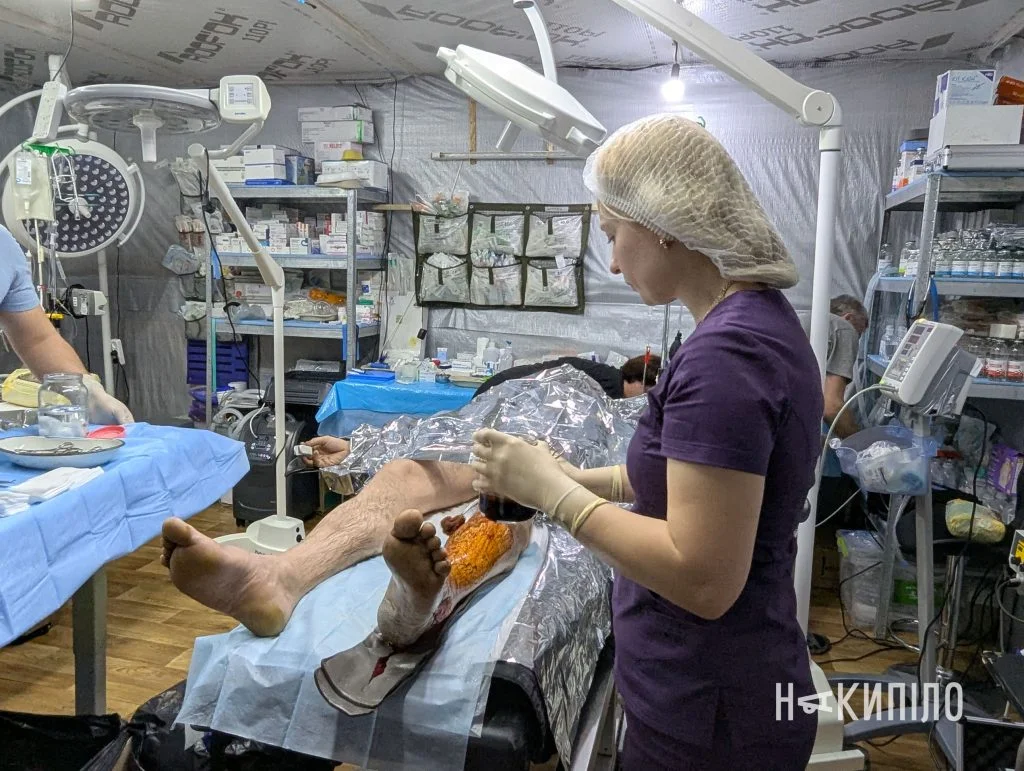
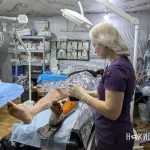
We arrive at the stabilization point during what they call a “quiet hour.” Some medics are resting on bunk beds, others are making tea, and some are discussing personal matters. Doctor Mariia gives us a tour. In the medics’ working area, there are two operating rooms (for severe and light injuries), a shock room, a waiting room for patients, and a small room for processing instruments.
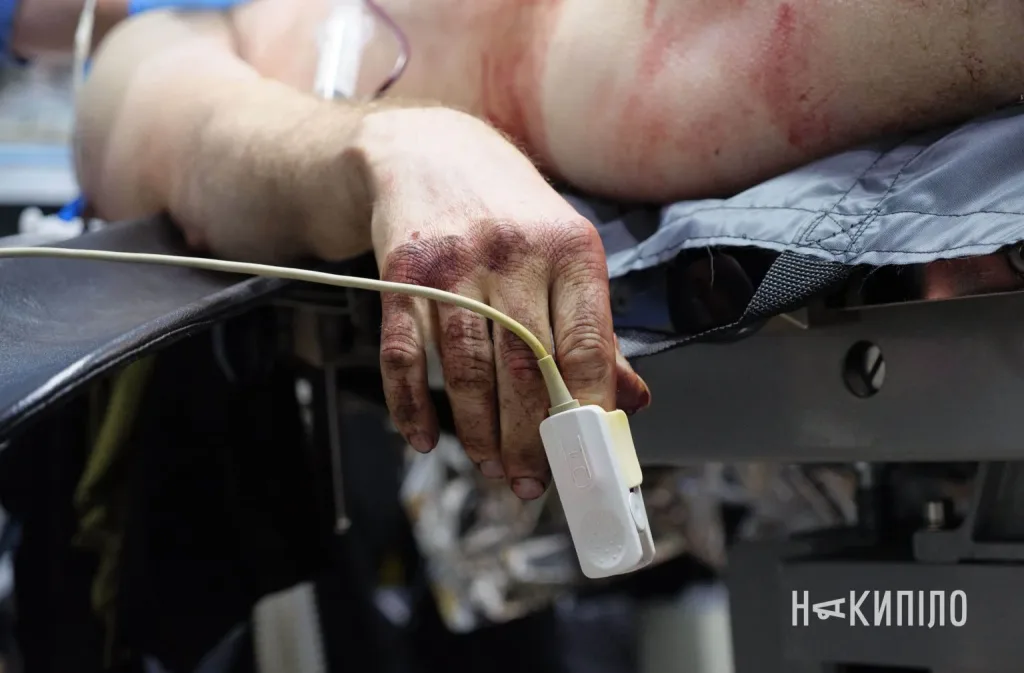
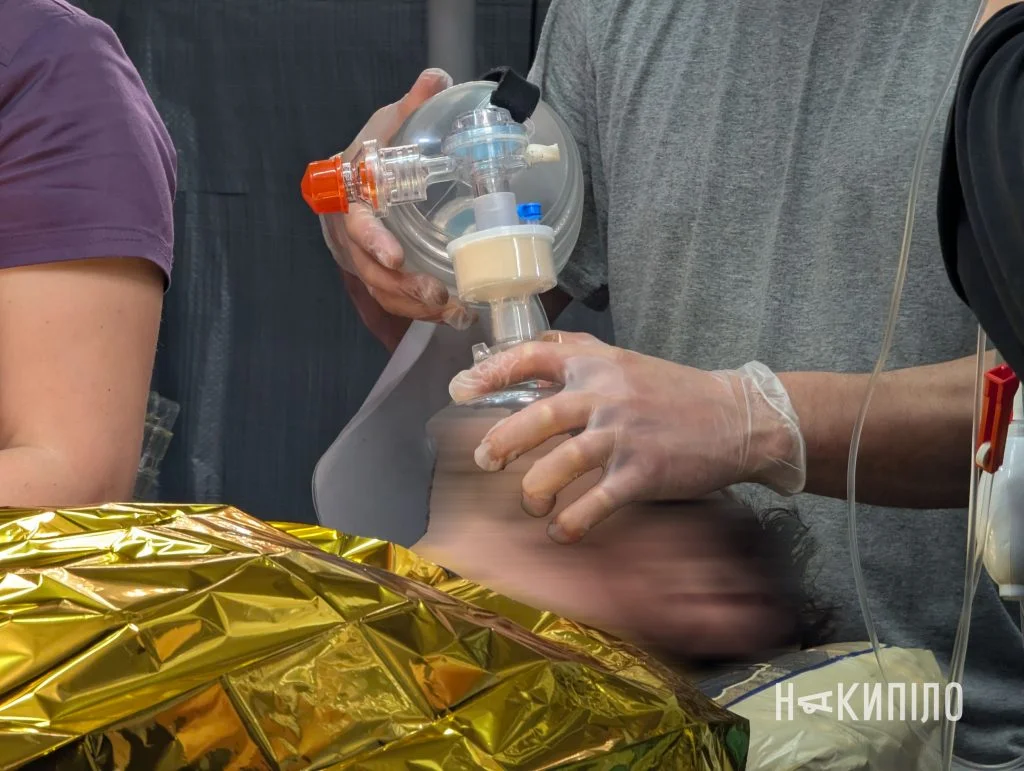
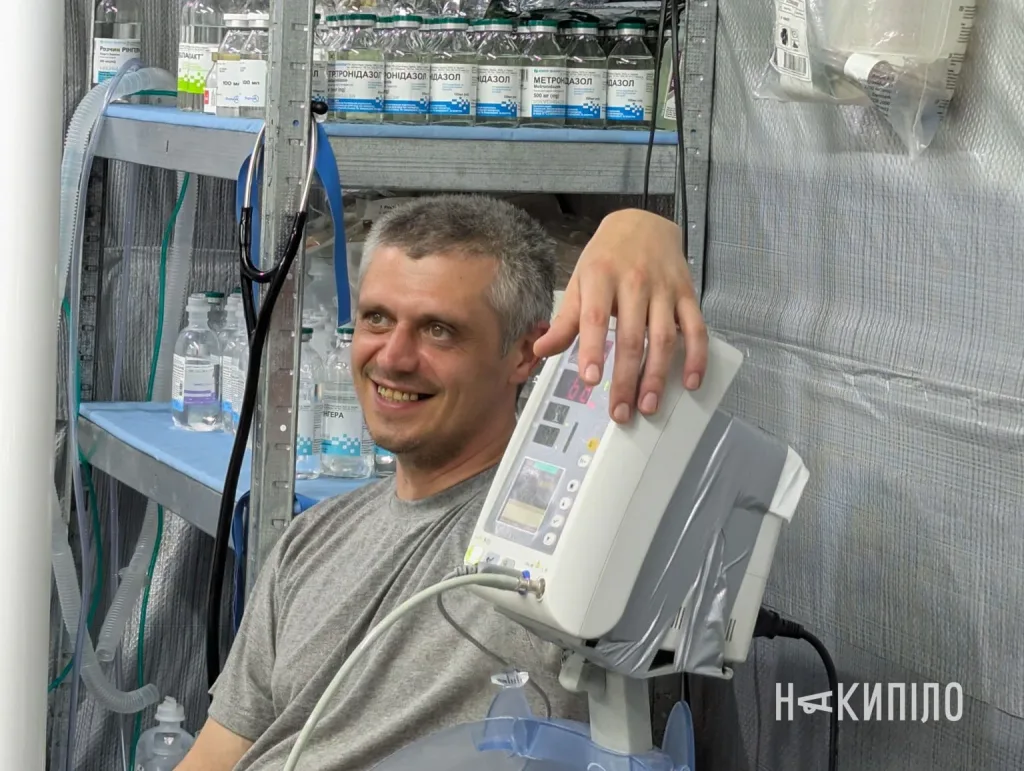
“Depending on the condition, we sort patients. If they have light injuries—they go to the small operating room; if severe—to the large one. This operating room has two tables. We place patients on them and undress them. If necessary, orderlies wash blood and dirt off the guys. There are surgical lamps, an X-ray machine, a defibrillator, oxygen. To keep the guys warm, we use a UFO heater. This monitor measures blood pressure and oxygen saturation,” Mariia explains.
Patients are sorted into four categories: light, moderate, severe, or extremely severe. After that, the medics plan further work and determine priority examinations. The goal is to provide the maximum possible care in time.
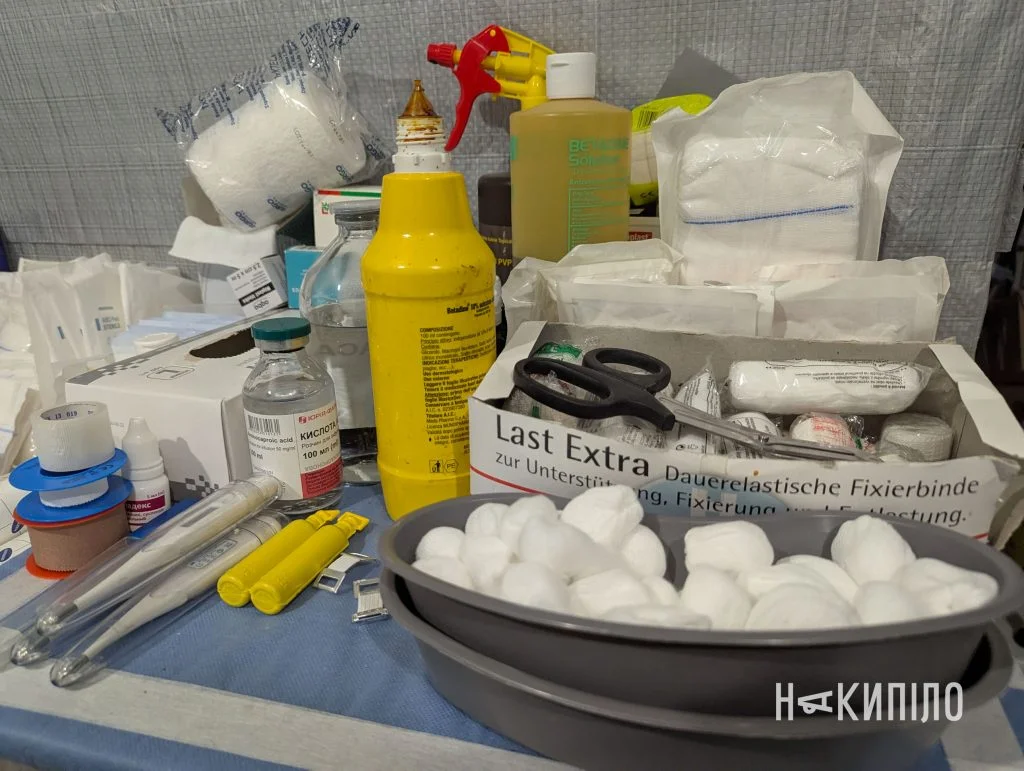
Everything necessary for work is available at the stabilization point. The military unit provides consumables, medications, and equipment. Additional needs are covered by volunteers: a radiolucent table, medicines, clothing and footwear for patients, and more. But the most important tool of a surgeon is their hands.
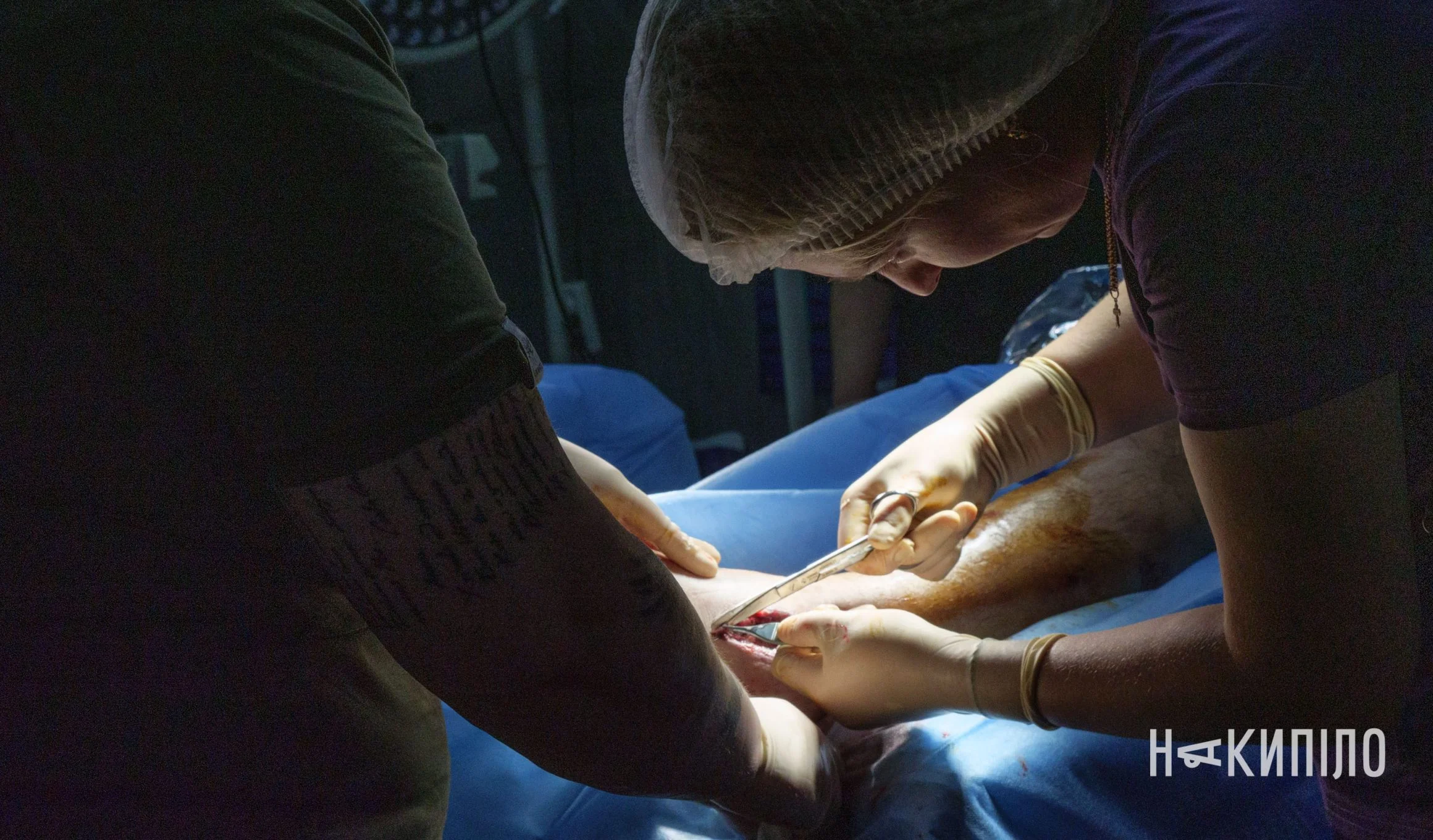
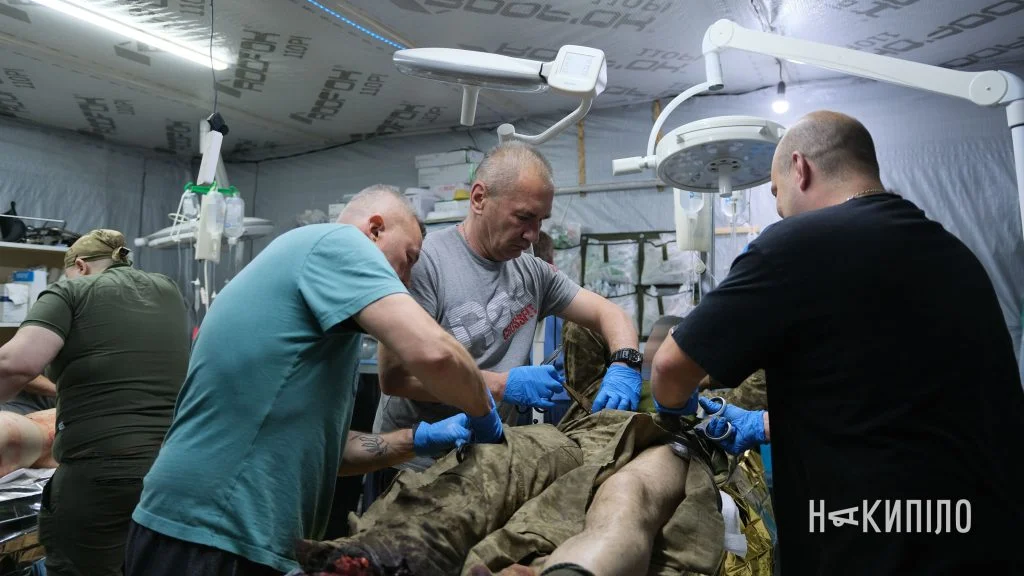
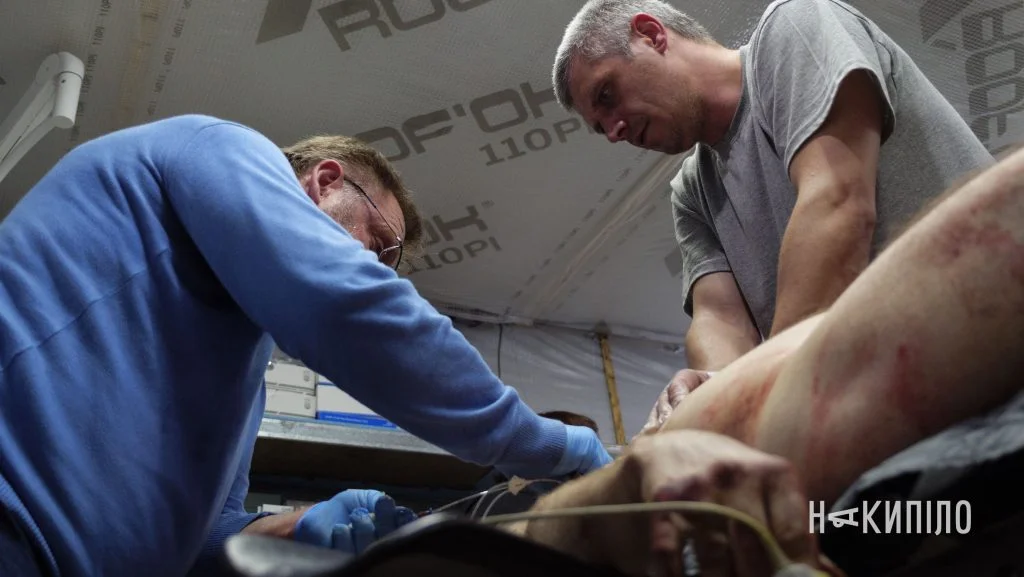
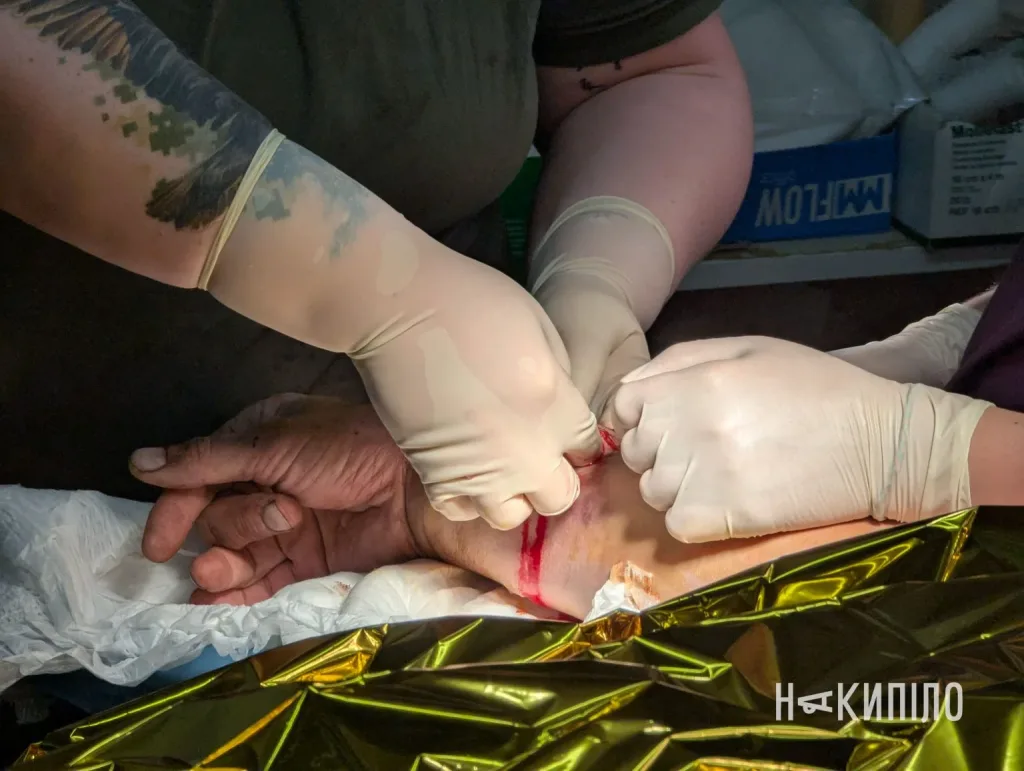
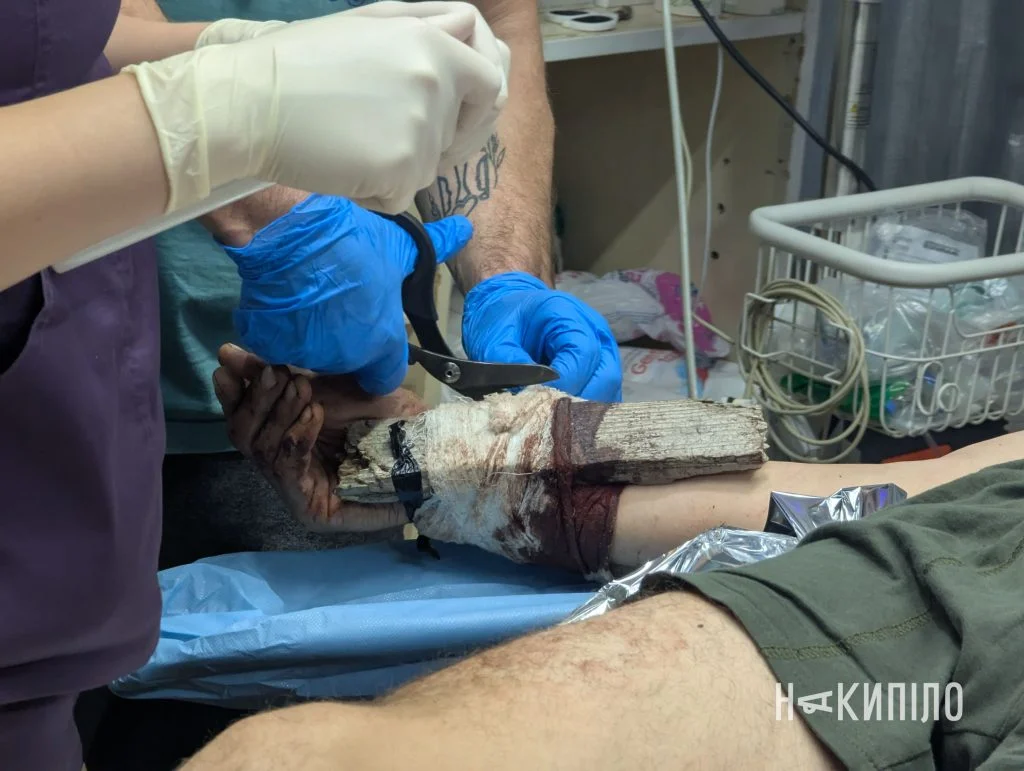
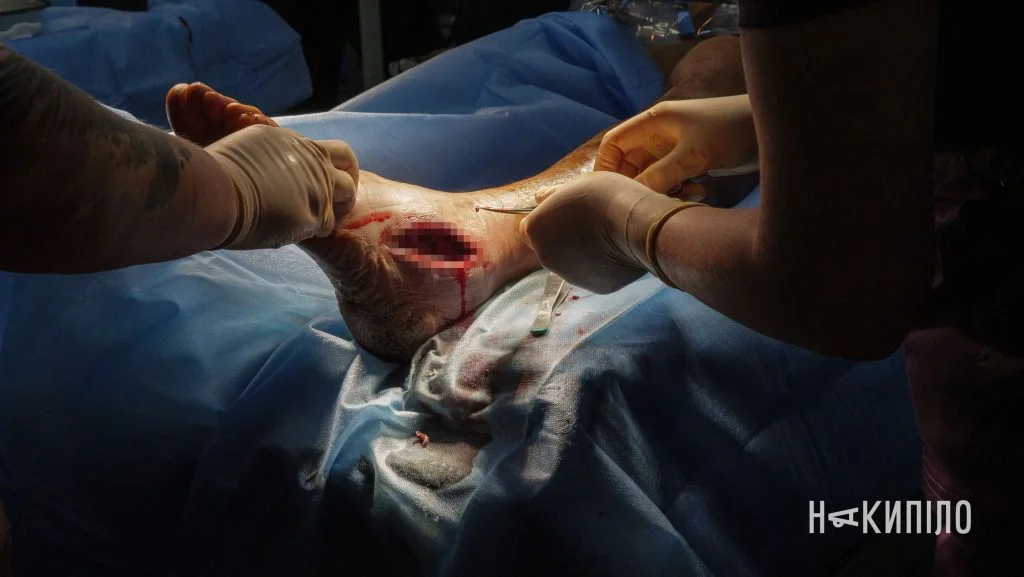
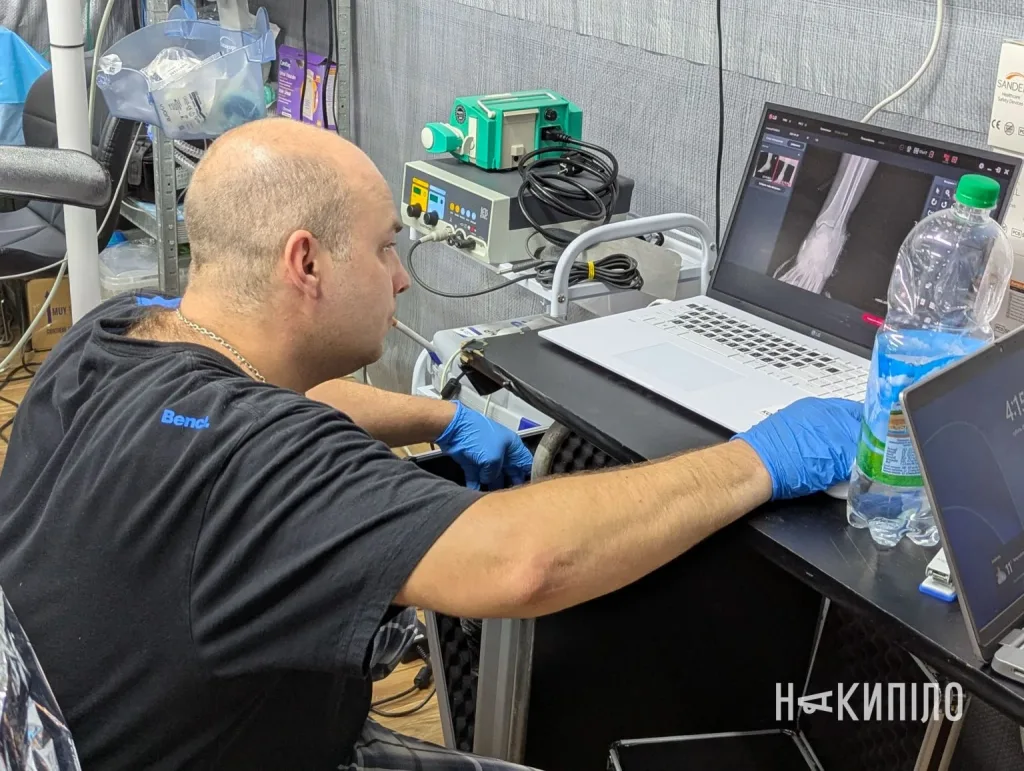
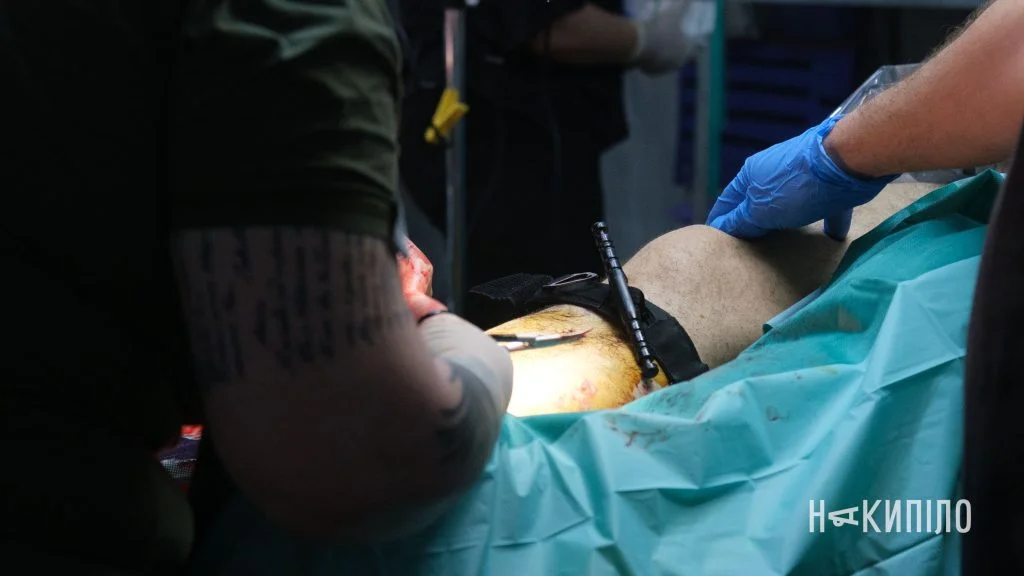
“With our hands, we can determine almost everything. Sometimes fragments are located in the wound channel close to the surface. We perform a revision and reach them with a finger. If they are deep, we take an X-ray and look at the projection to see exactly where they are. But very often the Russian army uses materials in FPV drones that are not visible on X-rays—some kind of plastic, and we see nothing on the image. Then we perform superficial surgical treatment of the wound, and with our hands or instruments we find and remove the fragments. But there is a rule: first the head, then the hands. That is, first the surgeon thinks, and only then acts,” says surgeon Iryna, call sign “Voda.”
While we are inspecting the stabilization point, the doctors receive a notification: two wounded are being brought in. Preliminary information—one severe, one light.
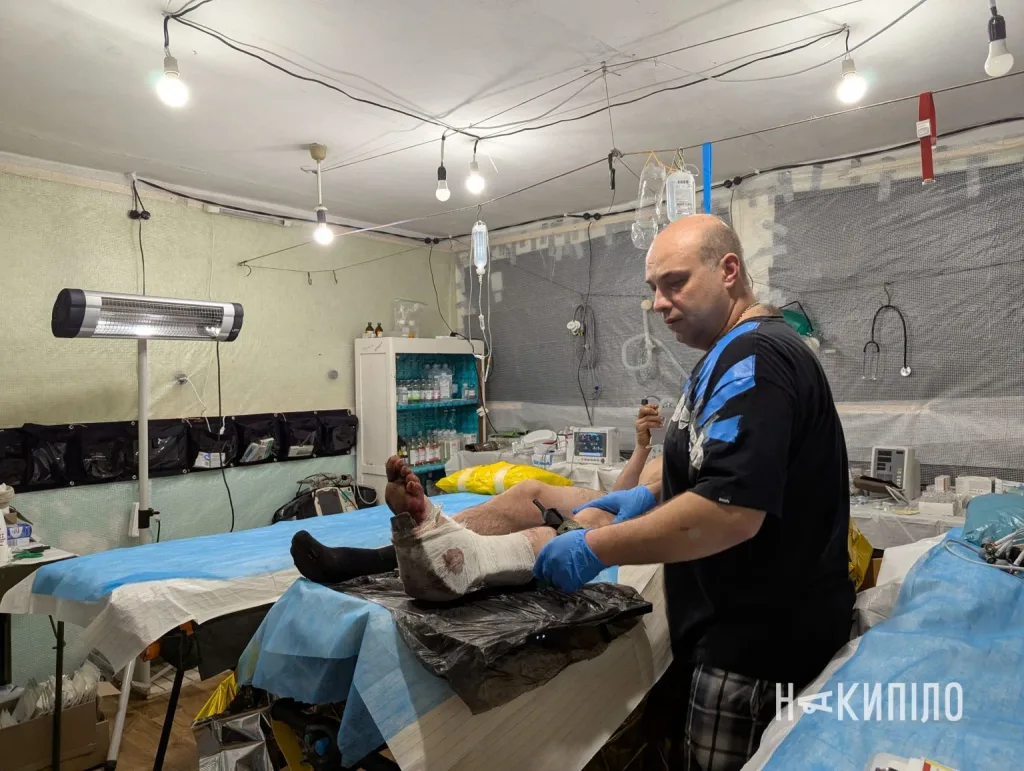
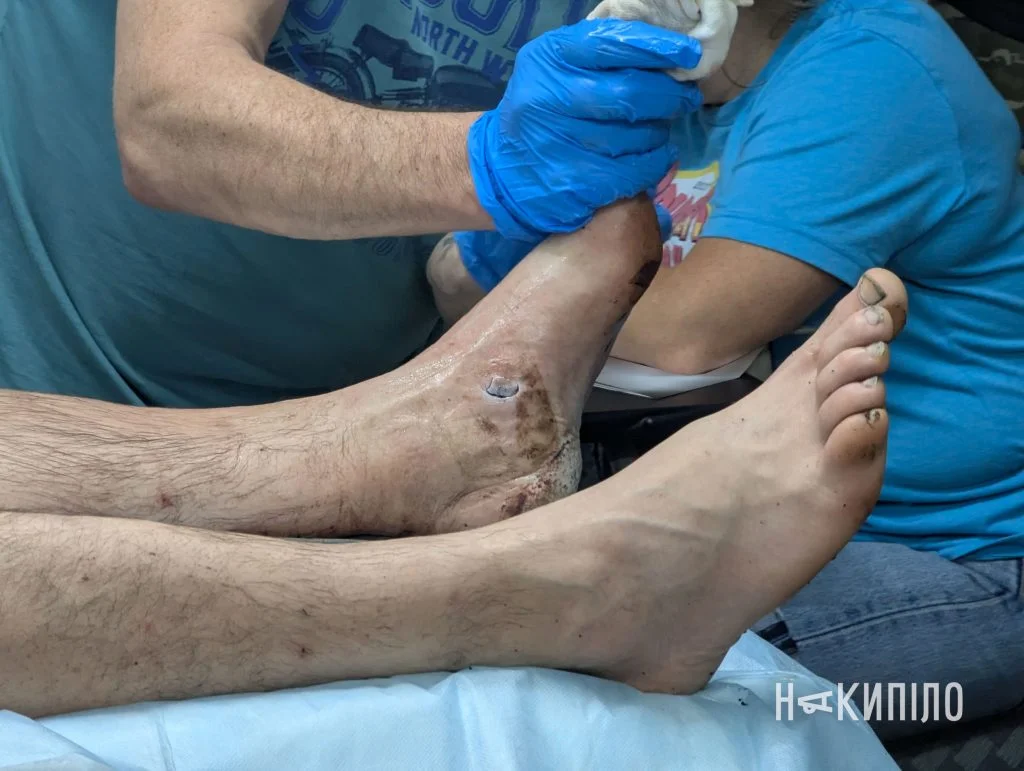
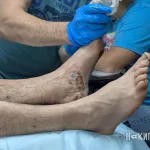
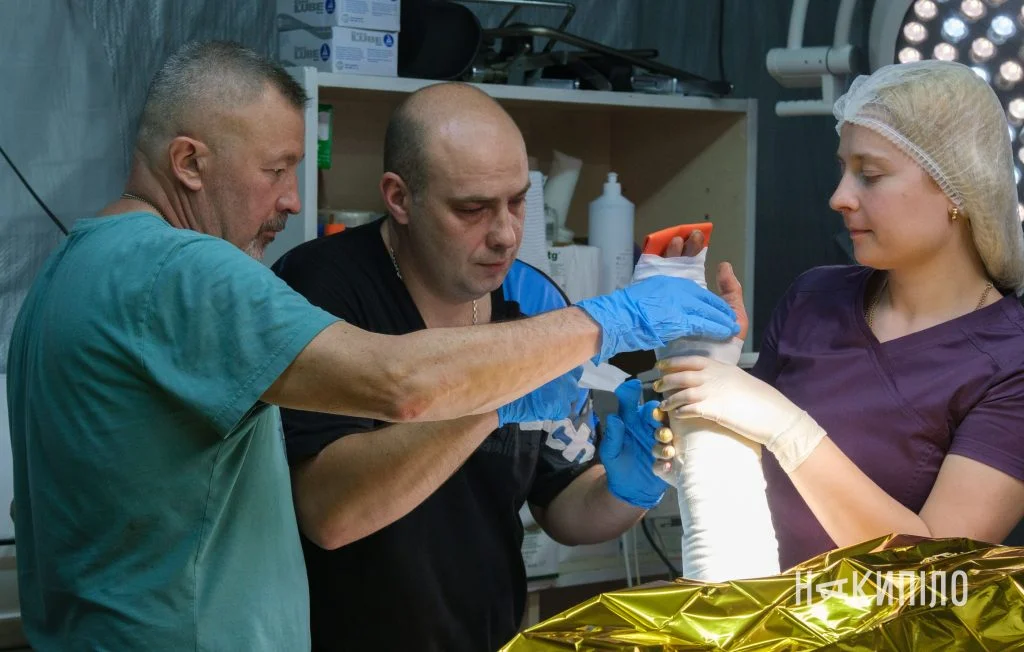
“Right now we are expecting a gunshot shrapnel wound to the foot. We are told that the patient’s condition is light, but combat medics cannot always adequately assess it. It’s good when they say ‘moderate’ and bring us someone light. Sometimes it’s the opposite: they say ‘light,’ and they bring someone severe. Because the road is rough, and while the wounded person is being transported, their condition may worsen,” the surgeon explains.
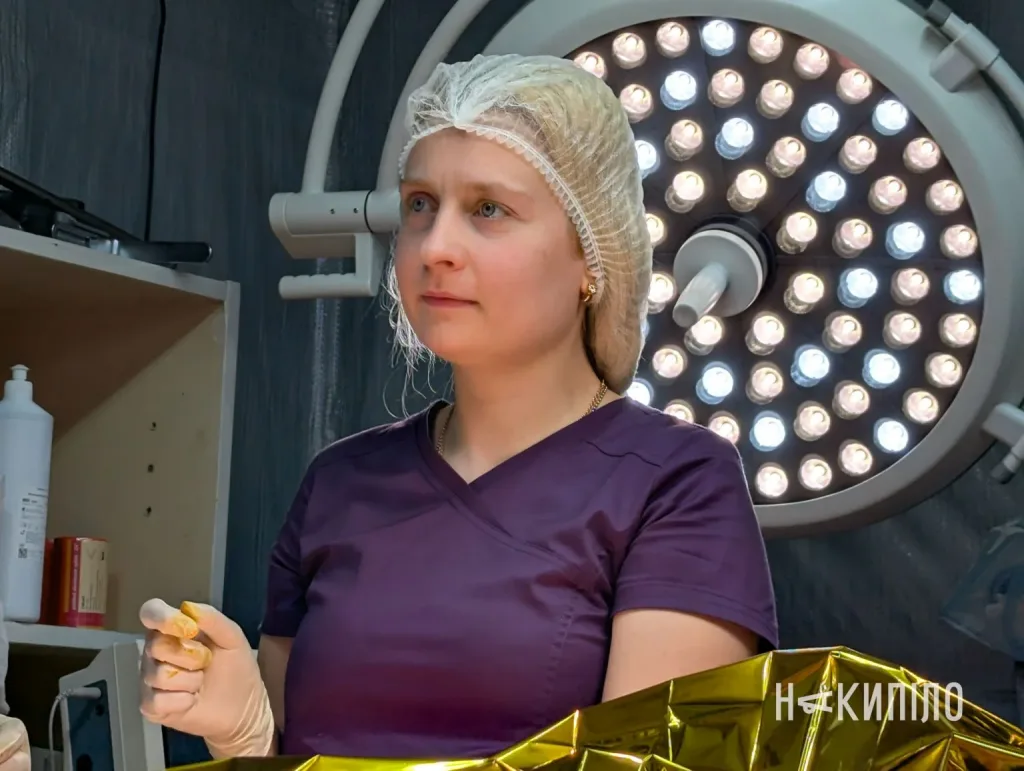
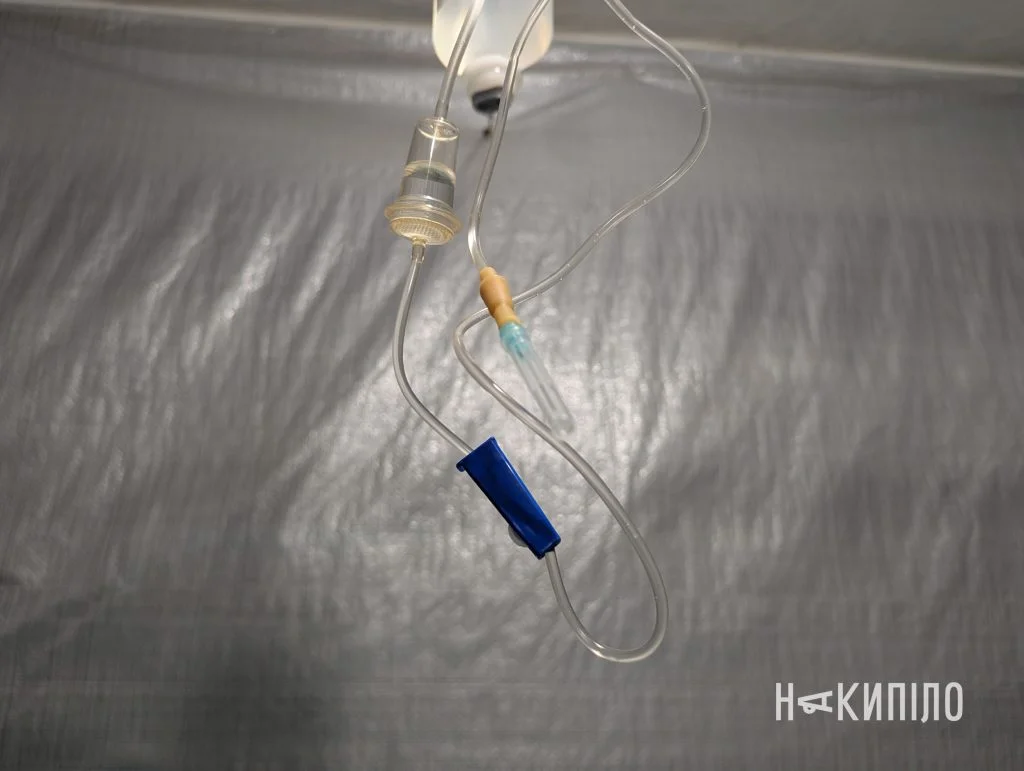
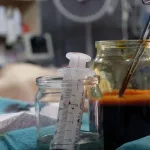
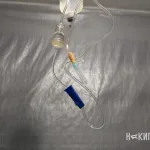
The team discusses the examination plan and prepares the operating room. An anesthesiology nurse, Hanna, call sign “Luna,” draws medications into syringes and sets up IV systems.
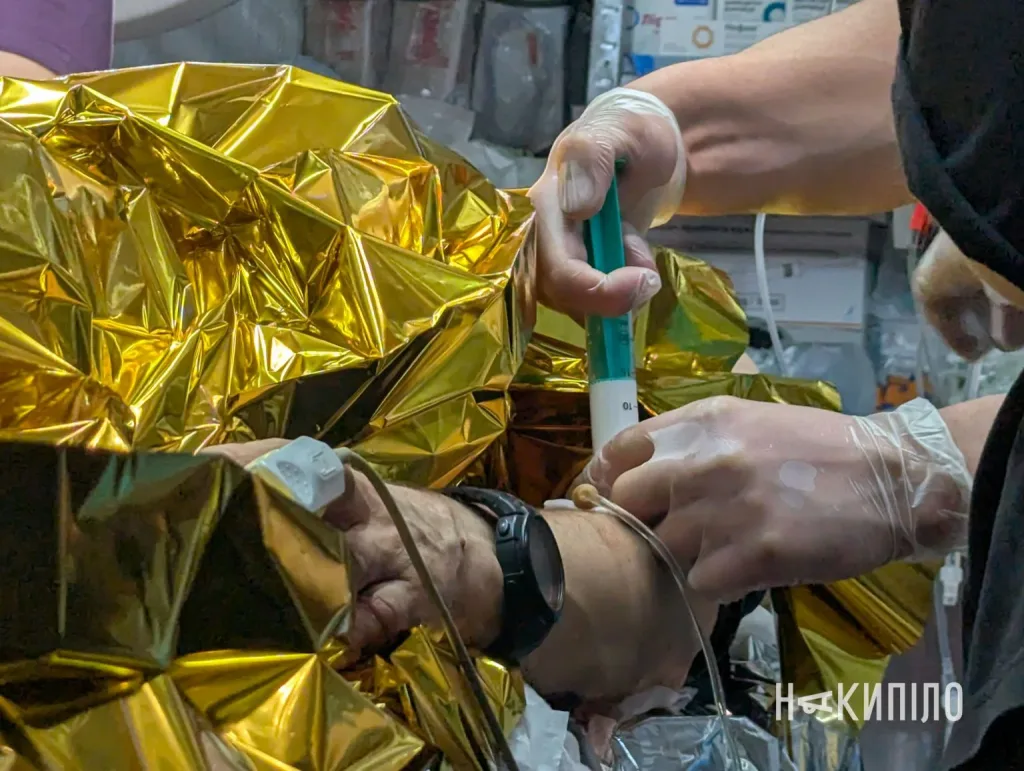
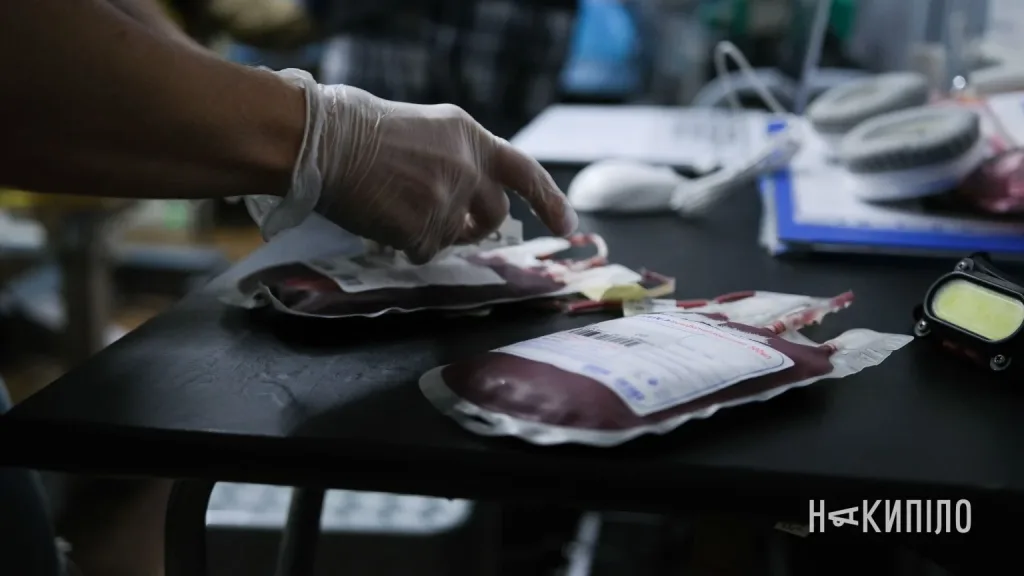
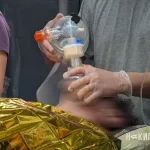
“When we know that a wounded person is on the way, we prepare a standard set: an antibiotic, an antiemetic, and painkillers. The operating nurse works with the surgeons, processes instruments, prepares dressings. And I am an anesthesiology nurse, so I work in a pair with the anesthesiologist. I am responsible for administering medications, narcotics. We run fluids, blood, plasma. Every case is different,” Hanna explains.
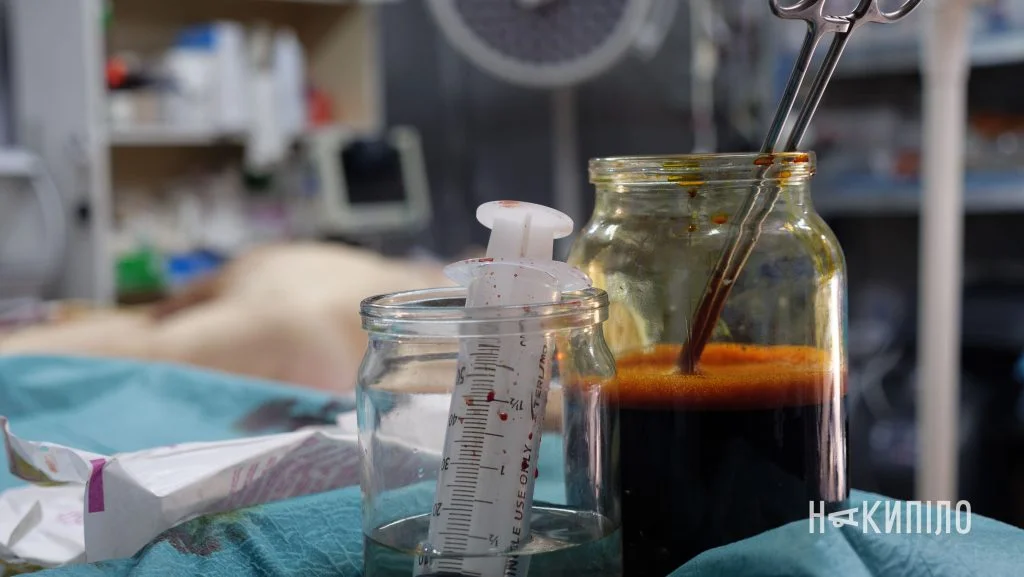
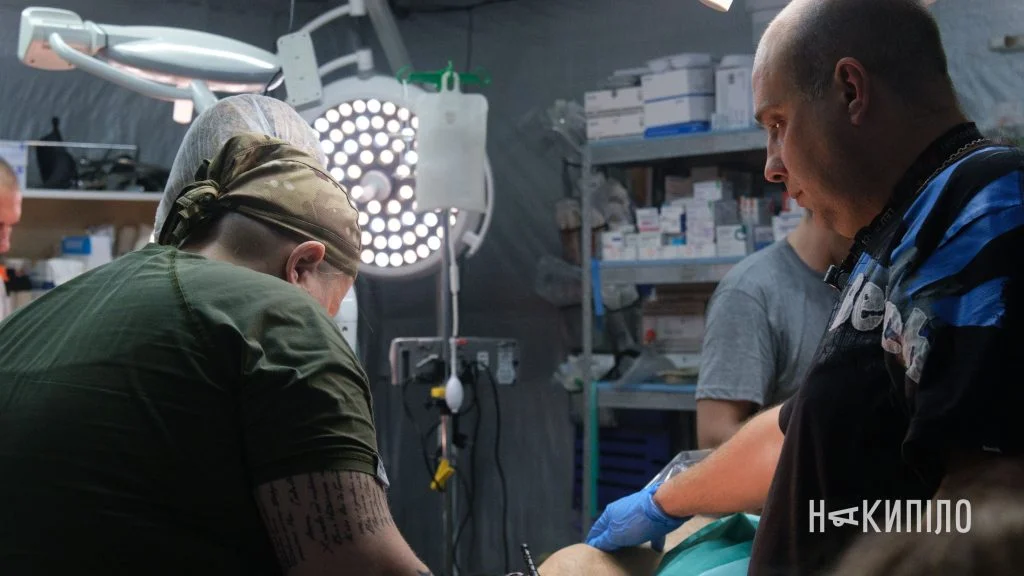
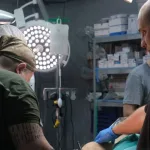
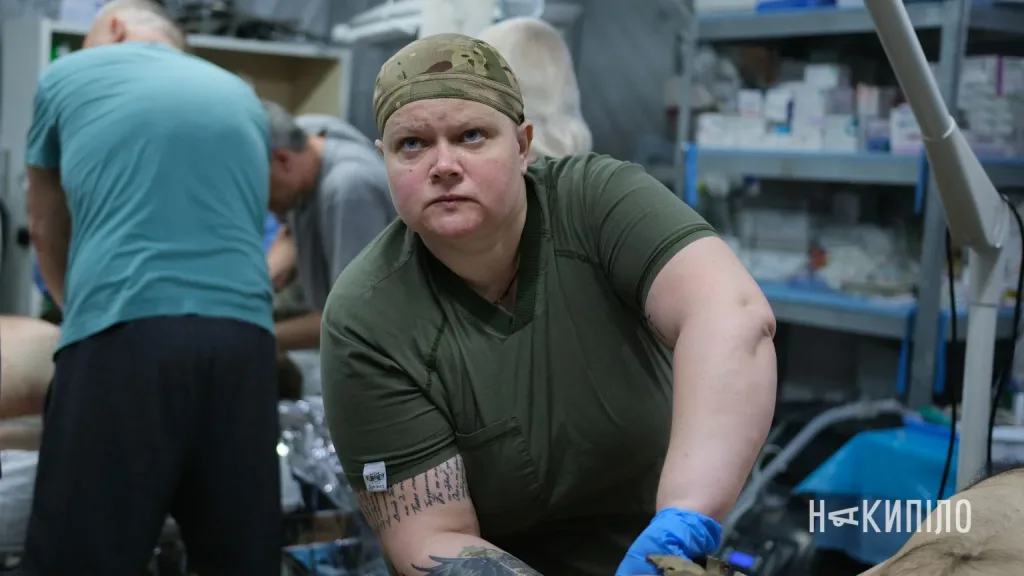
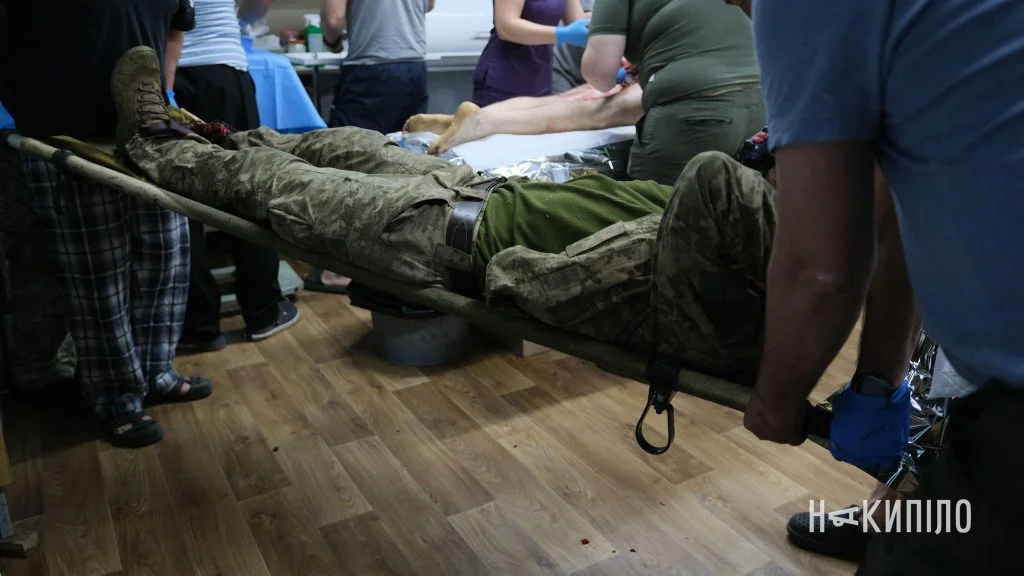
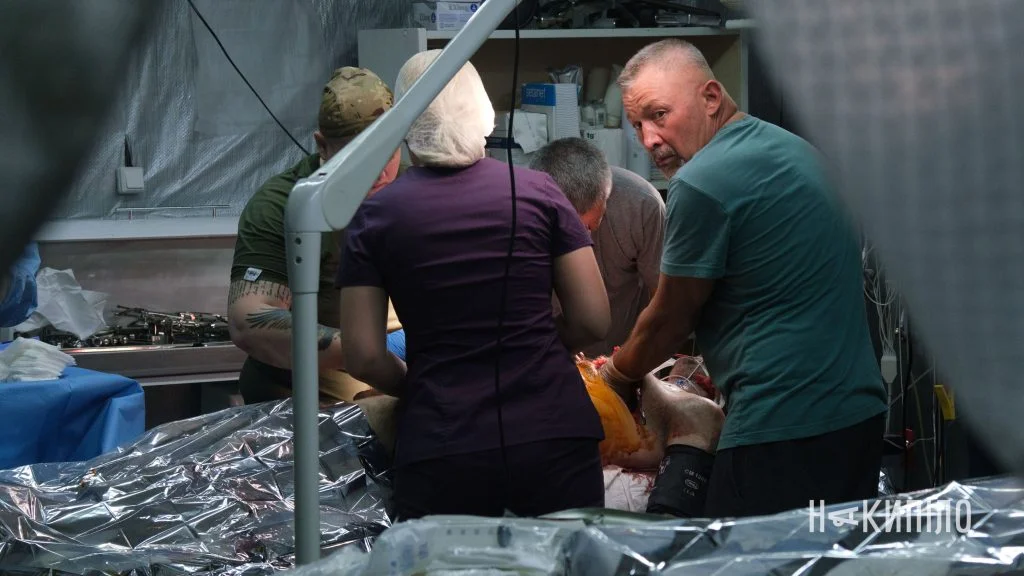
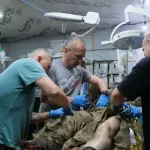
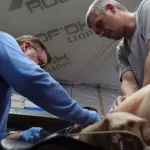
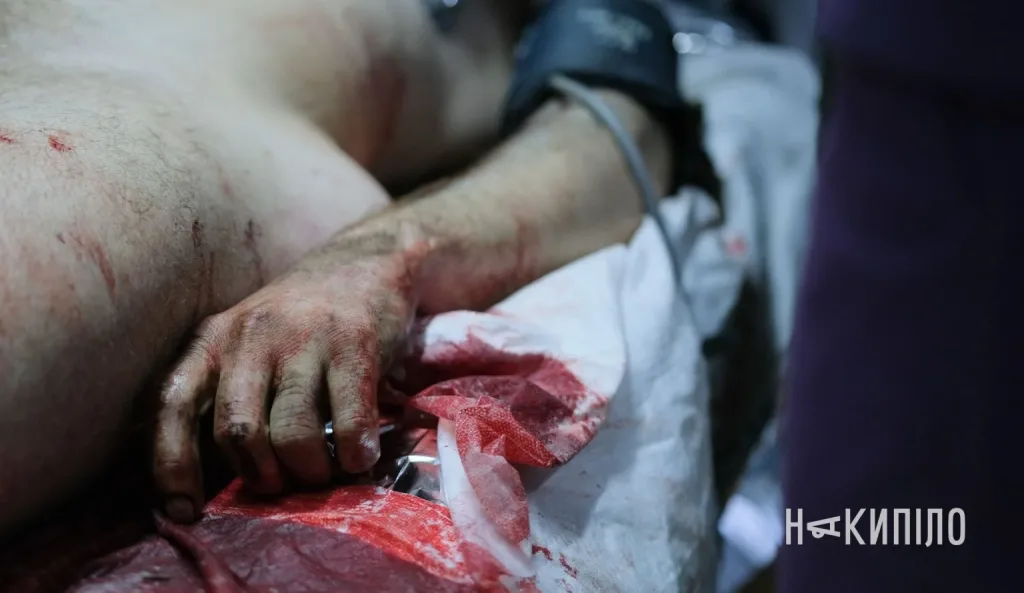
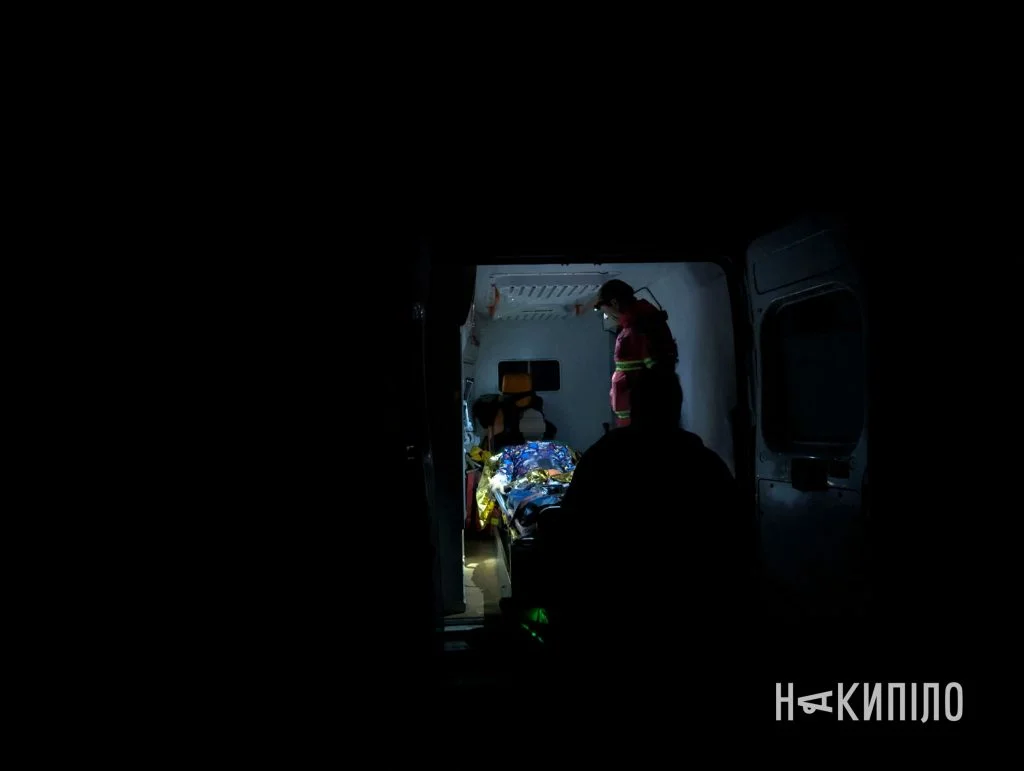
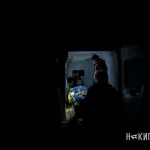
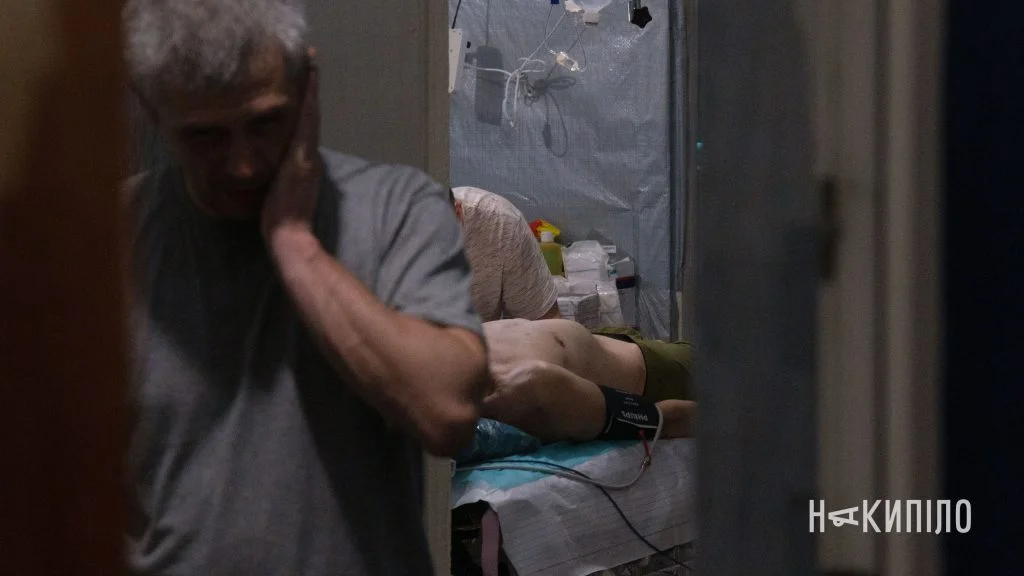
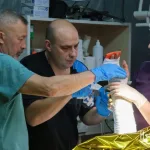
Military vehicles arrive at the stabilization point, and two wounded soldiers are carried in on stretchers. Within minutes, the operating room fills with the smell of blood—a smell that becomes sharply imprinted in memory. The atmosphere inside is tense. The medics work quickly, replacing one another seamlessly.
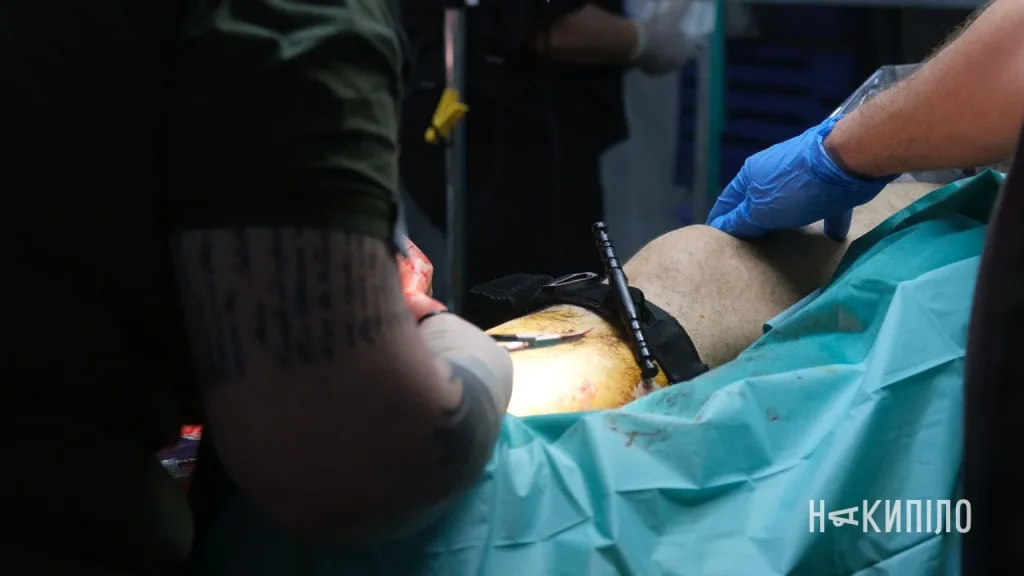
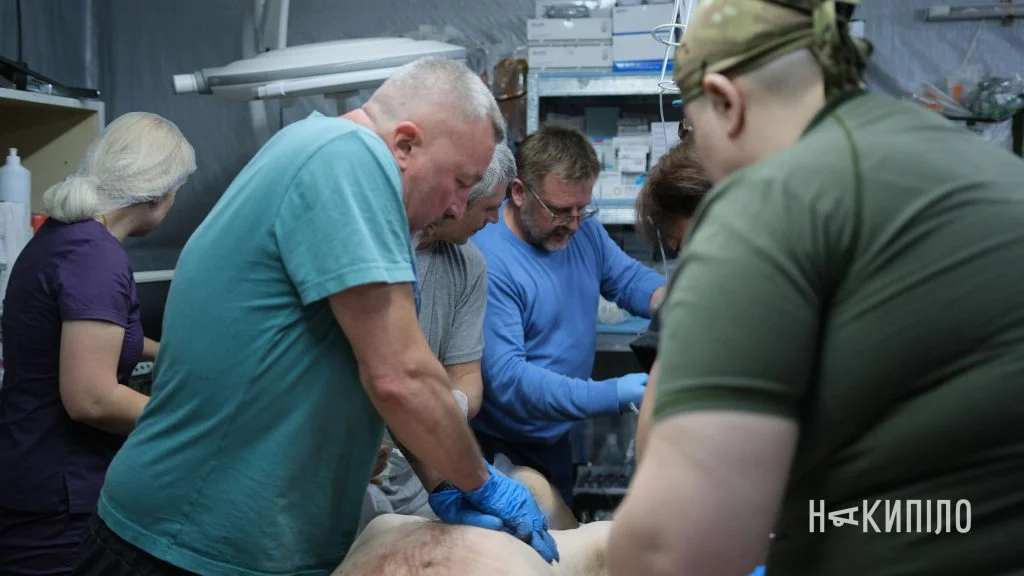
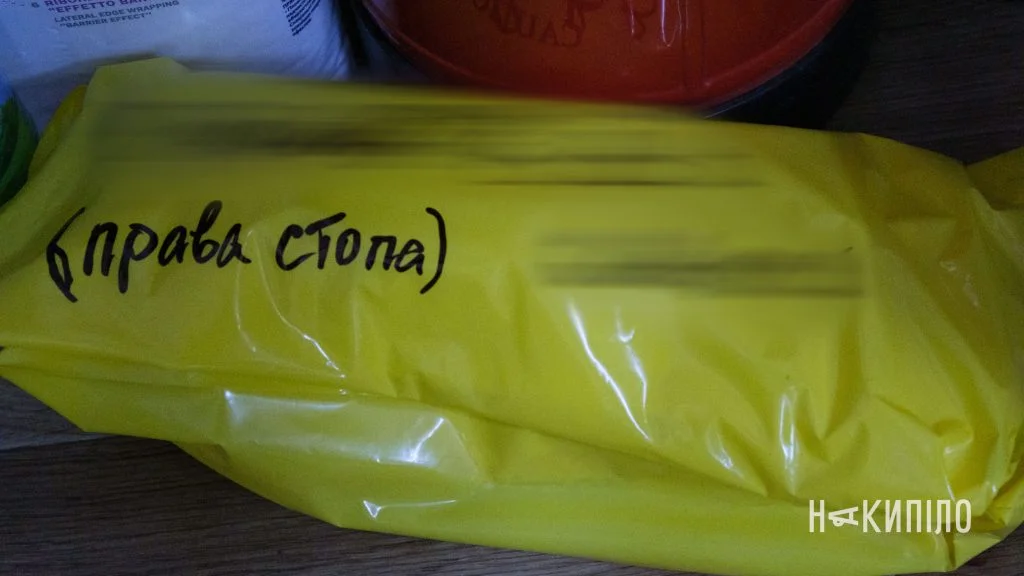
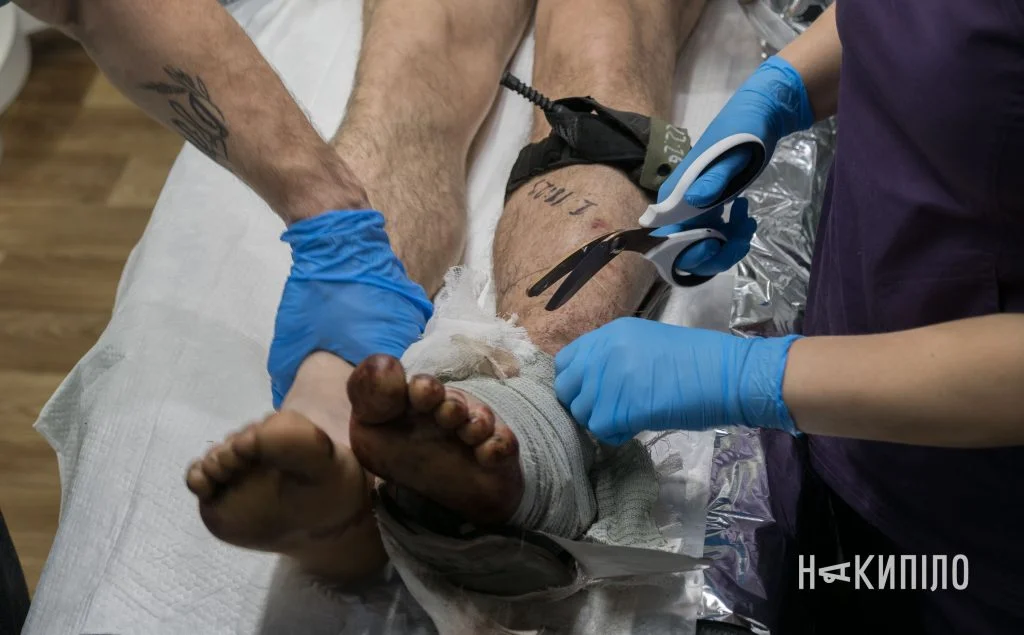
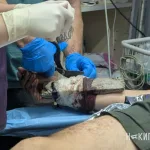
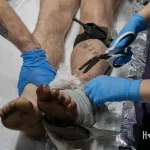
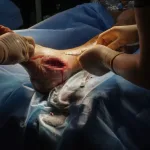
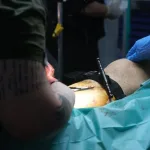
The heart of the critically wounded man stops. The doctors try to resuscitate him with strong, rhythmic movements. On the neighboring table, surgeons prepare to amputate the wounded man’s foot (so severely damaged by the explosion) and part of his lower leg.
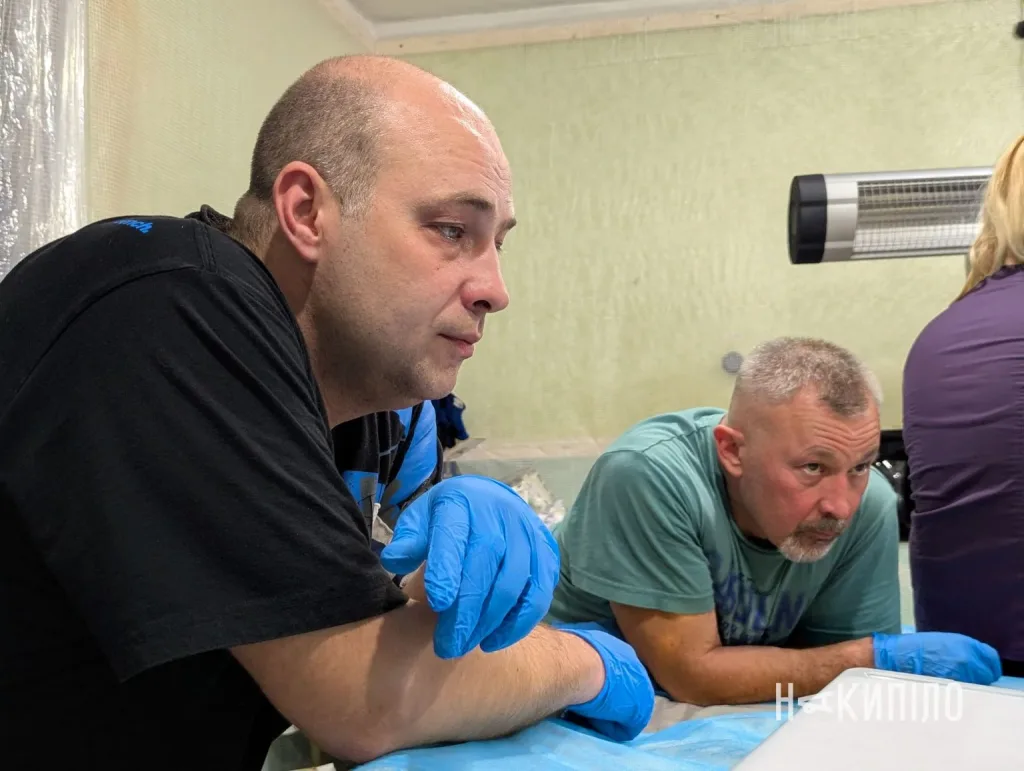
The first hour in the operating room passes rapidly. The next hour we spend alongside other soldiers, hoping that the doctors will manage to stabilize the critically wounded defender.
“Everyone here is motivated”
Surgeons, anesthesiologists, a traumatologist, and nurses work as a single mechanism. No one here lacks motivation.
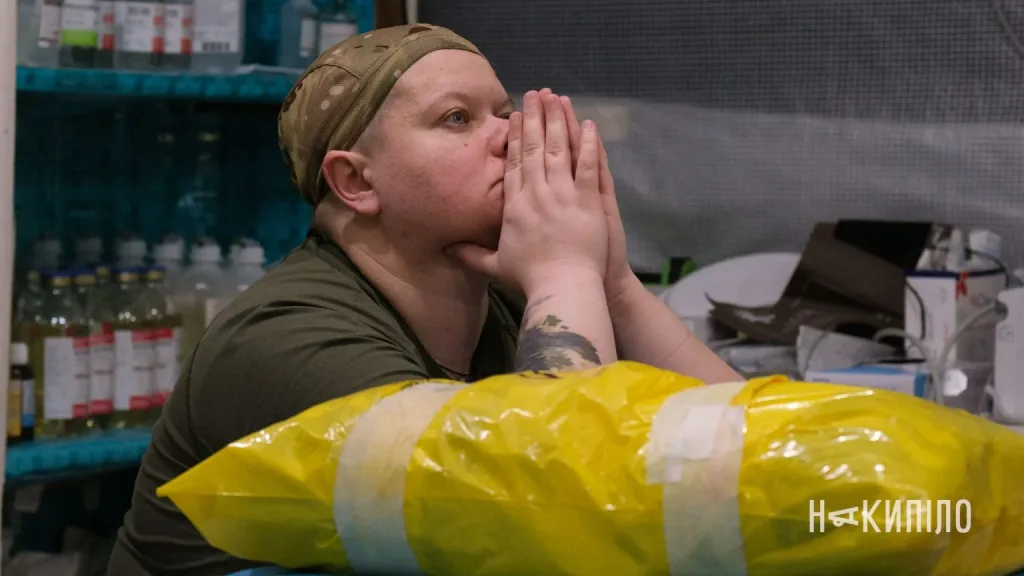
“Luna” is a paramedic by training. She joined the 113th Brigade together with her older brother on the first day of Russia’s full-scale invasion. At first, she served in a counter-sabotage unit, and later worked with sappers in an engineering company.
“I became an anesthesiology nurse when our brigade ended up in Donbas. We arrived, and they told us: ‘Here’s the stabilization point—you’ll be working here.’ I was sent to a hospital, where I completed training. And that’s how I’ve been working since,” the nurse recalls.
Hanna’s brother was killed by Russian forces in 2022. Now she serves in the army for both of them.
“He was always with me, protecting me. A good, very pro-Ukrainian guy. He served in the ATO. In general, within six months, such a situation happened in our family: we buried two brothers and our father. My younger brother died under certain circumstances. My father couldn’t bear his death. And my older brother was killed during the bombing of our location in Kharkiv, on Selianska Street,” Hanna says.
The nurse now has only her mother left. The despair from her losses was pushed aside by work in the medical unit in Donbas. Because of the large number of wounded, the medics didn’t sleep or eat for several days. Their days blended into nights.
“My mom is everything to me—I’m all she has, and she’s all I have. I could be discharged because of a fallen family member. But I came on February 24 to help the guys. And after my brother’s death, I see him in every one of them,” Hanna adds.
Over three years of service, surgeon Iryna (“Voda”) has saved lives in Donetsk region, near Vuhledar, and in various locations in the Kharkiv direction. She has evacuated soldiers from the battlefield in ambulances and performed surgeries at stabilization points. She developed her military surgery skills in practice.
“Both theoretically and practically, military surgery is a field that must be improved every single day. Whether you want to or not, you keep improving yourself in order to be as useful as possible. I had surgical experience in civilian life, but combat injuries are very different. When you see traumatic amputations of limbs, massive muscle defects, or a state of shock (and wounded people behave differently), it is very different from civilian surgery. And the human factor has not been canceled. The most difficult part is that you need to make decisions very quickly. You are responsible for someone`s life,” the doctor says.
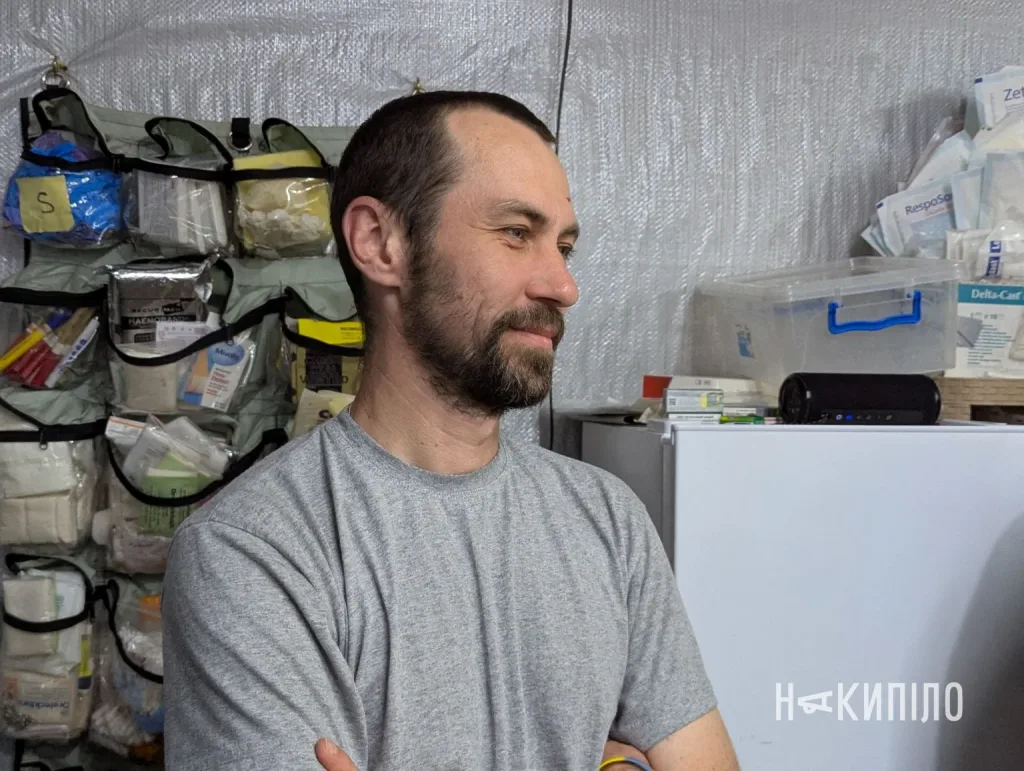
“Izia,” the team’s joker, joined this year. Before the full-scale invasion, Zhenia worked as an energy technician in the Saltivka district. Then he volunteered, helping civilians and the military. About two years ago, he joined the medical unit and worked in his specialty, and now he is acquiring new skills as a driver-orderly.
“None of my professions were connected with medicine, but I’m learning little by little. The main thing is desire and ability. The team is great, so it’s enjoyable. Everyone knows, especially when a severe case comes in, what needs to be done at a specific moment. If another person is busy with something, you take on this and that,” Zhenia says.
“A tough night, but we don’t lose spirit—we’ve had worse”
A few more long minutes of waiting outside the operating room—and a sad verdict: the medics did not win this battle for the life of the critically wounded defender.
— So that makes two dead in this 24-hour period?
— Yes. Unfortunately, these were patients who arrived to us already in a terminal condition. The main cause was acute massive blood loss.
The bustling atmosphere in the stabilization point turns into a heavy silence. Eternal memory to the defender.
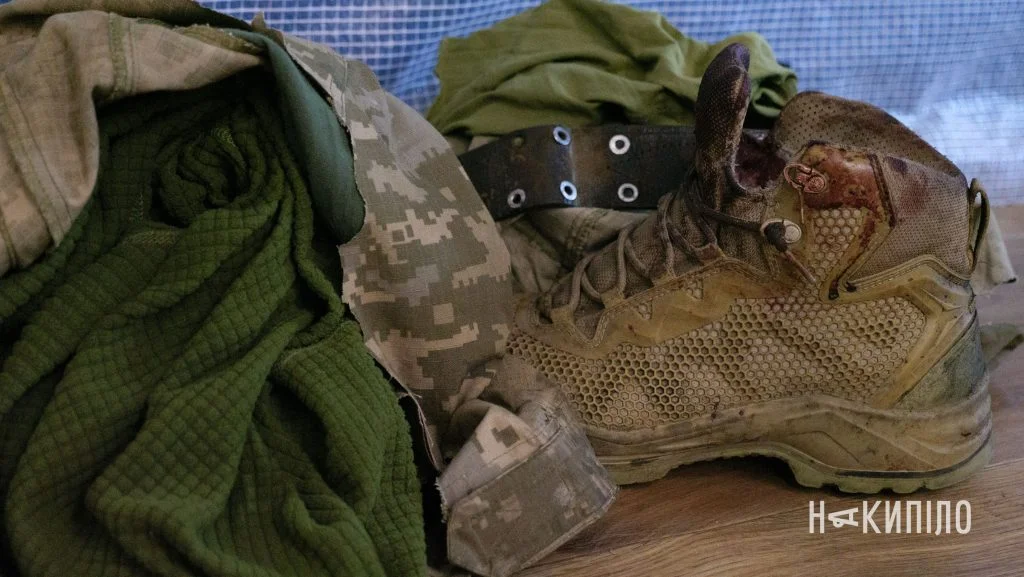
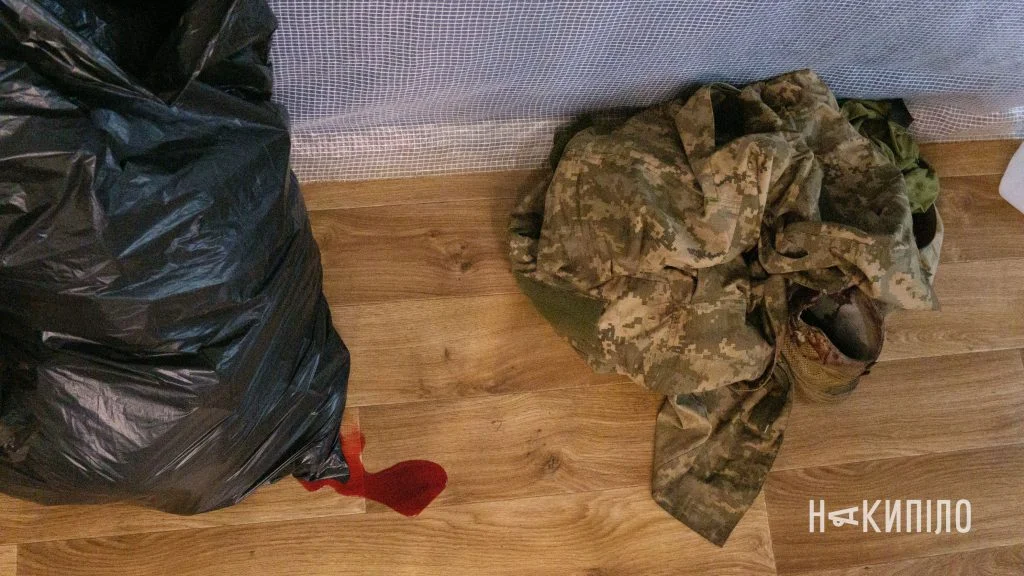
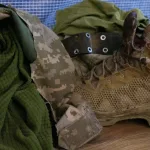
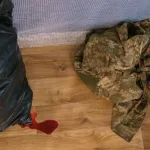
Despite everything, the work continues. The medics take care of the second soldier and prepare to receive new patients. An orderly wipes pools of blood from the floor, and a nurse disinfects the stretchers. Dirty, cut pieces of military uniform are packed into bags. Doctors change their work clothes, soaked with blood and sweat.
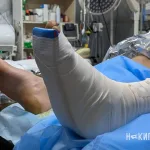
Next, an ambulance will take the wounded soldier, whose leg was partially amputated, to a hospital for further treatment. And a special service will take away the fallen soldier. According to Iryna, such a structure exists in every military unit—it covers all processes up to the burial of the fallen defender.
The next few hours resemble Groundhog Day: waiting for a new patient, examination, surgery, a smoke break, tea and coffee, waiting for an ambulance, writing a report—and everything again. It is five in the morning; during this time, another five or six patients have arrived. Some have a hypertensive crisis, others have injuries to the leg or arm. No severely wounded were brought in, but the fatigue on the medics’ faces becomes more visible with every hour.
“For our team, this 24 hours were very intense. Many blast injuries (concussions), shrapnel wounds, and explosive injuries,” Iryna tells us.
In the operating room, a playlist is quietly playing—a “kaleidoscope of Ukrainian music,” as the surgeon describes it. The medics have different tastes, so they adapt to each other.
“There were both severe and light wounded. But we don’t lose spirit—we’ve had worse nights,” Mariia says as she leaves the operating room.
— Did you manage to sleep at least a little?
— A couple of hours.
Voices of the wounded
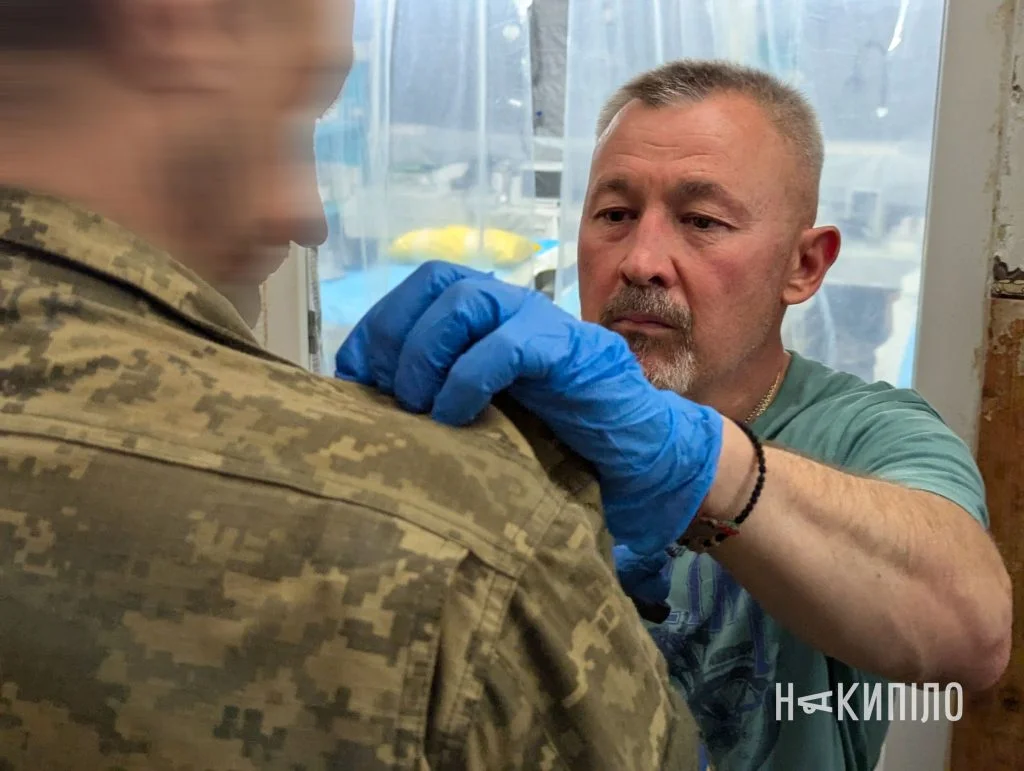
In a small room, Stas, call sign “Manager,” is waiting for examination while medics are operating on his comrade’s arm. The vehicle carrying the defenders was attacked by an enemy drone. On the Vovchansk direction, this is not uncommon. The enemy hunts not only military vehicles but also civilian ones. Reports from the regional administration and police regularly include information about injured local residents.
After the strike, the team split up. “Manager,” together with part of his comrades, covered kilometers to reach a point of assistance.
“We were driving in an armored vehicle. He was behind the wheel, and the vehicle commander was sitting next to him. We were behind, inside the capsule. The FPV drone hit the windshield. The vehicle slowed down at first, and the guys started jumping out. I was sitting last, near the driver, and I jumped out while the vehicle was already picking up speed. I got stuck awkwardly somewhere, injured my knee—I don’t know what’s wrong with it yet. I have dizziness, a headache, and temporary loss of consciousness,” Stas says.
The defender is from the Kharkiv region. He joined the military in 2022.
“Our unit is from Kramatorsk. All rotations were in Donbas, and this time—here in the Kharkiv region. So I’m defending, in a way, my own homeland, as close to home as possible,” the soldier says.
“We work, sleep for half an hour, work again”
The medical team has had a difficult three days. Their shifts have looked like this:
“We work — sleep for half an hour, work — sleep for half an hour, work. We gave everything we had. Yesterday we literally got up with one eye open and were already working. Of course, when there is time, we rest. But when there is work, you understand what needs to be done — there are no other options,” Iryna notes.
In a 24-hour period, the stabilization point receives between ten and thirty patients, mostly with mild to moderate injuries.
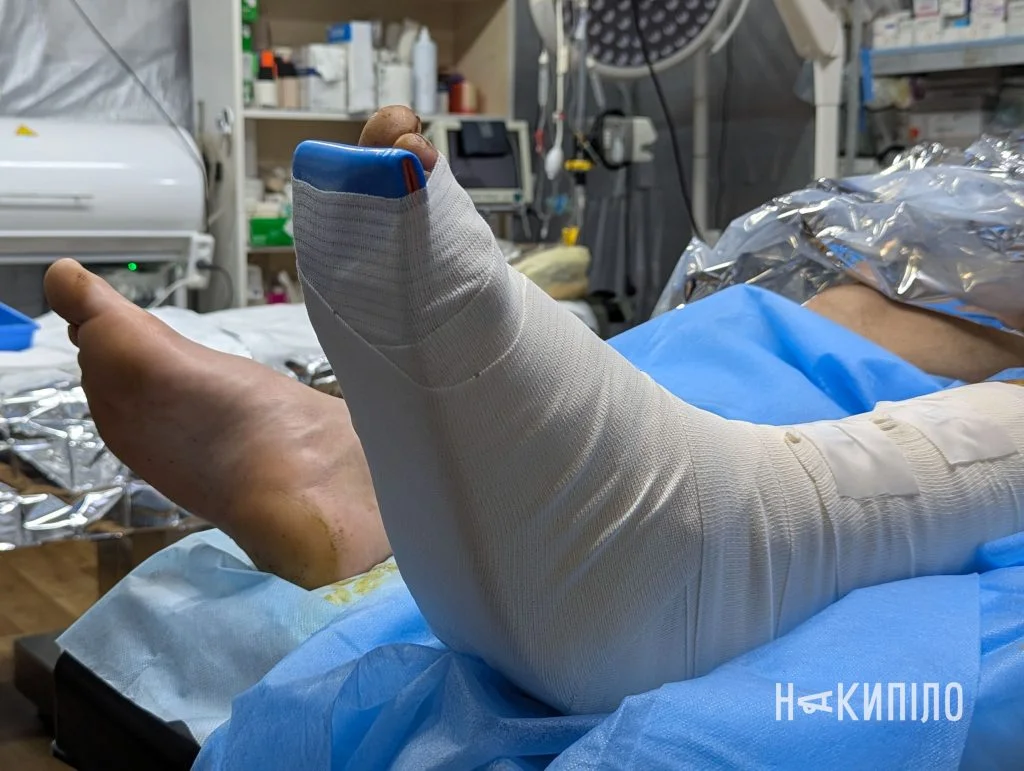
“Military surgeons perform operations within an unlimited range. We work according to the Damage Control Surgery protocol. We eliminate critical bleeding, hemothorax, pneumothorax. That is, at our stage, we do everything so that the person is in a stable condition when they reach the hospital, recovers as much as possible, and can return to duty. If time allows, we perform conversion: we remove the tourniquet and bandage the limb. During this time, the anesthesiologist prepares the patient for surgery.”
Easy shifts here are rare, but they do happen. During such times, medics even have a chance to miss the work a little, Zhenia notes.
“Sometimes there are no wounded, or only light cases arrive, and there is time to rest. And sometimes it’s like this: you finish a shift (at night the cases were not severe, but we still didn’t sleep), you come home, rest for an hour or two, and then you’re called back for a severe case,” Hanna adds.
The most common injuries are blast injuries to the limbs, head, and pelvis, as well as blast-induced trauma affecting the eardrum, with or without rupture.
“This week, there was a sniper injury. The bullet went through the left shoulder; the bone wasn’t damaged. The most common injuries are from drops, FPV drone strikes, and artillery shells. There are many inhalation poisonings with unknown chemical agents. What the enemy is using now affects the respiratory system,” the surgeon says.
Another issue is improperly applied tourniquets and long evacuation times.
“This is what affects me personally the most. If a person is brought to us, in the best case, within six hours after a tourniquet has been applied to a limb, we can still work. But sometimes it takes ten hours, and most often no one performs a tourniquet conversion. Of course, when there is shelling and the wounded person has been hidden somewhere, a comrade may simply not have the time or opportunity — the person is carrying out a combat task,” Iryna explains.
How the medics recover
Humor helps them cope with the workload during shifts, Zhenia admits. Especially black humor.
“We are constantly smiling, laughing. Even when severe cases are brought in. Working with a sad face — sorry, but that’s not it. Especially when the person is conscious, you always try to talk to them: ‘Everything’s fine, everything’s okay.’ Your emotions are passed on to the person. Black humor is completely normal — without it, there’s no way. Otherwise, your brain just starts melting. Sorry, a leg has been amputated — ‘Oh, a little ham.’ What else can you do? Deep inside, you feel such pity for the person. But on the other hand, if we start immersing ourselves in it, we’ll be in tears after every wounded patient. And what’s the use of that? None.
We recently had a combat medic. The guy walked many kilometers just in his underwear, but he made it out. Emotionally, he was completely wrecked, because a lot of people were left behind there, and he couldn’t help them. You speak to him a bit harshly, then suddenly — the person lifts up a little. We stand there talking, he’s lying down — everything becomes okay. You try to steer him away from those thoughts, and things stabilize,” the orderly says.
In his free time, “Izia” immerses himself in other activities to avoid thinking about work. For example, he enjoys cooking. At home, his creativity was limited mostly to meat and fish dishes, while the rest was handled by his wife. But at the stabilization point, it’s a free field for experimentation.
“It’s always scary, honestly. Even Shaheds fly — you don’t understand where they’ll land. But we try to cope somehow. When I joined the team, I never wondered how long I’d last — the injuries are all different. It’s just work — you distance yourself and do what you have to do. And if you can’t handle it, Uncle Roma (the anesthesiologist) can ‘hit’ you with something good. And then everything is fine — you keep working,” the medic jokes.
For Iryna, walks and phone conversations with her family—whom she hasn’t seen for more than eight months—help restore her strength.
“I don’t drink energy drinks: I’m a doctor, and I know how they affect the cardiovascular system. It’s better to have physical activity, some dumbbells. We have a small room where we exercise together with our brothers- and sisters-in-arms. Rest is simply sitting in nature. Because we can spend more than a day in an enclosed space, and all the rooms are heated so that the temperature is sufficient for the wounded. It’s hot, humid, and there’s barely any oxygen. So just breathing fresh air is already a reset. Almost none of us watches the news. Maybe we hear something occasionally,” the medic says.
Work often catches up with them in their sleep. To sustain such an intense pace, self-motivation and an understanding of why you are doing this are essential.
“I came to save lives. That was my choice. I am a volunteer. And when I see the result of my work—when they bring us severe cases, and they leave us smiling, thanking us—that motivates me. Recently, there was a patient with an abdominal injury. After treatment, he said: ‘You can call me the way my friends do.’ That is, in a very short time, a person decided that a doctor is a friend,” Iryna says.
She works with a psychologist and advises others to take care of their mental health.
“I believe this is necessary for every person, not only for a soldier or a medic. Questions accumulate inside you, and you can’t find answers — at some point, this chain breaks. You understand that it’s not enough just to talk to a comrade. You need someone who can act as a mediator and show you the chain from ‘before’ to ‘after.’ When you answer the questions that trouble you, you feel relief. There are moments when you are ready to give up. Then you need time to reset, and after that, you move forward,” the surgeon admits.
She has allowed herself to cry only a few times during the full-scale war.
“We all work as a team. If everyone shows their emotions, it can affect the result. In my opinion, a doctor must control the situation and organize the workflow so that everything is coordinated.
What would I change if I had the opportunity? I would constantly improve organizational aspects, skills, mastery, consistency, and processes. In reality, there is no job where everything is perfect. Especially in our work, where every person is like a mechanism. And if one mechanism doesn’t work — the whole system doesn’t work,” Iryna says.
“The shortage of medics and, in general, people in military service is probably the only global issue we cannot influence. We simply don’t have enough people. If all military positions were filled, if every person treated their duties responsibly, things would be better,” the medic emphasizes.
The Nakypilo Media Group is raising funds to support the 113th Territorial Defense Brigade, which is defending the Kharkiv region.