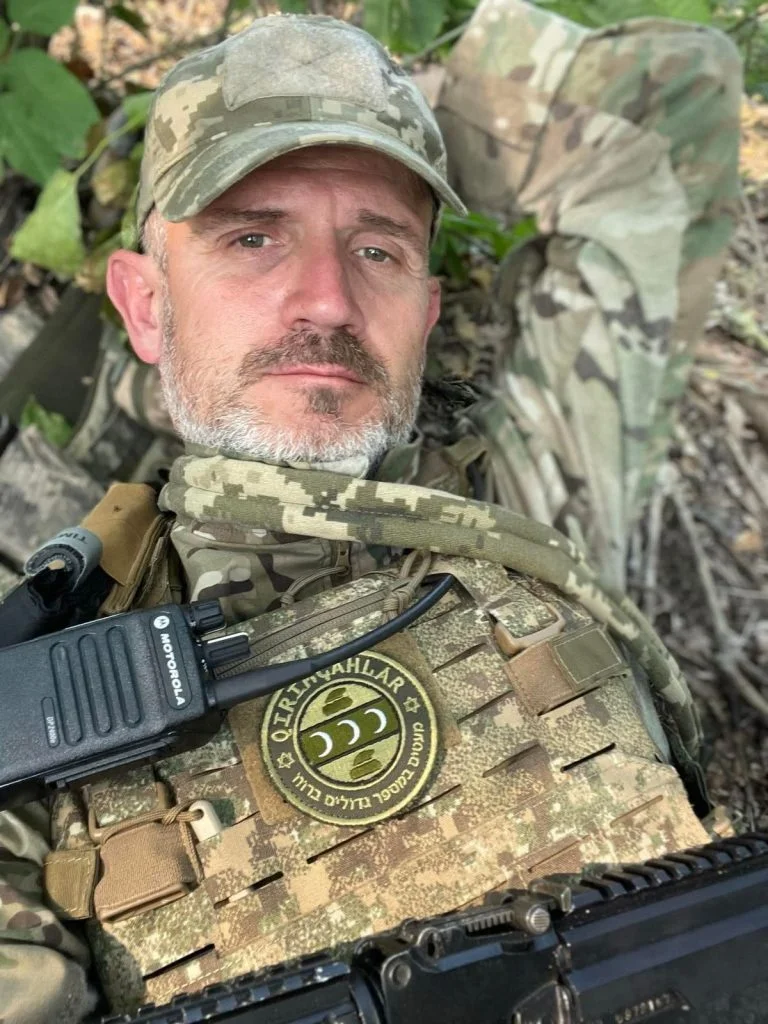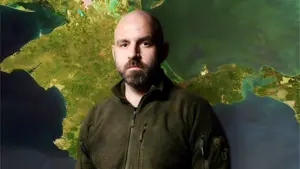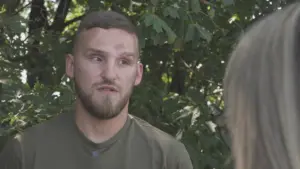
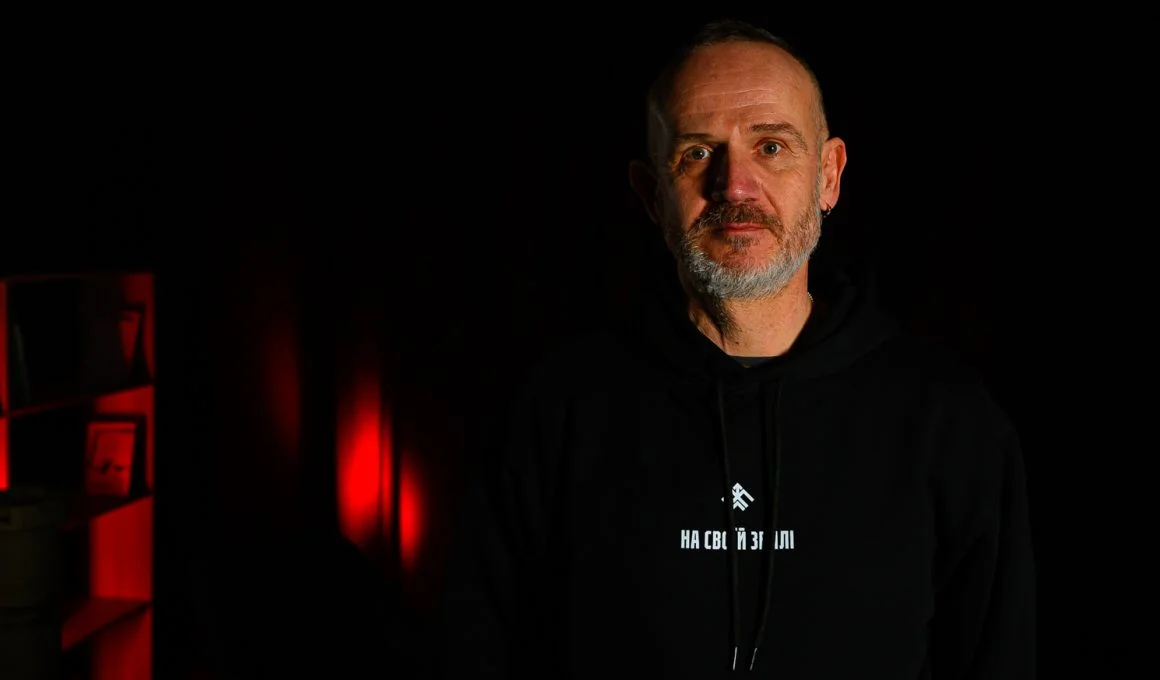
Petro Koshukov is a serviceman who recently joined the 13th Operational Assignment Brigade of the National Guard of Ukraine, “Khartiia.” Petro is a Krymchak, and he spent every summer of his childhood in Crimea. He was also there in February 2014.
I know that you are a Krymchak. Tell us a little about your roots and your homeland.
I am one-quarter Krymchak. I am a Kyivan, born and raised in the capital, but my grandmother was a Krymchak. As a child, I spent every summer with her in Crimea. Krymchaks are a national minority in Ukraine that, unfortunately, no longer exists as such. It has dissolved. Because of that, I feel responsible for preserving what remains of our culture.
When I was little, my grandmother spoke Krymchak with me and sang children’s songs. I remember several proverbs and expressions, and I can count in Krymchak. Interestingly, my mother, who is not a Krymchak, learned to cook traditional Krymchak food from my grandmother. My favorite dish is tiny dumplings sprinkled with crushed walnuts. In fact, you can sprinkle walnuts on almost any dumplings, and it becomes a delicious meal.
I have a collection of old photographs that my father assembled. He delved deeply into researching our family tree and uncovered a great deal of information about relatives on the Krymchak side, dating back, it seems, to the mid-nineteenth century or even earlier.
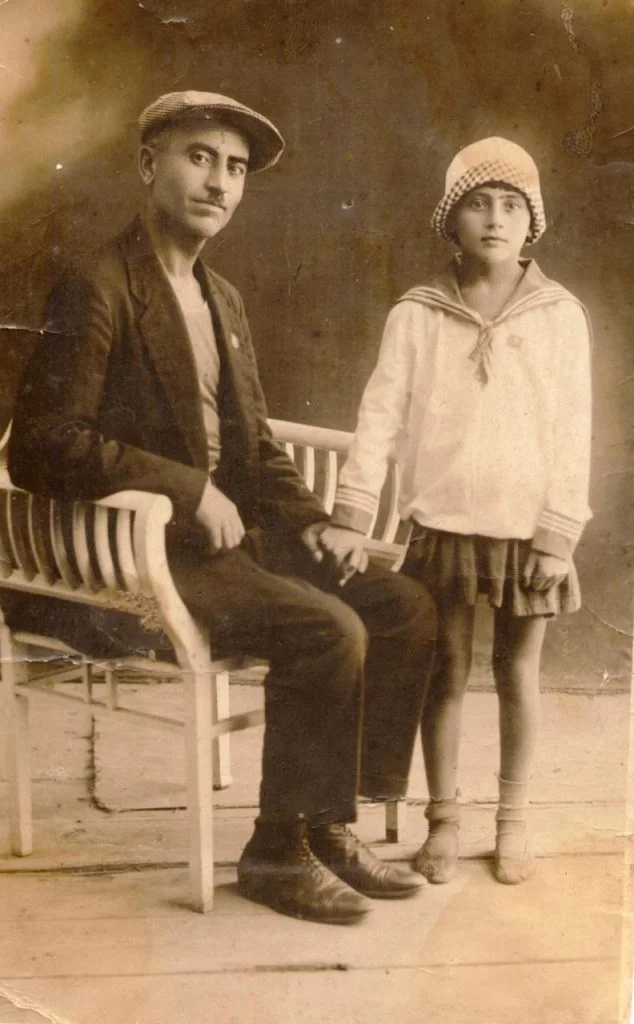
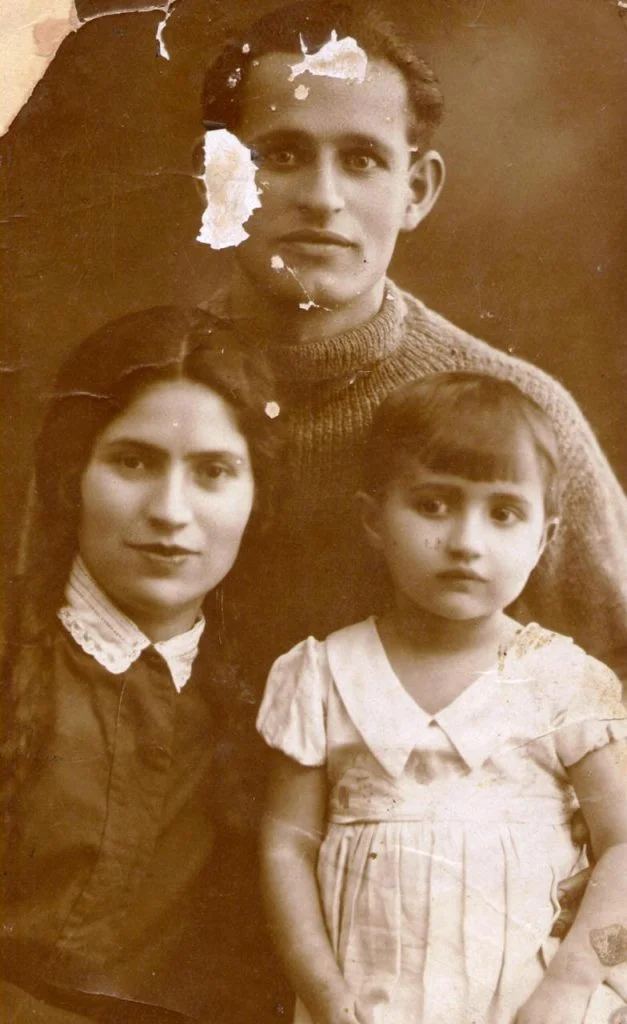
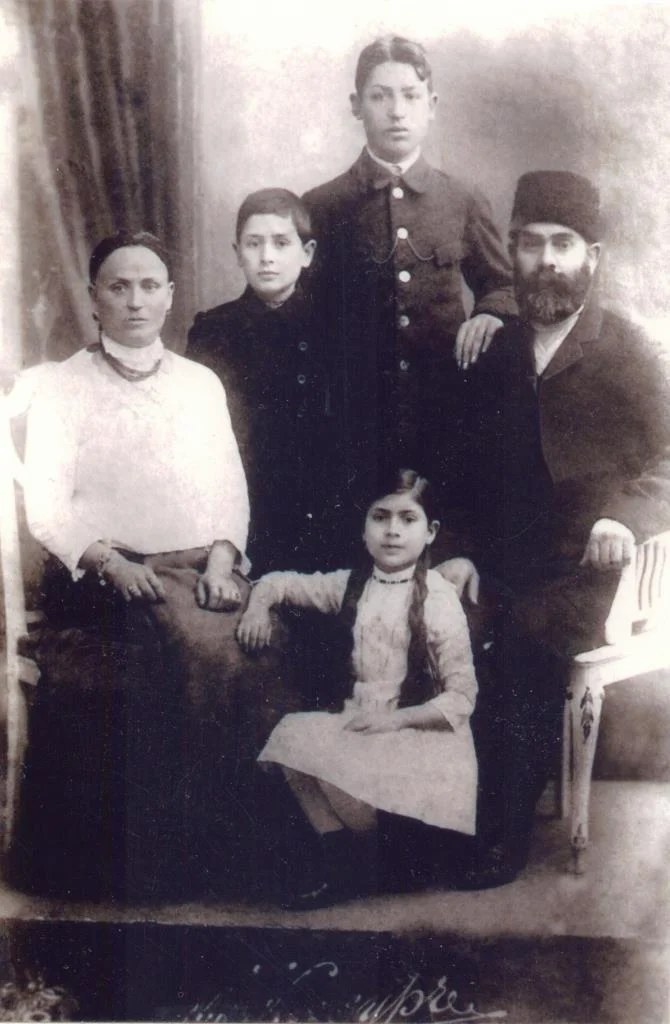
I stay in touch with Krymchaks of my generation, and even some who are a little younger, but there are very few of them in Ukraine. Like Ukrainians from occupied territories, they are unable to fully realize their national and religious needs. In addition, all Krymchak historical heritage is currently in the hands of the occupiers. The only Historical and Ethnographic Museum of the Krymchaks is located in Simferopol.
russia likes to rewrite history. What aspects of Krymchak history is it trying to rewrite?
We know russia as a country that is hostile to everything connected with Judaism. Even the name “Krymchaks” itself is a russian invention. Unfortunately, it became entrenched and was eventually adopted by the Krymchaks themselves. They did not call themselves that before the russian invasion and occupation of Crimea in the seventeenth century.
And what did they call themselves?
They called themselves srel balalary, the Children of Israel. Historians have not reached a consensus regarding the origins of the Krymchaks. These were people united by religion. They were likely ethnically diverse. Evidence of this can be found in the surnames of different origins: Turkic, Jewish, and Italian. A large portion of Crimea’s population descends from Genoese settlers and people who arrived from what is now Italy.
russia proclaims itself a multinational state, yet does everything possible to subjugate those nationalities. A number of scholars studied the Krymchaks and documented their culture in academic historical works. However, because this took place within the framework of the russian imperial historical tradition, the history of the oppression of the Krymchaks was erased.
The Krymchaks were primarily a people of artisans. Most were poor and illiterate. Like all Jews in the russian empire, they were considered members of a lower class and did not enjoy equal rights with the Slavic population. This fact was never highlighted by russian historians. Even in their best times, the Krymchaks numbered only six to seven thousand people throughout Crimea.
The Krymchaks generally welcomed the Bolshevik Revolution. Unfortunately, they themselves also contributed to abandoning their religious identity. They changed their surnames and given names and russified them. Unfortunately, they did not make sufficient efforts to preserve and pass on their linguistic tradition. My father, born in 1943, no longer speaks the Krymchak language. The entire history of the Krymchaks, now compounded by the occupation of Crimea, is not a positive one.
When you visited Crimea as a conscious adult, what surprised you the most?
Ukraine invested too little effort in integrating Crimea, above all culturally. Nevertheless, a balance was found between peaceful coexistence and gradual integration into Ukraine. In my view, this process continued until 2014 and was moving in a positive direction.
When Ukrainian license plates were introduced in Crimea during the 1990s, local residents would even tear off the little Ukrainian flags. But this was no longer noticeable in the 2000s, and especially not in the 2010s. A new generation had grown up. Despite total russification, they were ready to embrace multiculturalism and their belonging to Ukraine. A generation emerged that identified itself as Ukrainian.
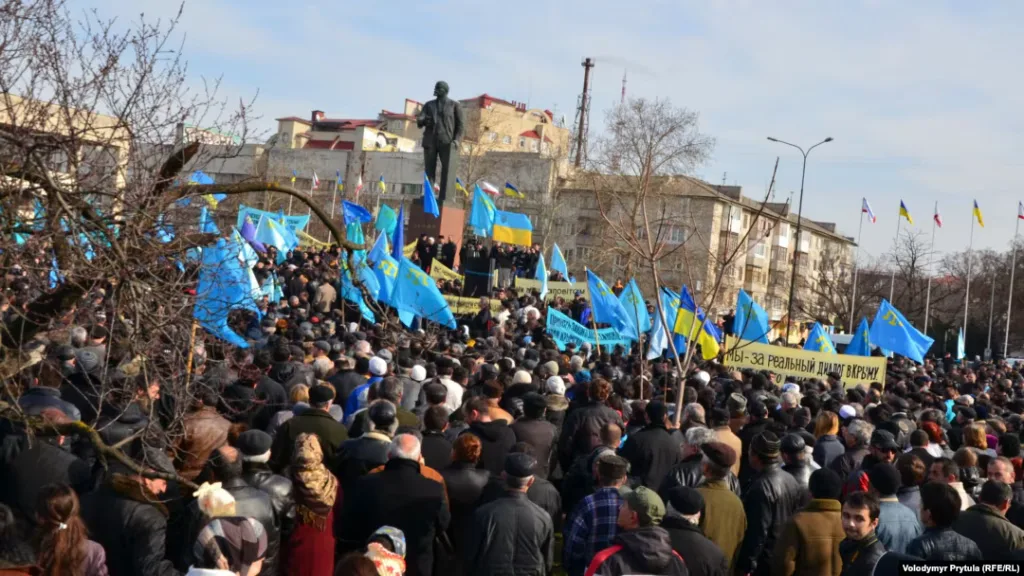
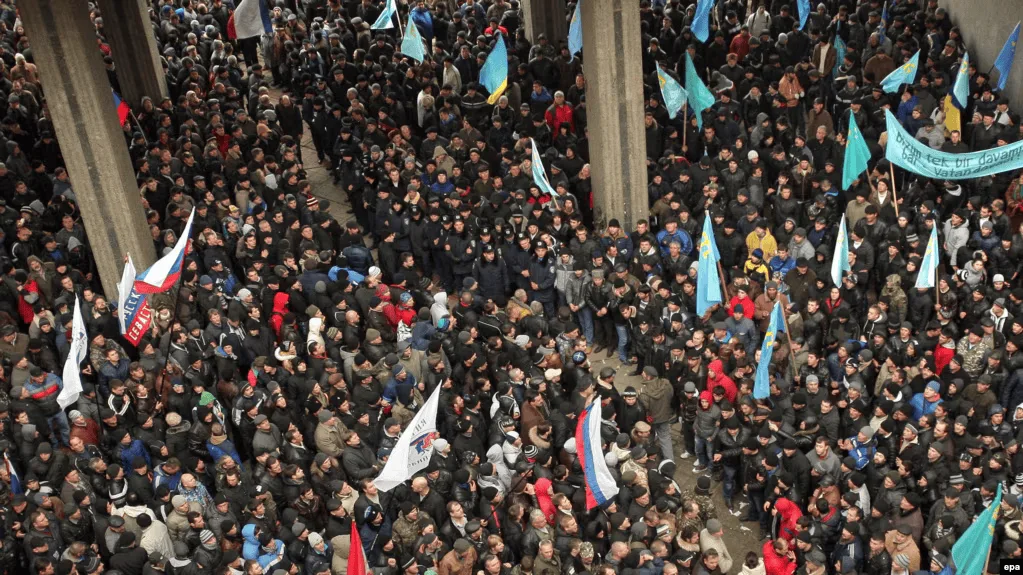
Crimea was not anti-Ukrainian. The protests at the end of February 2014 prove this. Thousands of people gathered and spoke out against the occupation and russian intervention. They carried blue-and-yellow Ukrainian flags as well as Crimean Tatar flags.
You were in Crimea at that time. What were you doing there?
I was an activist of the Maidan movement in Kyiv. At the same time, I helped foreign media cover events in Ukraine and worked as a local producer for an international television corporation. After the Maidan victory, our media team was deciding where to go next and what to cover first in Ukraine. Protests had already begun in eastern regions, and everyone’s attention was focused on Donbas. But I convinced the team to go to Crimea. On February 25, the day before the large protest, we flew to Simferopol.
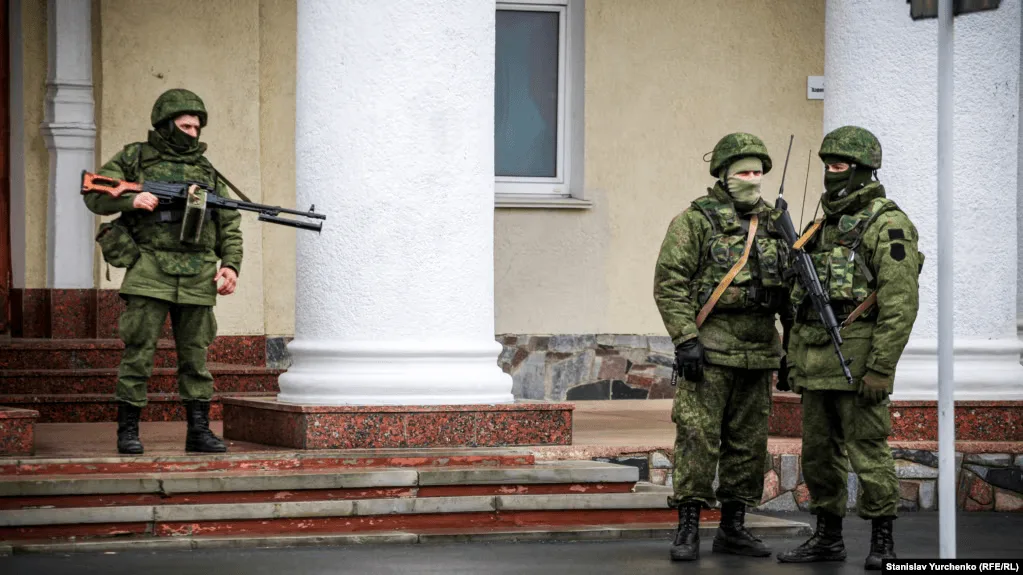
There were numerous pro-russian demonstrations taking place. We saw costumed agitators, and they were easy to identify. It also became apparent that russian military contingents were beginning to move across Crimea.
We were among the very first media teams to establish that the vehicles used by the so-called “little green men” had recently been brought in from various regions of the russian federation. These were not the troops and equipment stationed in Crimea under the international agreement governing the presence of russia’s Black Sea Fleet on Ukrainian territory. It was clear that something large-scale was unfolding. Yet neither Kyiv nor Crimea could fully comprehend the scale of what was happening.
I had many contacts and friends there. One night, someone from a local network informed me that the russians were seizing the Cabinet of Ministers and the Parliament. Our hotel was located just a few hundred meters from the Council of Ministers of the Autonomous Republic of Crimea. I ran out of the hotel and saw machine gunners on the roof. Later, we learned more and saw video footage documenting how those buildings had been taken. It was russian special forces.
That night, the russians seized two key government buildings. Mass demonstrations began, including a major pro-Ukrainian rally outside the Parliament of the Autonomous Republic of Crimea on February 26.
Can you tell us about that large rally? What do you remember about it?
It was something extraordinary. The square in front of the Parliament was completely filled with people. Estimates vary, but there were thousands of them. At least five thousand, somewhere between five and ten thousand. It was a rally organized by Crimean Tatar leaders. What impressed me most—I had never seen anything like it—was when the crowd chanted in unison: “Allahu Akbar! Glory to Ukraine!”
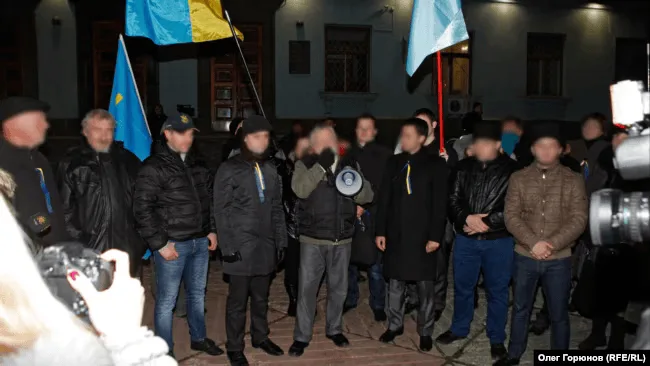
I got goosebumps all over my body. I realized that I was in a remarkable place at a remarkable moment in time. It seemed to me that this force could move mountains and influence the situation. Unfortunately, I was wrong. For objective reasons: the russian army was there, exerting enormous armed pressure as an occupying force. But that force, those people—they were there, and there were many of them.
If we are talking not about staged demonstrators but about Crimean residents themselves, how united were opinions on the peninsula? Were there clashes among them?
The clashes were clearly provoked, at least the ones I witnessed. Crimeans’ attitudes were not radically pro-russian. Most people had been frightened by russian propaganda that had been broadcast both through major Ukrainian channels before the victory of the Revolution and through russian television. It was a well-orchestrated propaganda machine that flooded Crimea with stories about Banderites who would supposedly arrive and slaughter everyone who did not speak Ukrainian.
But Crimeans did not want to join russia. The fact that only a relatively small number of people took part in the referendum is evidence of that.
How did the resistance develop afterward?
It seems to me that the fact that pro-Ukrainian forces and the Crimean Tatar movement acted in parallel rather than together may have reflected a realistic assessment of their own strength and mobilization capacity. In the end, Crimea’s pro-Ukrainian forces were unable to withstand the pressure and momentum of the russians.
The movement continued for several weeks. But as far as I can judge, the russians had accounted for almost everything. It was a carefully planned operation. They seized key locations and neutralized people capable of organizing protests. Resistance from Crimea’s pro-Ukrainian forces gradually began to fade. At the same time, the russians surrounded all Ukrainian military units and naval vessels. It became clear that no assistance would come from mainland Ukraine.
How was the referendum conducted?
They tried to organize it in a way that resembled elections, opening polling stations. However, there were ten times fewer of them than would normally have been required. They directed those people who chose to participate voluntarily to these polling stations and created television images suggesting widespread participation in the referendum.
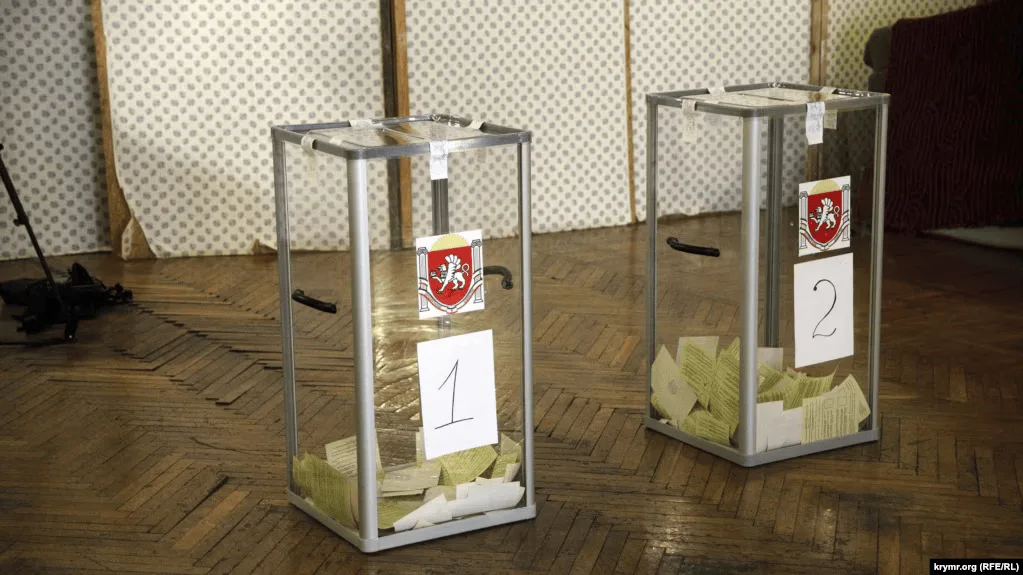
No aspect of the process—neither the printing of ballots, nor their transportation, nor the counting of votes—could be independently monitored. That is why we later saw the figures they announced, claiming that 96 percent had voted in favor. Mathematically, those numbers simply do not add up. The entire process was a lie held together with a white thread. Moreover, the referendum itself was illegal under Ukrainian law.
What happened after the results were announced?
The situation was completely unclear. The encirclement of Ukrainian military units continued, as did russian attempts to seize them. We documented all of this on a daily basis.
What was happening inside those units? Leonid Matiukhin wrote a book about it. He was an officer at the military base in Perevalne, which my team was the first to reach. I believe it was the first military unit surrounded by the russians. In his book And Mom Will Understand… Crimea 2014: True Stories, he tells the story from the inside.
In planning the Crimean operation, the russians failed to take two things into account. First, Ukraine was a country with freedom of the press. It also had a visa-free regime for foreigners, allowing journalists from around the world to come, document what was happening, and share it with the world. The russians had not anticipated this. They believed they could hide behind the narrative of a “people’s militia” and deceive everyone for a long time.
The second factor was the behavior of Ukrainian servicemen inside the surrounded military units. Everywhere, the same scenario played out once a unit had been encircled by russian troops. Some high-ranking officer, usually a colonel in the russian army, would enter and say to the Ukrainian soldiers: “Guys, today is your lucky day. Let’s all quickly sign up for the russian army.”
The russians assumed that the Ukrainian servicemen would immediately applaud and switch sides en masse. But the Ukrainians neither agreed nor outright refused. They held their positions and defended themselves for as long and as best they could. This must be understood in context: only yesterday they had lived side by side with russian officers, drunk vodka together, and socialized as families. And today a representative of the russian army or navy arrived and said: “Surrender, take off your insignia, and put on russian ones.”
It was a cultural shock that they could not process quickly. They understood that if they complied, they would be betraying their oath. Within every military collective, every group of servicemen, I believe, there were around twenty percent who maintained that core of loyalty and honor. And it could not be broken. As a result, the russians eventually resorted to violence. They began tearing down fences, driving onto military premises, acting aggressively, and physically attacking Ukrainian servicemen.
Having assessed their situation, the Ukrainians were unable to mount armed resistance. Perhaps this was done to preserve the lives of Ukrainian servicemen, whose number reached up to fourteen thousand. Had armed resistance begun, most of them would likely have been killed. It is a sad fact that around eighty percent of Ukrainian servicemen in Crimea eventually joined the russian army. But that process took time. The first encounters with representatives of the occupying army did not unfold according to the russian script.
Do you ever feel that Ukraine gave up Crimea too easily?
We must remember the circumstances in which all of this happened. The Revolution had just taken place, Yanukovych had fled, and the security apparatus was disoriented. Many people blame Turchynov and others for not taking harsher measures or issuing a clear order. But it seems to me that the Ukrainian government simply had no one it could fully rely on at that moment. There was no certainty that a clear command would actually be carried out. Moreover, Ukraine’s partners, especially the United States, exerted significant pressure on the new Ukrainian government to avoid escalating the situation.
When did people begin leaving Crimea?
Our media team left at the end of March, once it became clear that the entire peninsula was already under russian control. By then, leaving without problems had become difficult. As for the military, if I remember correctly, there was an agreement under which the russians allowed Ukrainian servicemen who wished to leave to do so without weapons. There were several successful attempts to leave by ship. Some of our men managed to break through. Heroic men—and highly professional ones as well.
There is a perception that everyone who stayed in Crimea is pro-russian.
That is not true. I still keep in touch with many people who remained in Crimea for various reasons, yet are strongly pro-Ukrainian.
If you are able to return to Crimea one day, where would you go first?
I would like to drive through the steppe, go into the mountains, and see the beauty of Crimea’s southern coast—the coast over which we will raise our flags again. What keeps me in the army is the dream of entering Crimea in a military uniform.