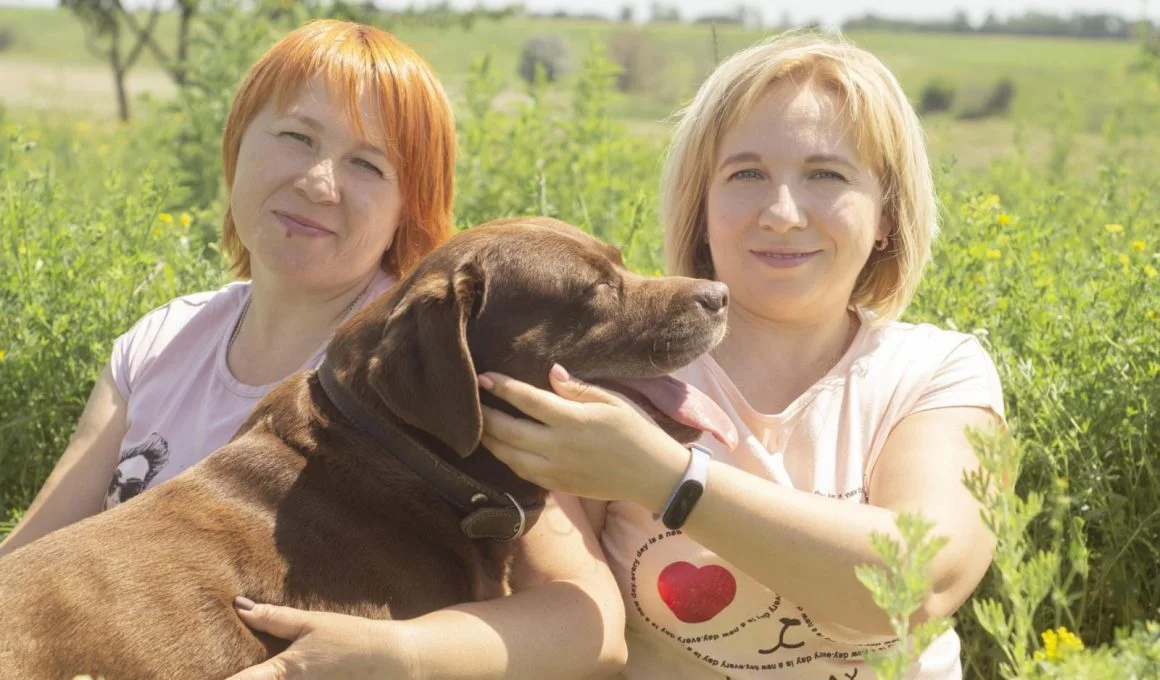
Ten years ago, sisters Valentyna Denysenko and Tetiana Chernikova, entrepreneurs from Donetsk, decided they did not want to remain under occupation. They moved to the Kharkiv region and founded a family business growing microgreens. Together, they weathered the crisis caused by the COVID-19 pandemic and have now experienced displacement for the second time due to Russia’s full-scale war. Although Tetiana now lives and works in the Poltava region and Valentyna remains in Kharkiv, the sisters continue to run their business together. Moreover, they actively work with local communities and develop new areas of activity.
We have previously written about the entrepreneurs’ experience. This time, together with Poltavska Khvylia, we will look at their story from a different angle. How cooperation between displaced women and host communities helps make frontline regions more resilient during a prolonged war.
This photo from occupied Mariupol appeared in nearly all major international media outlets. Seeing people forced to cook over open fires, Tetiana Chernikova began wondering what she could do to help.
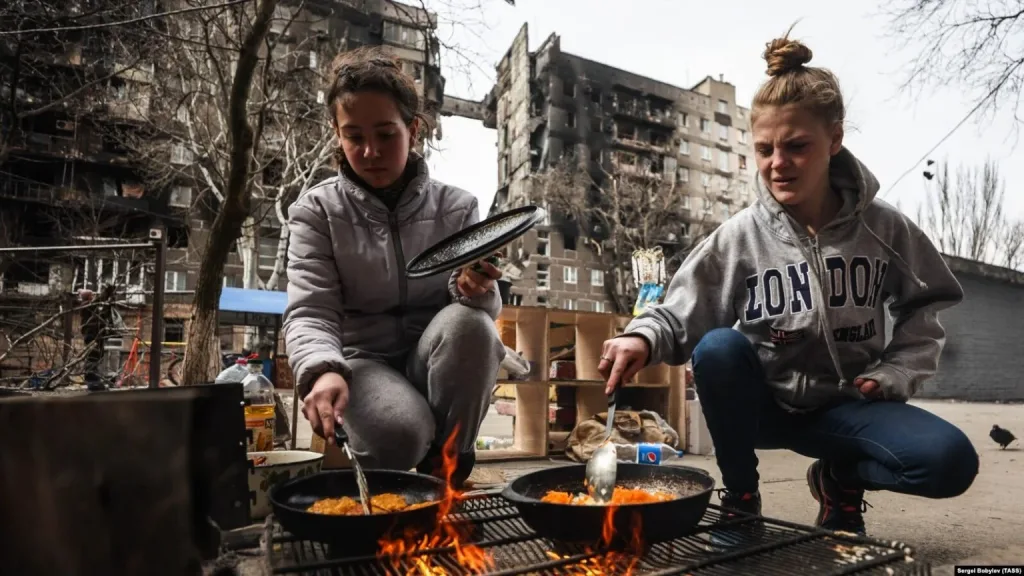
Her experience suggested that the solution had to be something easy to prepare anywhere and that would not require refrigeration. Later, Tetiana learned about retort packaging: vacuum-sealed pouches designed for the long-term storage of ready-to-eat meals. She decided to reproduce the technology at her own production facility in the Poltava region.
A USAID AGRO grant helped launch the venture. Together with her husband, Tetiana rented the premises of a café in Orzhytsia, set up a kitchen, and developed a menu. Starting with zucchini caviar and jams, the product range gradually expanded. It now includes first and second courses, porridge with stewed meat and vegetables, liver pâté, and more.
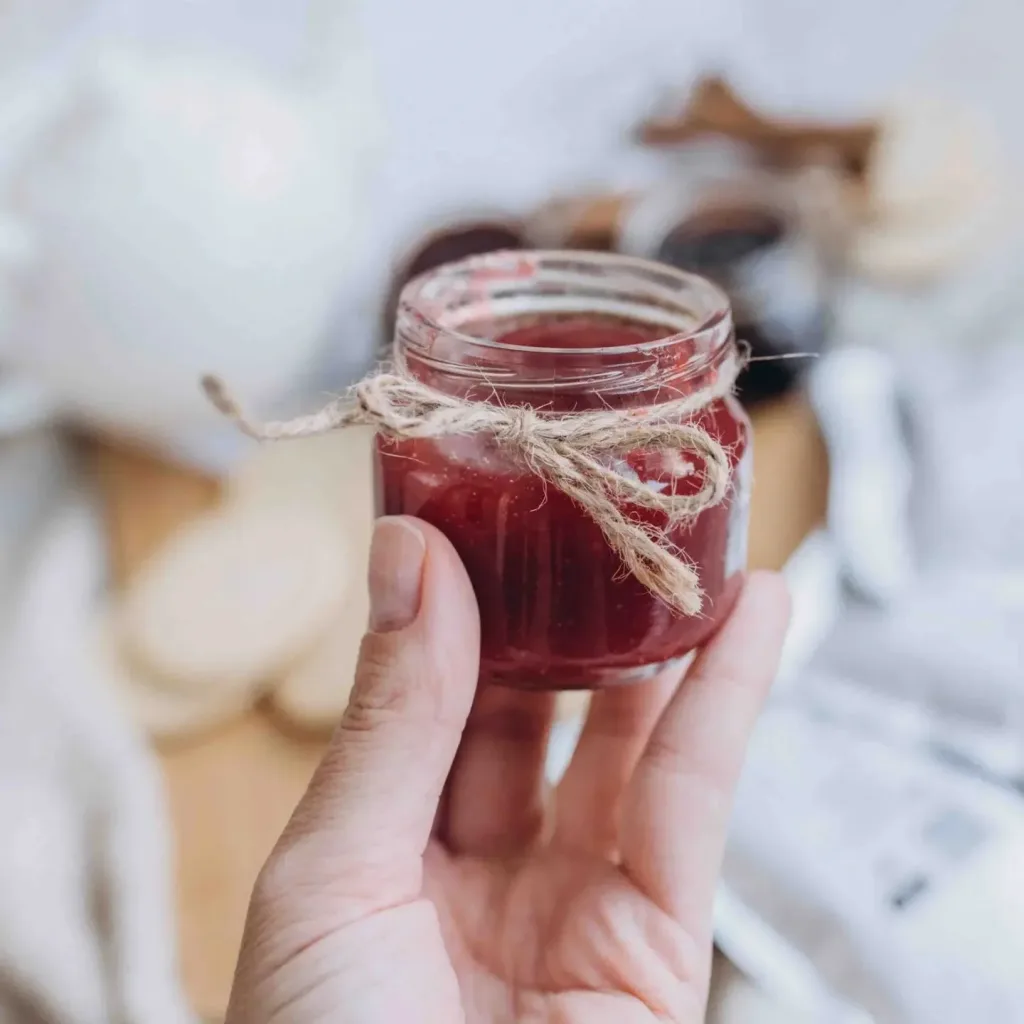
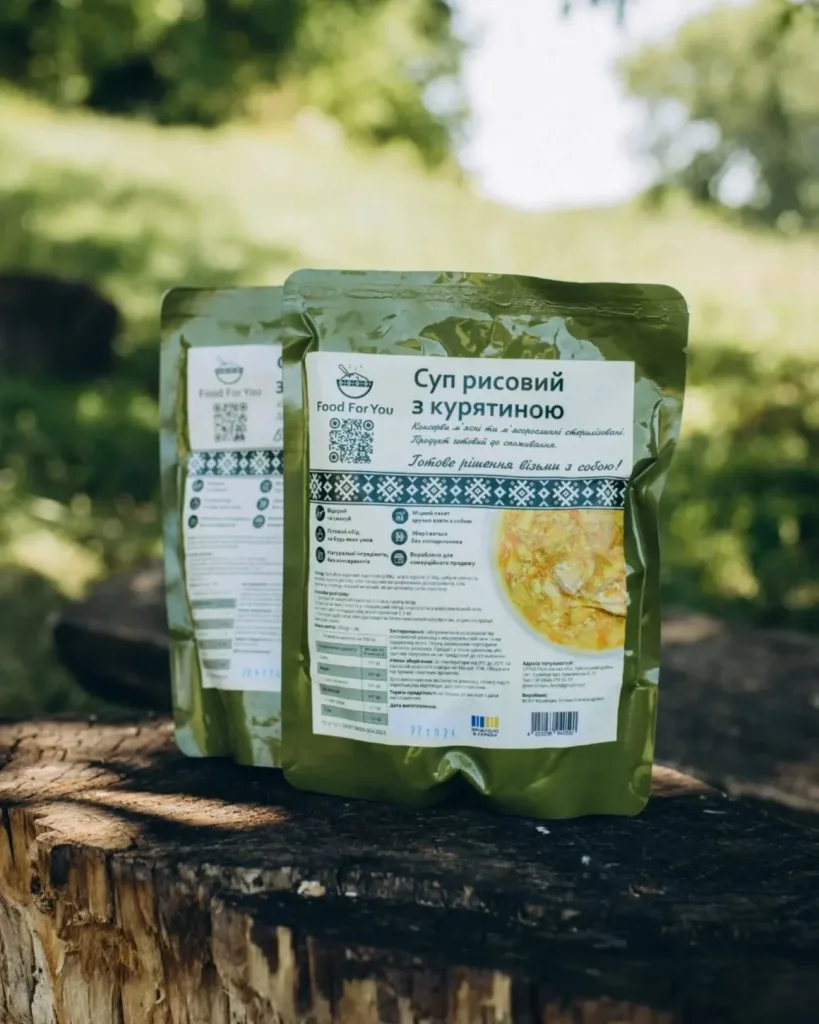
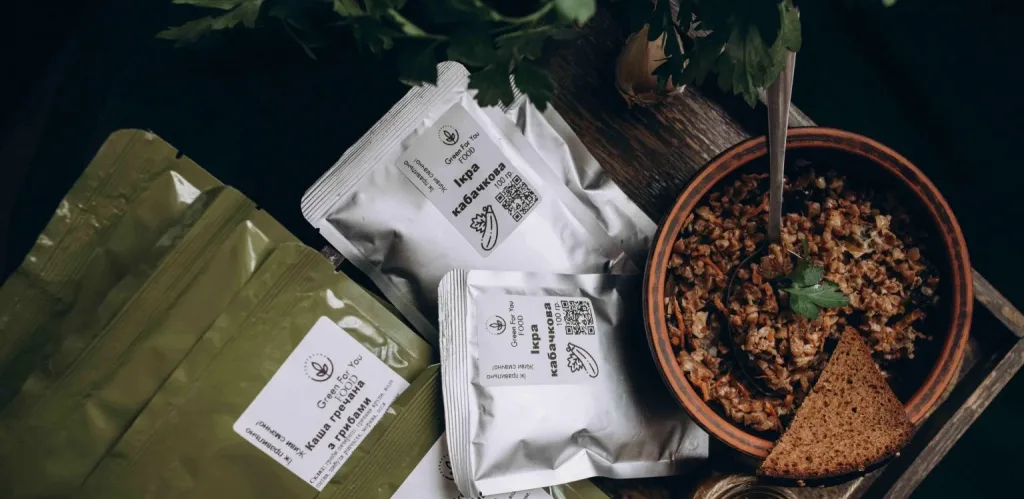
“The idea is closely connected to my own life. My family and I are experienced displaced persons. We know how difficult life can be for people who cannot stay at home in comfortable conditions. When I saw how the residents of Mariupol had to cook food over open fires, I realized it was critically important to help people in such situations. To help them always have some food in reserve to feed themselves and their children,” Tetiana recalls. “I came across retort packaging. In both Ukraine and abroad, it is used to supply military rations.
The pouch preserves food safely, is easy to transport, does not tear, and withstands temperature fluctuations. It seemed extremely useful under current conditions. So I contacted manufacturers, found a food technologist who advised me, and began implementing the idea.”
The meals are suitable for preparation in field conditions, while traveling, in shelters, and during blackouts. They require no additional cooking and can be eaten immediately. Tetiana initially sent the first batches of products through volunteers to military personnel and people living near the front line. Later, online sales were launched across Ukraine. Production was expanded thanks to a grant from Corteva Agriscience. Tetiana won that grant after completing the TalentA-2022 educational program.
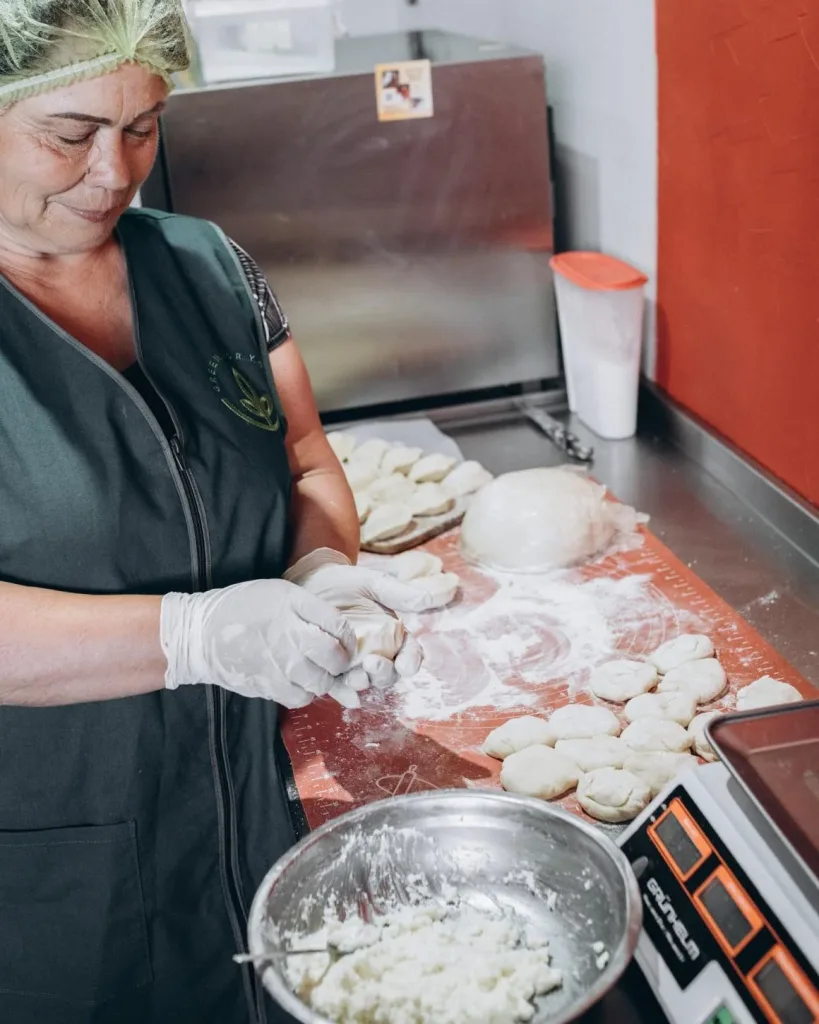
Tetiana’s husband handles logistics, while local women from Orzhytsia and displaced women were invited to work in the kitchen. After moving to the village, the entrepreneur noticed that employment opportunities were limited and decided to support local residents.
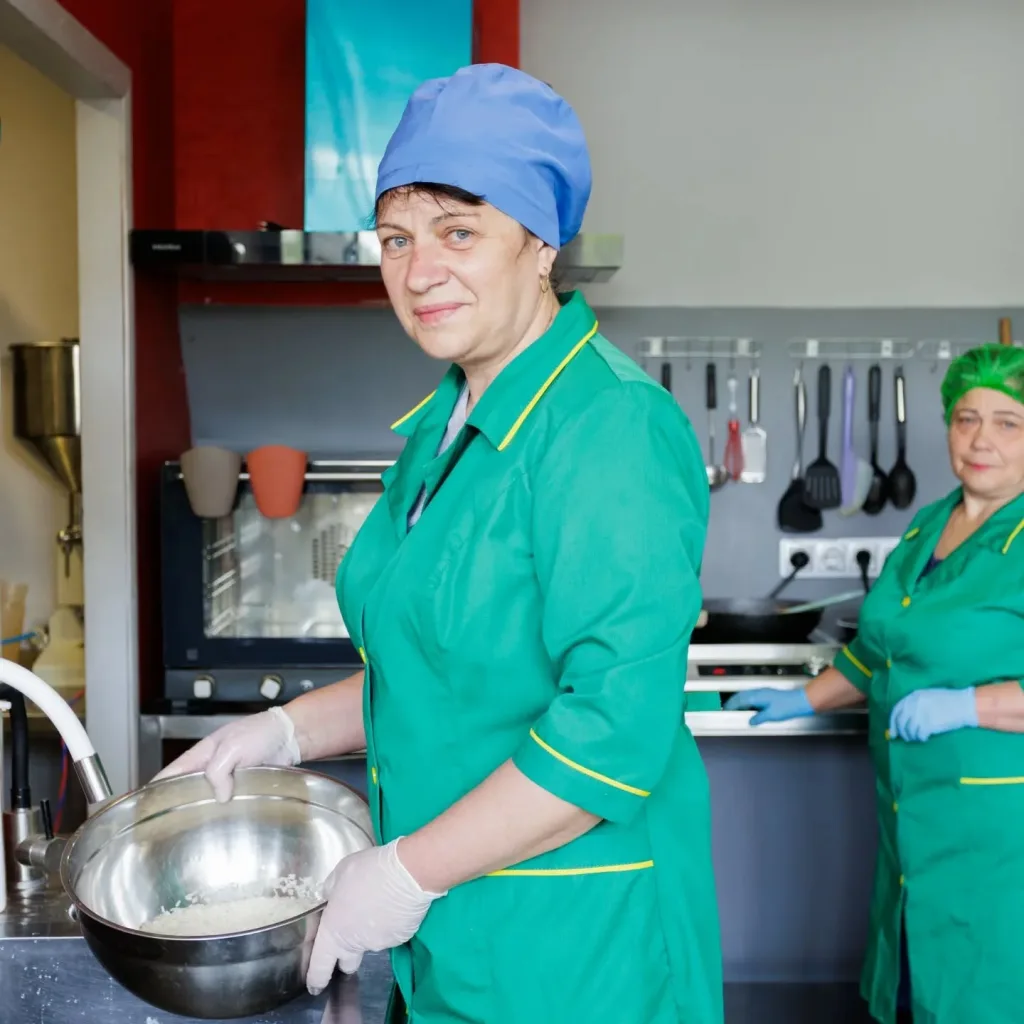
“We employ mothers with young children, older women, and people with disabilities. It is important for us to provide local residents with opportunities to earn an income. That is why we purchase vegetables, berries, and fruits from them. We encourage farmers to register as sole proprietors so that we can officially purchase products from them for our production. I believe this contributes to strengthening the community’s economic capacity.
We received a very warm welcome. When we first moved here, I approached the village council and told the head: ‘I want to live here, work here, and help others, but I also need support.’ The local authorities responded immediately. They helped us find premises for work and introduced us to local entrepreneurs. I am deeply grateful to the local administration and everyone who has stood beside us since the very first days.” – Tetiana Chernikova
The family business continues to operate, though not without challenges. According to Tetiana, vegetable prices rose significantly this year due to poor harvests, forcing the company to recalculate production costs several times.
“Those moments are difficult because our product serves a social purpose. Our main customers are military personnel, their families, and volunteers. These are not people we intend to profit from. Since the very beginning of our work, back in the Kharkiv region, it has been important for us to remain a socially responsible business and help those in need. Therefore, pricing is always about finding the optimal solution,” the entrepreneur emphasizes.
Part of the food produced by the team is supplied free of charge to soldiers and people affected by Russian aggression. Production capacity now reaches 10,000 units of ready-made products per month.
“Before the full-scale war, my sister and I dreamed of producing salad dressings from microgreens and various sauces such as Italian pesto. We wanted to expand our product range. But after the full-scale invasion began, we realized that such products were not nearly as relevant as they had been in peacetime. We focused on current public needs, and we can see that it was the right choice,” says Tetiana.
Although demand for microgreens has declined, Tetiana’s sister, Valentyna Denysenko, continues to work with supermarkets in Kharkiv. She does not rule out the possibility of growing new crops in the future, but for now, civic engagement takes priority.
Today, It Is No Longer Enough for a Business Simply to Exist. Civic Engagement Has Become a Necessity and a Part of Everyday Life
In 2021, Valentyna and Tetiana, together with their colleague Inna Avramenko, founded the NGO Green-Landia. Inspired by the idea of conscious consumption, the activists initially wanted to raise environmental awareness among the population. They also sought to promote women’s entrepreneurship and organize educational events for aspiring business owners. These initiatives required funding, and the women realized that a formally registered organization would have a better chance of obtaining grants.
“When the full-scale war began, we had to put our dreams on hold and focus on something else. Humanitarian aid started arriving in Kharkiv, and we began asking what help was needed and who needed it. We provided whatever we had: medicines, food, clothing, and shoes. Having NGO status turned out to be very useful,” Valentyna notes.
The question of whom to help was quickly resolved. Previously, Valentyna and Tetiana had spent two years working with children with Down syndrome in cooperation with the charitable foundation Caritas Kharkiv. As agricultural consultants in the Sprouts of the Future project, they taught children how to grow greens. It turned out that almost all of these families had remained in Kharkiv, so Valentyna called them first and offered assistance.
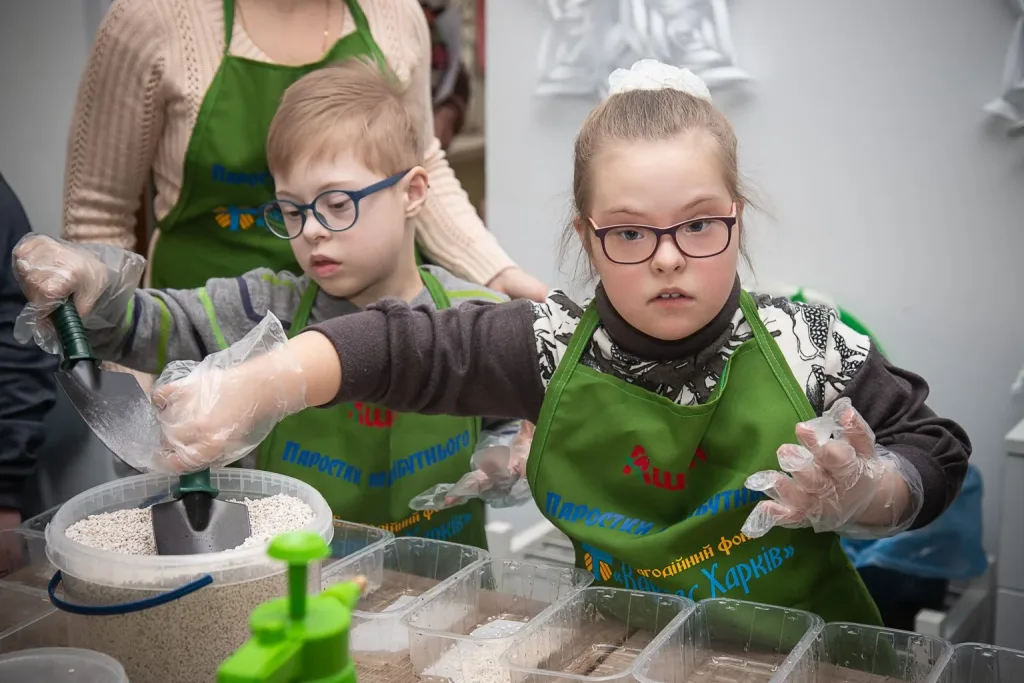
As Tetiana Chernikova recalls, even before Russia’s full-scale invasion, when the children’s project ended, she and her sister were already thinking about how to continue supporting families raising children with disabilities. That was when they realized that establishing an NGO would make it easier to secure funding and revive the project. Sooner or later, Tetiana believes, they would have founded an NGO anyway. It is also important for cooperation with international donors.
In February 2022, the situation in Kharkiv deteriorated sharply. Tetiana evacuated to the Poltava region with her husband and children. Valentyna stayed in the city. She was supporting families raising children with disabilities by delivering humanitarian aid packages and maintaining constant communication with them.
“While talking to mothers raising children with disabilities, we realized how much they needed places to meet, socialize, engage in creative activities, dance, and sing. These may seem like simple things, but someone has to organize and manage them. Such support is important not only for these families but for all women and girls. Valentyna and I thought: we need to create a space where women can support one another, and that alone would already be significant assistance. And if specialists such as psychologists, lawyers, facilitators, and fitness trainers were also available there, it would become a resource center where women could receive the support they need and recover emotionally.
Even when we were still just an initiative group, and to this day, we have been supported by the Center for Gender Culture. Tetiana Isaieva and Tetiana Chernetska recommended us as a partner to the International Rescue Committee (IRC). Together with them, we opened seven safe spaces for women and girls.”
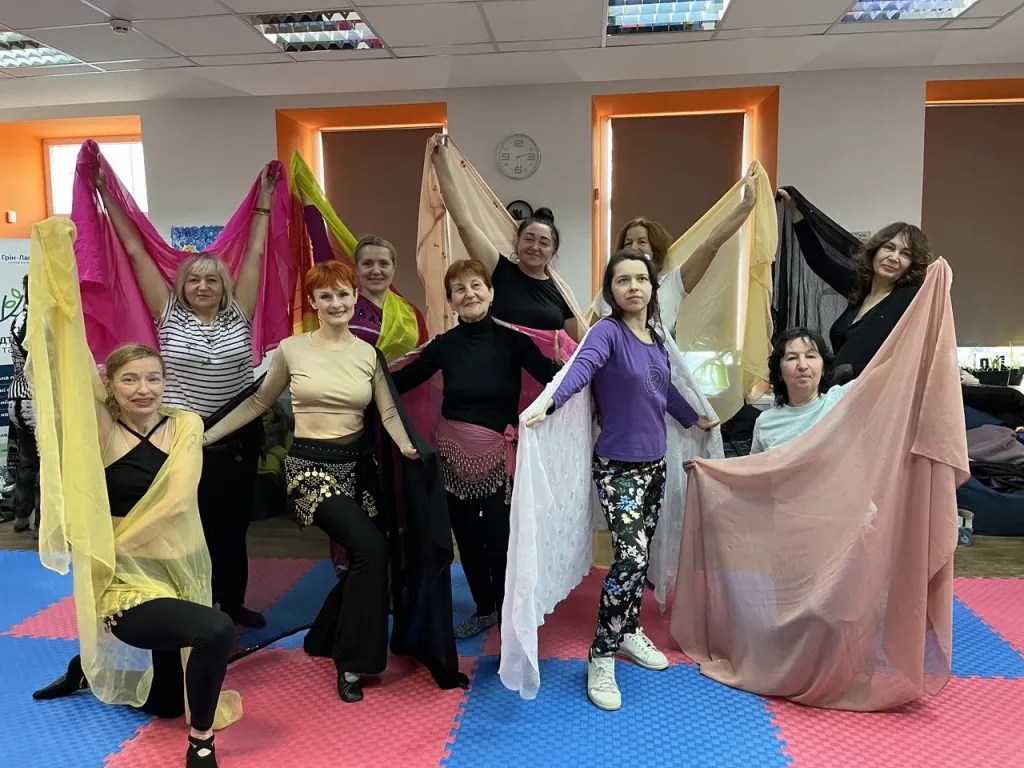
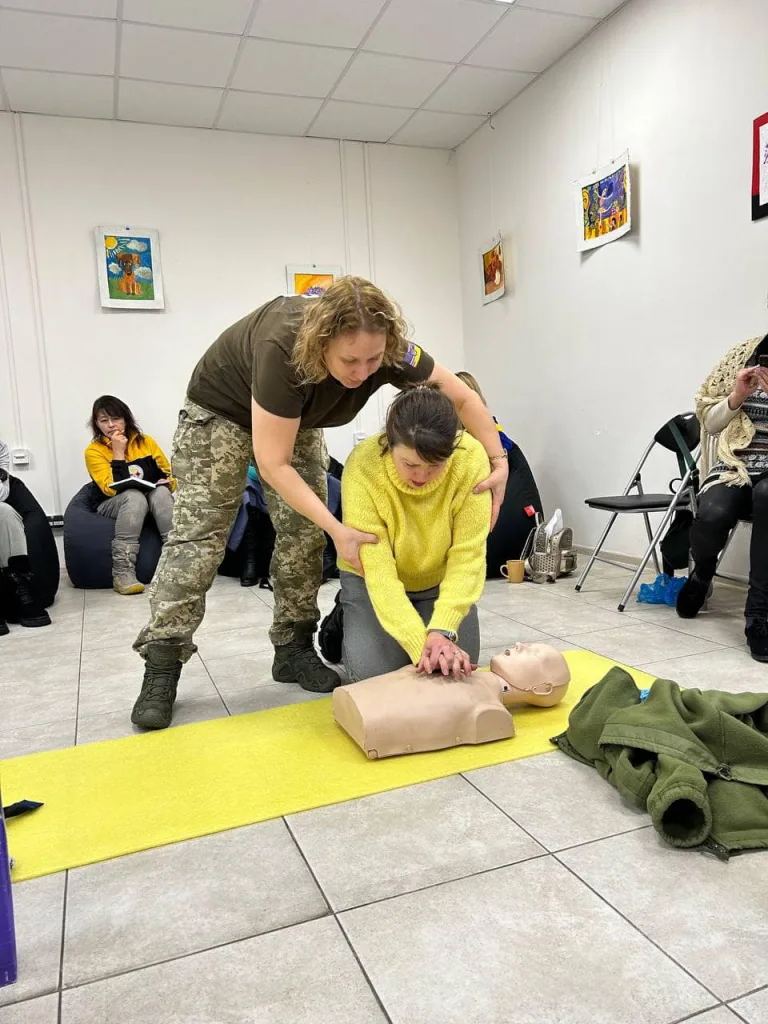
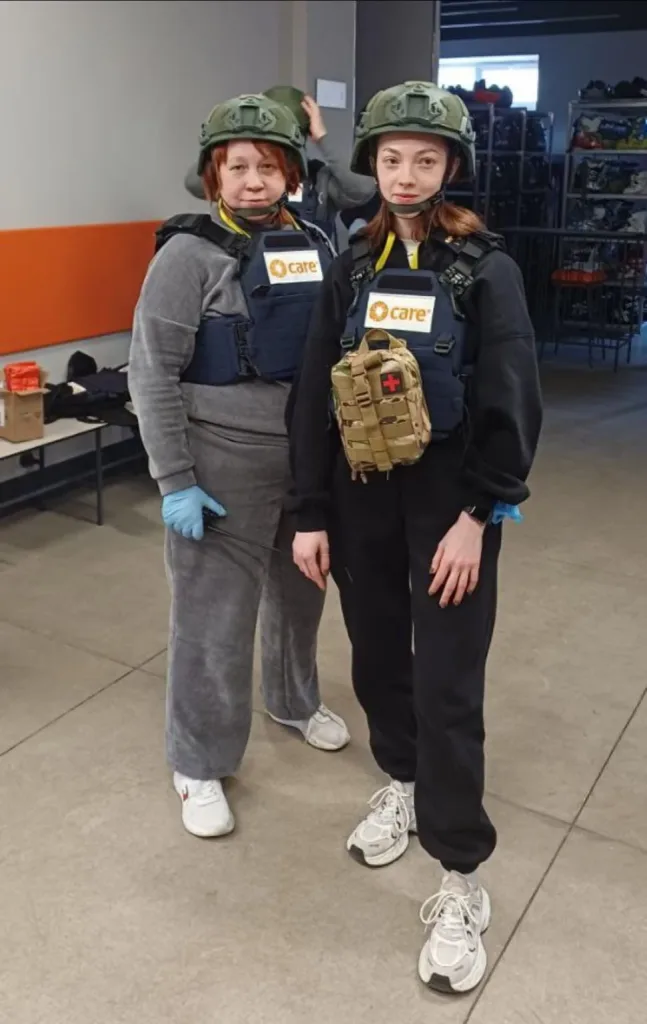
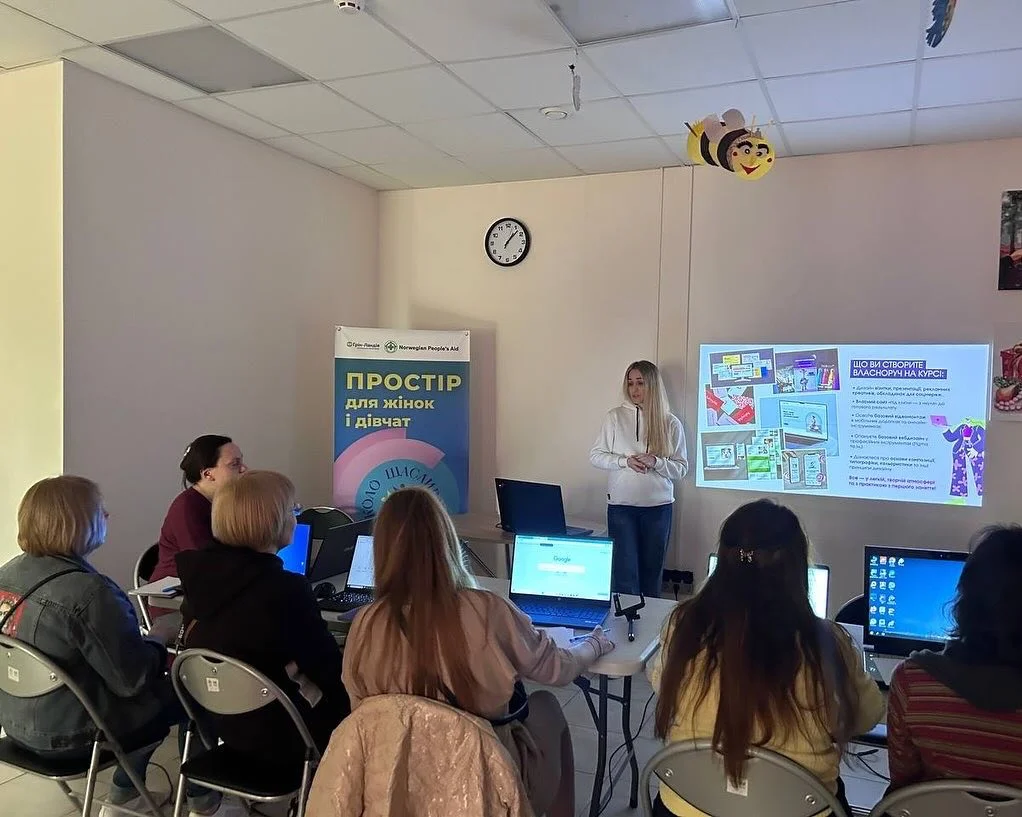
Today, such women’s spaces operate in Kharkiv, as well as in the settlements of Staryi Merchyk, Rohan, Ternova, Tsyrkuny, Khroly, Liubotyn, Pisochyn, and Balakliia. Visitors can receive free psychological support and legal consultations, as well as attend creative workshops and educational events.
“We are open to everyone, but we pay particular attention to women affected by gender-based violence or at risk of it, as well as those affected by Russian military aggression and violence,” Valentyna explains. “Overall, our focus is on addressing women’s urgent needs. We have a lawyer to help resolve legal issues and psychologists who can help improve emotional well-being. We also organize regular activities aimed at strengthening mental and emotional health. For example, during art therapy sessions, participants paint, socialize, relax, and take a break from everyday challenges.
One of our greatest achievements is our educational programming. Together with invited experts, we explain how to become an entrepreneur, how to discover yourself and start a business you have long wanted to pursue but lacked the opportunity or support to launch. We also teach women how to manage finances effectively and how to avoid scammers online and in everyday life.”
Over the past two years, more than 20,000 women have visited the centers. Information about events spreads from regular visitors to newcomers. Dozens of women join the communities every month.
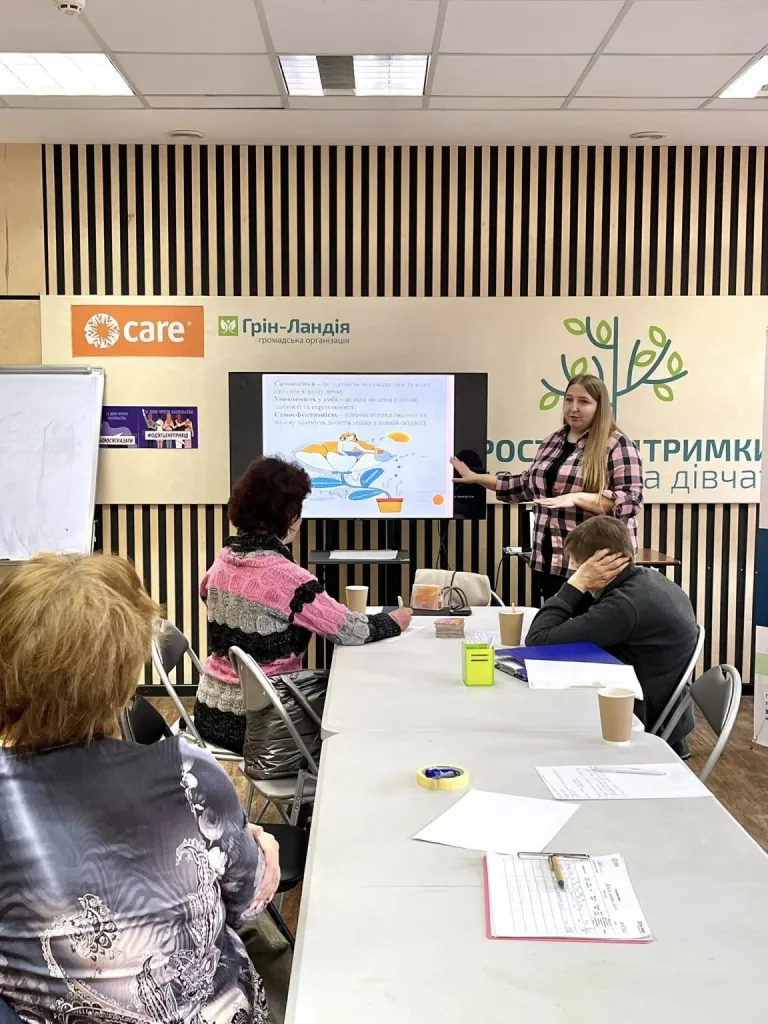
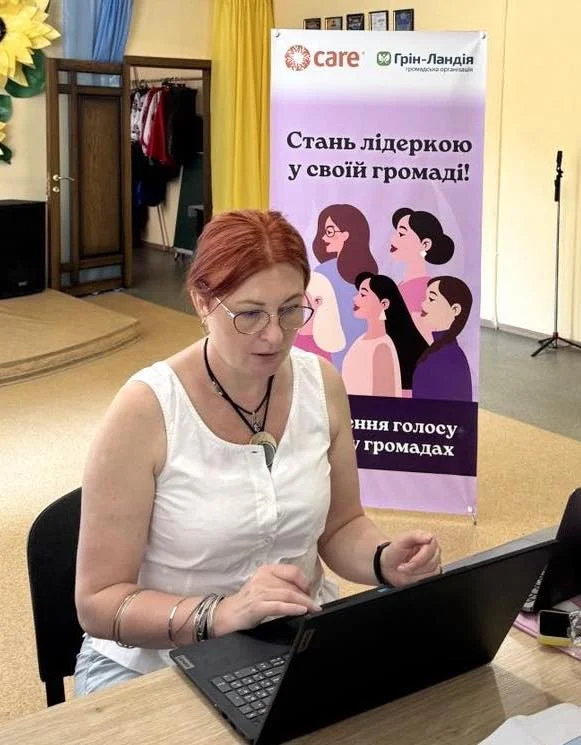
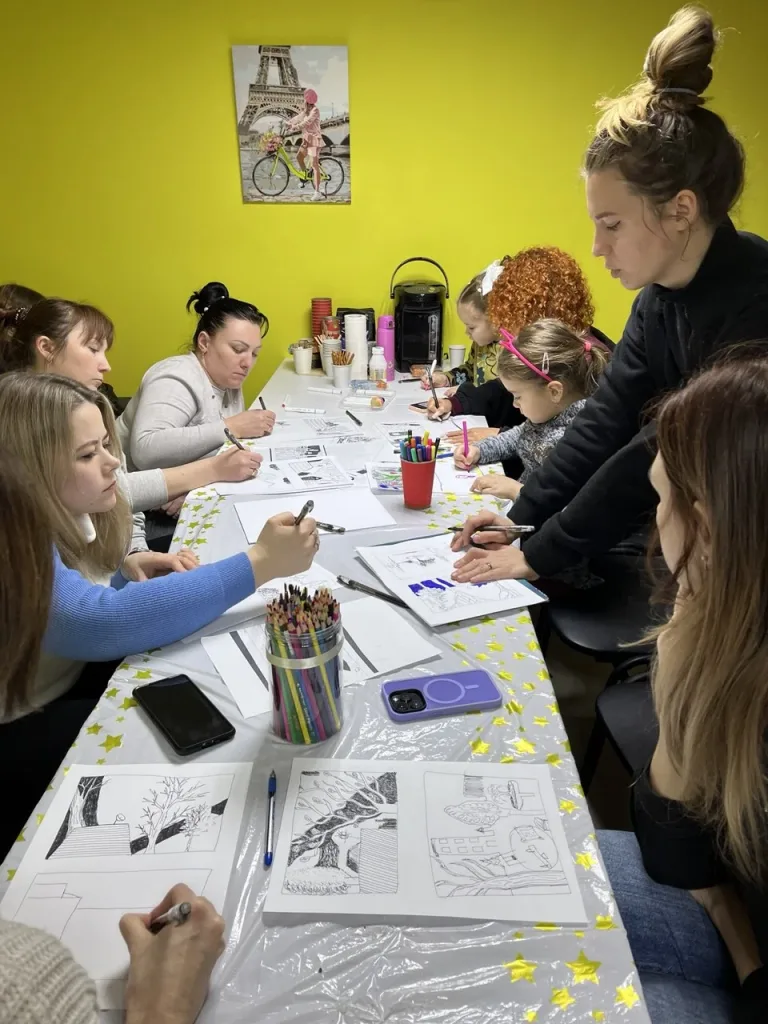
Tetiana dreams that similar centers will eventually open in Orzhytsia and other communities across the Poltava region. In the meantime, she continues searching for opportunities to support local women.
In the Kharkiv region, meanwhile, security remains the greatest challenge, according to Valentyna. Russian attacks make long-term planning difficult. Nevertheless, some preparation is possible: identifying shelters in advance, choosing safe venues for activities, and developing emergency response plans for staff and visitors in the event of shelling.
Business + Community + Government: Who Benefits and How?
Whether in business or civic engagement, the main goal is to meet the needs of the target audience. How can those needs be addressed? First, they need to be identified, and the simplest way is to ask people directly.
“Many people lack face-to-face communication, so they are willing to speak openly about what concerns them. It may be poor water quality where they live, a home damaged by shelling, or simply a desire to escape, even temporarily, from the reality they are living in.
In the communities where we work, we are constantly talking with local residents. Based on what we hear from them and from local authorities, we develop project ideas that can later be implemented in those communities to address residents’ needs,” says Valentyna Denysenko.
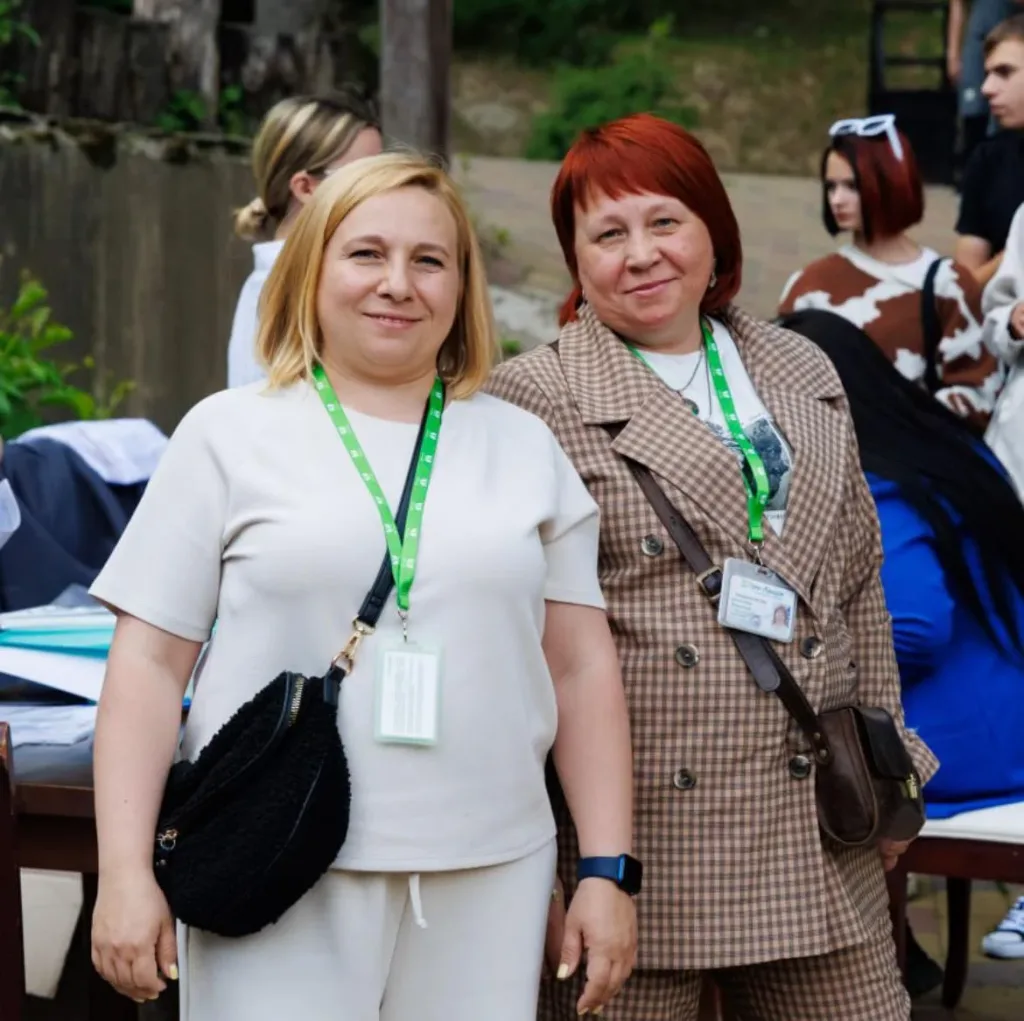
According to Valentyna, local governments in the Kharkiv region are eager to cooperate with activists. Civic organizations are less constrained by bureaucracy and can often respond to community needs faster than state institutions.
“We have a very productive partnership. The authorities clearly understand that civic activists bring significant benefits to communities. Sometimes they address needs that local governments simply cannot meet because they lack sufficient funding.”
If newcomers take a proactive approach from the start and engage with local authorities, there is a good chance of finding common ground and receiving support. It is important to regularly remind people about your work, talk about your activities and needs, and explain how you can contribute to the community, says Tetiana Chernikova.
“You need to write, call, visit the administration, and say: ‘This is what I do, and this is the support I need—human resources, administrative assistance.’ Don’t be afraid to approach local authorities. You may not receive a positive response immediately, but persistence produces results. I know that from personal experience. Of course, administrations are made up of different people, but you can find those who are willing to help. Whenever we have an opportunity in Orzhytsia to assist vulnerable groups of residents, we do so. As a result, the administration knows that we are not just entrepreneurs earning a living here—we can also support local residents through employment.”
Employment Opportunities Are One Reason People Choose to Live in Frontline Regions
According to estimates by the International Organization for Migration, the largest numbers of internally displaced persons (IDPs) in Ukraine live in the Dnipropetrovsk and Kharkiv regions—520,000 and 447,000 people respectively. For local communities, a key challenge remains creating conditions that allow newcomers to support themselves and their families. Training, retraining, and business grants are common and genuinely effective forms of support, but they require time. At the same time, there is added pressure on the social welfare system, as people who are not officially employed remain eligible for unemployment benefits.
Authorities can address employment issues more quickly by cooperating with local businesses, as in Tetiana’s case. Entrepreneurs in frontline regions face labor shortages, which encourages them to offer flexible working conditions and accommodate people’s personal needs simply to attract employees. Equally important for displaced people, such opportunities help them feel needed and integrate into a new community.
Those who still own housing often prefer to save on rent and live in their own homes, so many return even when those homes are close to active combat zones. Those who lost their homes due to Russian occupation or shelling eventually want to establish a new household. In both cases, they need money to live on. Savings run out, and people typically seek work wherever they have settled.
In its Report on Internal Displacement in Ukraine, the International Organization for Migration notes that most displaced people moved to another region of the country (73%). Most originate from the Donetsk region, with 283,000 settling in the Dnipropetrovsk region and 131,000 in Kyiv. Slightly more than one quarter (27%) relocated within their home region. The highest rates of such internal movement were recorded in the Donetsk (92%), Zaporizhzhia (86%), and Kharkiv (84%) regions.
Employment opportunities are one reason people choose to remain in frontline regions. But what does the labor market actually look like there?
Kharkiv Region Ranks Second After Kyiv in the Number of Closed Sole Proprietorships — YouControl.Market
According to the State Tax Service in the Kharkiv region, during January–June of this year, 171 sole proprietors chose Kharkiv as the location for opening a business. As of July 1, more than 122,200 sole proprietors were registered in the city.
Promising as these statistics may seem, entrepreneurship in a frontline region is more about constant risks and expenses than substantial profits. It requires considerable resilience.
Those who choose to operate and even expand businesses in the Kharkiv region point to significant support measures, including partial compensation of interest rates on loans and exemptions from local taxes and fees. These measures somewhat reduce financial pressure and allow businesses to allocate more resources toward recovery and development.
“Kharkiv ranks second after Kyiv in the number of closed sole proprietorships,” says Oleksandr Chumak, Head of the Association of Private Employers, analyzing YouControl.Market data. “During the first quarter of 2025, 3,771 sole proprietorships were opened, while 9,830 were closed, resulting in a net loss of 6,059 businesses. For comparison, in the Poltava region, 2,053 businesses were opened and 3,774 closed during the same period, resulting in 1,694 fewer entrepreneurs. This is a deeply concerning trend because the factors driving business closures, including shelling, remain in place. Operating in a frontline region therefore requires resilience and a conscious approach. Authorities need to support determined entrepreneurs and provide tools that allow them to continue working.”
In addition to existing tax benefits, the expert proposes the following support measures:
- Introduce war-risk insurance to cover losses resulting from the destruction or damage of property caused by shelling.
- Provide financial assistance options—ideally non-repayable grants for business recovery and development. Loans may also be useful, provided businesses have assets to use as collateral. However, as Oleksandr notes, banks are often reluctant to accept property located in frontline regions because of the high risk of destruction.
“Unfortunately, neither Kharkiv nor other communities in the region have sufficient resources to launch such programs. One measure currently operating in Kharkiv is a program that compensates half of loan interest payments in addition to the national ‘5–7–9’ program. Another program is being developed to support entrepreneurs who wish to participate in trade fairs and exhibitions to promote their products internationally, with a 50% reimbursement rate. That is an excellent initiative.
For five consecutive quarters, Kharkiv has also maintained a preferential taxation program under which entrepreneurs do not pay property and land taxes. This is significant support as well. However, the key question remains: what happens next? The continuation of the program depends entirely on central government decisions and the availability of subsidies from the Cabinet of Ministers.” Oleksandr Chumak
The expert considers business start-up grants a good idea that genuinely motivates many people to become entrepreneurs. At the same time, the requirement to create new jobs makes these programs more difficult to access.
“When a business has been damaged by a strike, the entrepreneur’s primary concern is not creating new jobs but preserving existing ones. The Association of Private Employers is working with the Ministry of Economy and the State Employment Service to change grant conditions so that businesses can receive support without being required to create additional jobs. Grant amounts also need to be increased. For example, a grant of 500,000 hryvnias is negligible for a company that has lost property worth three million dollars. Funding is never abundant, and existing programs are insufficient. We are working to create more opportunities for entrepreneurs to recover and scale their businesses,” says Oleksandr.
In the Kharkiv Region, One in Four Recipients of a Business Grant Is a Displaced Person
“I have spoken with representatives of almost every settlement, village, and city council in the Kharkiv region. I can tell you this: everyone wants displaced people to stay, but they also want them to become economically active,” says Oleksandr Kotukov, Director of the Kharkiv Regional Employment Center.
Labor shortages exist everywhere, he continues, but demand differs significantly between the city and the surrounding region. In Kharkiv, there is roughly one applicant per vacancy, and applicants’ qualifications often do not match employers’ requirements. In the region, however, for example in the Lozova district, there may be as many as seventeen applicants for a single assistant educator position.
According to Oleksandr, most employers are willing to invest in employee training because they understand that if workers are scarce now, the situation will only worsen. It therefore makes sense to hire motivated people, support them, and help them acquire the necessary skills. This benefits individuals, strengthens businesses, and prevents the local economy from declining.
“I believe that once the active phase of hostilities ends, displaced people will become extremely active. After living in a place for two or three years, adapting to it, many will likely stay, and their skills and knowledge are valuable for host communities. That is why we need to support these people today, engage them in work, and provide training.
I can see that the authorities in the Kharkiv region share this understanding. The opening of administrative service centers for internally displaced persons is evidence of that. Our career guidance specialists work there as well. We are doing everything possible to ensure that everyone who comes to us finds employment as quickly as possible,” Oleksandr adds.
People registered as unemployed may remain on the unemployment register for no longer than three months, while pensioners may remain registered for up to one year. The minimum unemployment benefit is 3,600 hryvnias for insured individuals and 1,500 hryvnias for those without insurance records. The maximum available benefit is 8,000 hryvnias.
According to the Kharkiv Regional Employment Center, the number of displaced people applying for the government’s Own Business grant program has increased this year. The grant provides up to 300,000 hryvnias if one new job is created and up to 500,000 hryvnias if two new employees are hired. In 2023, 48 internally displaced persons received the grant. In 2024, the number rose to 133. In the first six months of 2025 alone, 134 displaced people received grants enabling them to start businesses in the Kharkiv region. The Employment Center expects even more recipients by the end of the year.
“Overall, 1,265 people in the Kharkiv region have received business grants since the program was launched in April 2023. Among them, 315 were displaced persons, meaning that one in four grant recipients is an IDP. We monitor their progress and inform them about employment compensation programs, training opportunities, and vouchers that allow them to obtain additional education. In this way, we support both business development and people’s self-realization,” notes Oleksandr Kotukov.
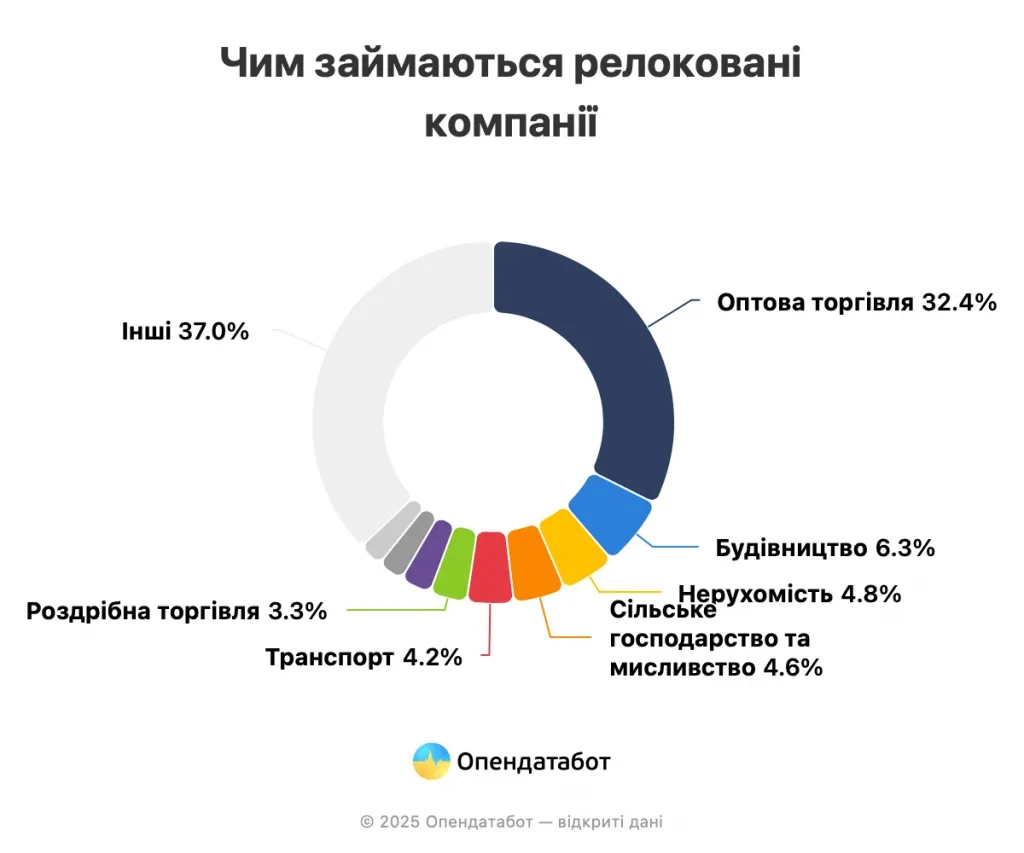
Which Business Sectors Offer the Best Opportunities for New Entrepreneurs?
When choosing a field of activity, the people featured in our story advise paying attention to current trends. At present, the most promising sectors include:
- Retail and wholesale trade.
- Personal care services (beauty salons, hairdressers, fitness centers, pet grooming).
- Veterinary services.
- IT consulting.
- Transportation and logistics (freight and passenger transport, including taxi services).
- Food service (restaurants, cafés, bakeries, and fast-food establishments).
“If you already owned a business and arrived in a new region as a displaced person, it is logical to restart that activity. Though you need to take local specifics into account,” notes Oleksandr Chumak.
Since 2014, he and his colleagues at the Association of Private Employers have helped relocated businesses adapt to the Kharkiv region. He recalls that between 2015 and 2018, a common challenge for entrepreneurs from the Donetsk and Luhansk regions was that their businesses were heavily dependent on the local economy. Industries such as metal production, mining, and related sectors simply were not developed in the Kharkiv region.
“Their businesses were connected in one way or another to those industries, but when they arrived in Kharkiv, there were no mines here. They had to integrate into our region’s economy. We helped them through the Association, but entrepreneurs themselves also need to consider the current context before trying to recreate their previous businesses,” Oleksandr warns.
“We Need to Adapt and Look for Opportunities Where We Are. Things Will Never Be the Way They Were Before”
For Tetiana and Valentyna, growing microgreens marked the beginning of a new life in the Kharkiv region. Later, the experience they gained proved valuable in their civic engagement and in launching a new business in the Poltava region. The entrepreneurs continue seeking opportunities to learn new things by participating in training sessions and educational programs. Sometimes they mentor aspiring business owners themselves. They continue searching for funding opportunities because having a Plan B is no longer just a principle of crisis management—it has become a necessity.
As Valentyna Denysenko says, one of the most important skills she has gained in recent years is the ability to find a way out of any situation.
“No matter what happens, you cannot give up. You have to get back up and keep moving forward. Creativity is incredibly important right now. Even though you do not know what tomorrow will bring, you still need to plan one year ahead, five years ahead, and think about what your business and civic engagement should look like in the future. It sounds unbelievable, but we need to adapt and look for opportunities where we are. Things will never be the way they were before.”
“Don’t be afraid of bold decisions,” adds Tetiana Chernikova. “In extreme situations, you need to act quickly. There is no time to hesitate or wonder whether you can handle it. You simply have to act, ideally anticipating all negative scenarios and being prepared to make decisions rapidly. It is also important to have a financial safety cushion. I cannot say we had one in 2014, but experience has taught me that it is wise to set aside at least ten percent of every profit for unexpected situations.”
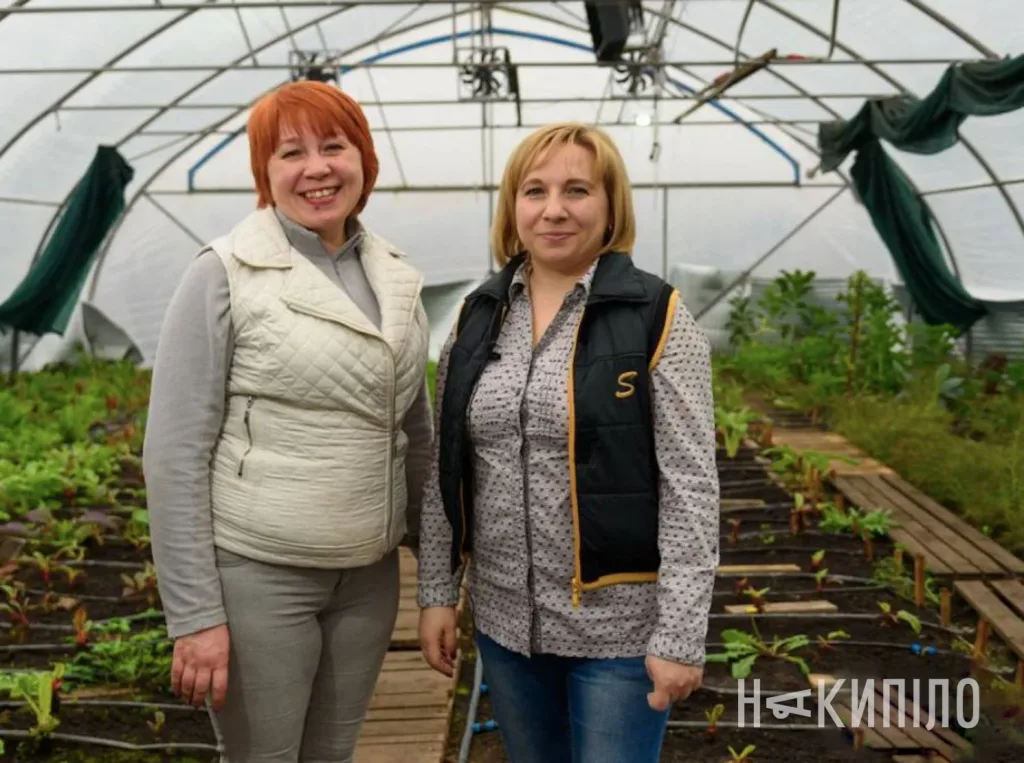
Through their own example, these women demonstrate how to become leaders in a chosen field despite war, bureaucratic obstacles, and personal challenges. Today, women carry a significant burden both at work and at home. According to the entrepreneurs, it is therefore essential to feel capable, motivated, and inspired to grow both personally and professionally. Ultimately, that helps restore the desire to live. And for every woman, close relationships with loved ones remain a constant source of support that continues to motivate them in both work and life.
“These are difficult times, and there is no point in wasting energy on arguments or misunderstandings. It is better to find shared opportunities, implement projects together, and support one another. Besides spending time with my loved ones, what gives me strength and inspiration is my deep desire for Victory.
I always say: we work here, in Kharkiv and Poltava, so that people want to return and have somewhere to return to. I say this both to the soldiers defending our country and to those who have moved abroad or to other regions of Ukraine. I want them to know that they are awaited here. And we are doing everything we can to make sure they come home,” Valentyna says with conviction.